Early Legal Codes: How Ancient Laws Shaped Sex, Power, and Gender
When we talk about early legal codes, the first written systems of rules that governed human behavior, including sex, marriage, and social hierarchy. Also known as ancient law, it was in these codes that society first decided who could have sex with whom, who owned whom, and what counted as a crime against the body or the family. These weren’t just laws about theft or murder—they were the first attempts to control desire, gender roles, and reproduction. And they still echo in today’s debates over consent, marriage, and bodily autonomy.
Take the Code of Hammurabi, a 1754 BCE Babylonian legal code that treated women as property and assigned different punishments based on social class. If a man injured a noblewoman, he lost a hand. If he injured a slave, he paid a fine. Marriage wasn’t about love—it was a dowry system, a financial contract between families to transfer wealth and secure alliances. economic marriage was the norm. The dower rights, a legal claim a wife had to her husband’s property after his death, existed not out of fairness, but to prevent women from becoming destitute. These weren’t progressive ideas—they were survival tactics wrapped in law.
And then there was silence. sexual regulation, the legal control of sexual behavior through punishment or censorship didn’t just target rape or adultery—it erased entire identities. Lesbian relationships? Not mentioned. Non-heterosexual acts? Often ignored unless they threatened property lines or male authority. The gender in law, how legal systems assigned roles, rights, and punishments based on perceived gender was rigid: men were public actors; women were private assets. Even in cultures like ancient Etruria, where sex appeared in tombs as sacred ritual, Roman law later criminalized it as moral decay. The law didn’t reflect reality—it enforced a version of it.
What you’ll find below isn’t a dry list of old statutes. It’s the human story behind them: how women used hidden spaces to claim pleasure, how LGBTQ+ people coded their lives to survive, how medical myths were built into law, and how the same power structures that shaped Hammurabi’s tablets still shape who gets heard today. These aren’t ancient relics. They’re the roots of the rules we still live under.
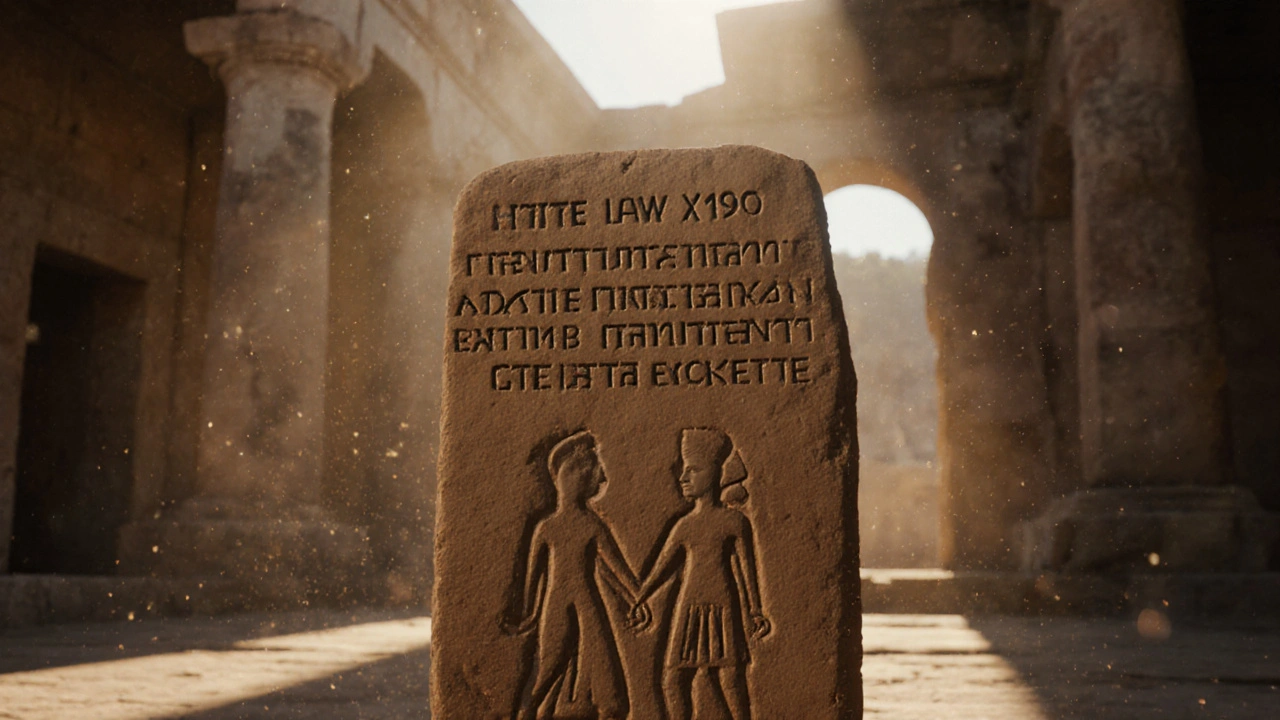
Hittite and Assyrian Laws on Sexual Consent: Early Codifications and Gaps
Nov 24 2025 / History & CultureThe Hittite and Assyrian legal codes from 1650-1100 BCE contain some of the earliest known laws addressing sexual consent, revealing stark differences in how ancient societies handled rape, consent, and gender roles - with the Hittites recognizing mutual willingness and the Assyrians enforcing brutal retribution.
VIEW MORE