Egyptian beauty rituals: Ancient secrets of skin, hair, and sacred self-care
When you think of Egyptian beauty rituals, a system of skincare, cosmetics, and personal care practices developed in ancient Egypt that combined hygiene, religion, and social status. Also known as ancient Egyptian cosmetics, these routines weren’t just about looking good—they were tied to protection, divinity, and eternal life. Women and men alike painted their eyes with kohl, rubbed their skin with oils infused with myrrh and frankincense, and bathed in natron—a natural salt used for purification. This wasn’t luxury. It was survival. The desert sun burned. Insects swarmed. And in a culture that believed the body had to be preserved for the afterlife, looking pristine wasn’t optional—it was spiritual duty.
The kohl eyeliner, a dark pigment made from galena, soot, and animal fat, applied around the eyes for both cosmetic and protective purposes. Also known as ancient Egyptian eye makeup, it wasn’t just fashion. Studies of mummies show it reduced glare and had antibacterial properties, helping prevent eye infections in the Nile’s humid air. Women applied it with sticks carved from bone or wood, and men wore it too—pharaohs, soldiers, priests. It was universal. Meanwhile, natron cleansing, a natural mixture of sodium carbonate and sodium bicarbonate used for bathing, teeth cleaning, and mummification. Also known as Egyptian cleansing salt, it was the ancient equivalent of a deep cleanse. People scrubbed their bodies with it before temple visits, after sex, and even before sleep. It dried sweat, killed germs, and left skin smooth. Even today, modern dermatologists note its similarity to today’s gentle exfoliants.
Hair was treated like sacred fabric. Both genders shaved their heads to stay cool and avoid lice, then wore wigs made from human hair, date palm fibers, or wool. Wigs were dyed, perfumed, and styled for status—elaborate ones for royalty, simple ones for workers. They slathered hair in oils from castor, almond, and sesame, not just to shine but to seal in moisture and protect against the sun. And scent? Perfumes weren’t optional. They were prayers in liquid form. Egyptians pressed lotus flowers, cinnamon, and honey into fat to create unguents worn on the skin. These weren’t just smells—they were offerings to the gods, tools to attract divine favor, and signals of wealth.
These rituals weren’t isolated. They connected to medicine, religion, and gender. The same oils used to smooth skin were also used to treat burns and wounds. The kohl recipe mirrored early pharmaceutical formulas. And while women are often highlighted in these stories, men practiced them just as rigorously. Beauty in ancient Egypt wasn’t feminine—it was human. It was about control over chaos: heat, disease, decay. It was a daily act of resistance against entropy.
What you’ll find in the posts below isn’t just a list of old habits. It’s a window into how people used their bodies as canvases for power, protection, and pleasure. From the science behind their recipes to the hidden gender dynamics in their routines, these stories reveal a civilization that understood beauty as something deeper than surface—something sacred, strategic, and surprisingly modern.
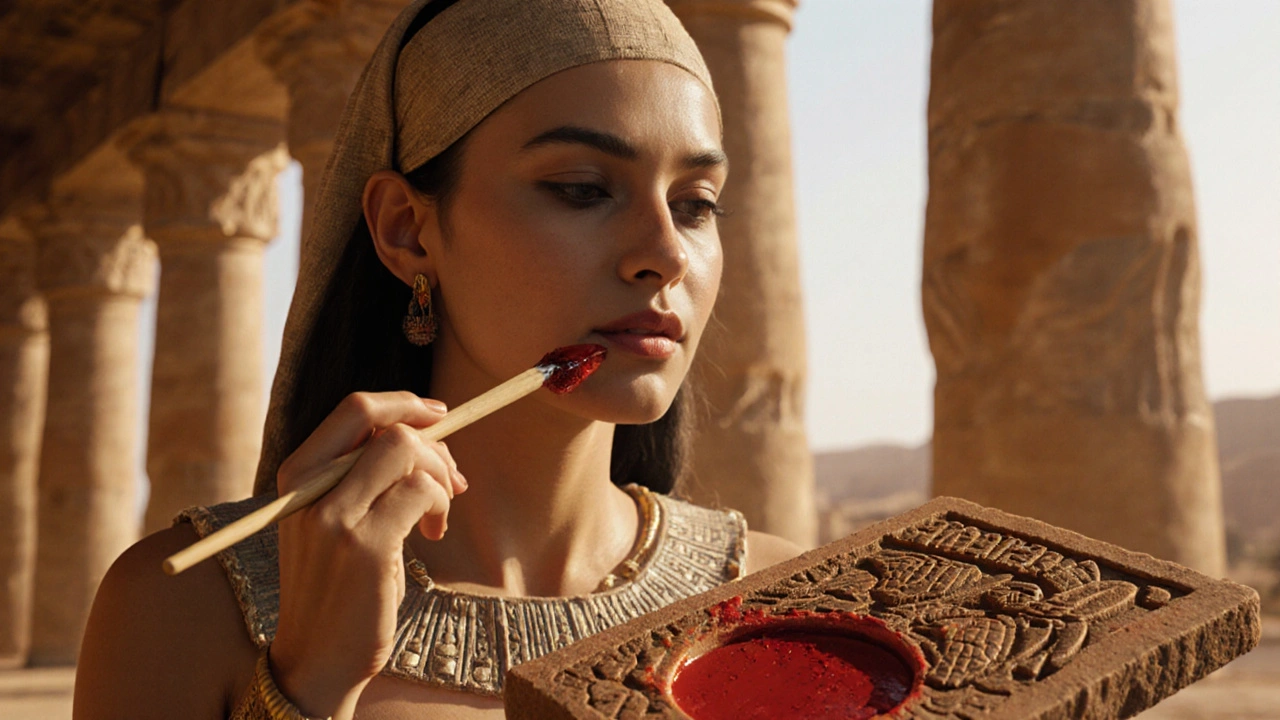
Lipstick and Signals in Ancient Egypt: How Cosmetics Communicated Sex, Status, and Power
Nov 22 2025 / History & CultureAncient Egyptians used lipstick not just for beauty, but as a coded system to signal social status, sexual availability, and spiritual power - with Cleopatra’s crimson lips becoming a symbol of political and erotic authority.
VIEW MORE