Elizabethan Erotic Poetry: Secrets of Sex, Power, and Pleasure in Shakespeare's Time
When you think of Elizabethan erotic poetry, a rich, coded form of Renaissance literature that blended courtly love with raw desire, often disguised as allegory to avoid censorship. Also known as Tudor erotic verse, it was written by nobles, poets, and even queens—using sonnets, pastoral imagery, and mythological references to talk about sex without saying it outright. This wasn’t just poetry for fun. It was a tool for flirting, power plays, and sometimes, rebellion.
Behind the elegant language of Renaissance sexuality, the complex interplay of class, gender, and desire in 16th-century England, where public modesty hid private transgression lay a world of hidden meanings. A rose wasn’t just a flower—it was a symbol for the female body. A garden wasn’t just a place to stroll—it was a metaphor for sexual access. Poets like John Donne and Sir Philip Sidney wrote lines that sounded pious on the surface but carried unmistakable carnality beneath. Meanwhile, the Shakespearean love poems, the sonnets and verses attributed to William Shakespeare that mix devotion, lust, and betrayal with startling emotional honesty didn’t just praise beauty—they questioned it, mocked it, and sometimes, weaponized it. These weren’t sweet love letters. They were psychological experiments in attraction, jealousy, and control.
What made this poetry dangerous wasn’t just the subject—it was who was writing it, and who was reading it. Women, even noblewomen, were rarely credited as authors, yet their voices appear in the margins, in letters, in disguised verses passed between courtiers. The Tudor eroticism, the cultural expression of sexual desire during the Tudor dynasty, where religious repression clashed with aristocratic indulgence thrived in secret salons and private libraries. It wasn’t just about pleasure—it was about identity, status, and survival. The same metaphors that praised a lover’s eyes could also mock a rival’s power. A poem could be a threat, a bribe, or a confession.
What you’ll find in the posts below isn’t just analysis of old texts. It’s a look at how desire was hidden in plain sight—how people used language to survive, seduce, and resist when speaking openly meant ruin. You’ll see how shame, power, and silence shaped the way sex was written, read, and remembered. These aren’t just poems. They’re artifacts of a society that punished desire but couldn’t stop it.
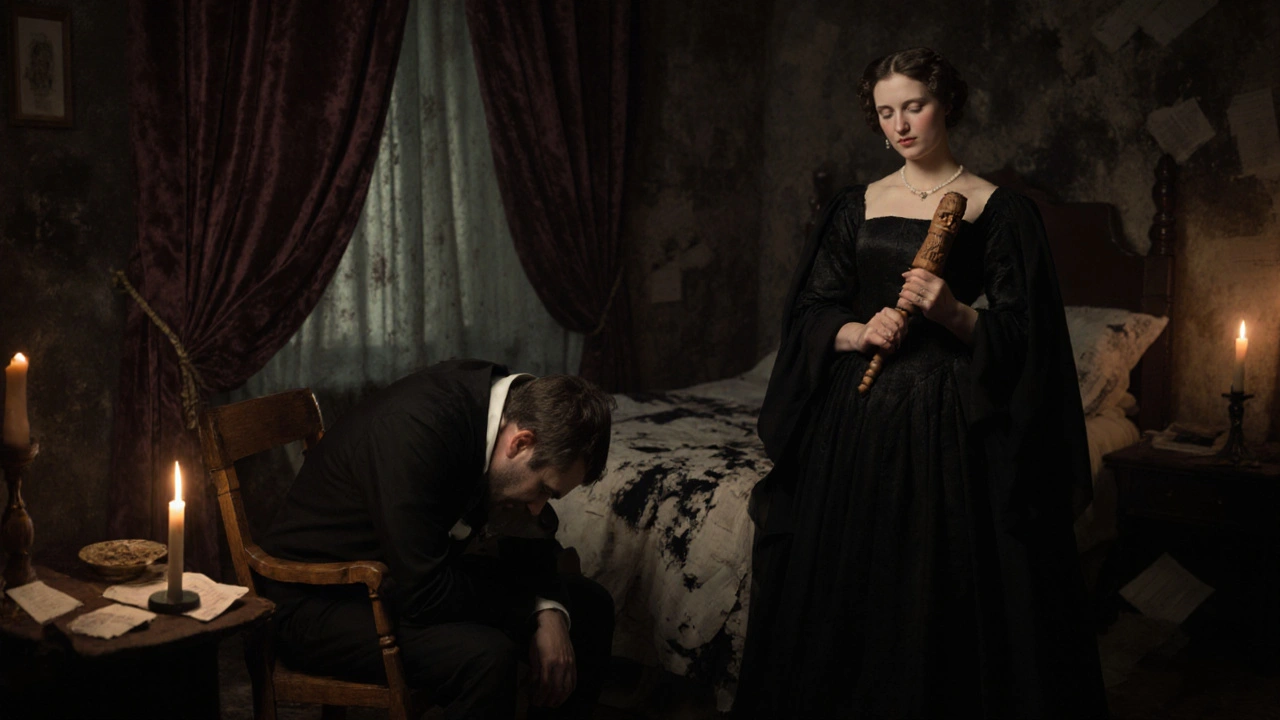
Nashe’s ‘Choice of Valentines’: The Banned Dildo Poem and the Fight Over Erotic Literature in Elizabethan England
Nov 10 2025 / History & CultureThomas Nashe's banned 1592 poem 'The Choise of Valentines' exposes male impotence and female agency in Elizabethan England through a shocking dildo scene-once censored, now a key text in understanding Renaissance sexuality and satire.
VIEW MORE