Censorship Impact Simulator
How Censorship Shapes Literary Legacy
Explore the historical impact of censorship using the case study of Thomas Nashe's banned 1592 poem, The Choise of Valentines.
Imagine writing a poem so raw, so explicit, that even in 1592, it was too much for the church, the crown, and the public. No, this isn’t a modern internet scandal. This is Thomas Nashe and his poem The Choise of Valentines-a 314-line erotic narrative that ends with a woman using a dildo because her lover can’t perform. And yes, it was banned. Not just quietly suppressed. Banned. Censored. Hidden in private manuscripts for decades. This isn’t just a dirty poem. It’s a mirror held up to the hypocrisy of Elizabethan England.
What Was ‘The Choise of Valentines’ Really About?
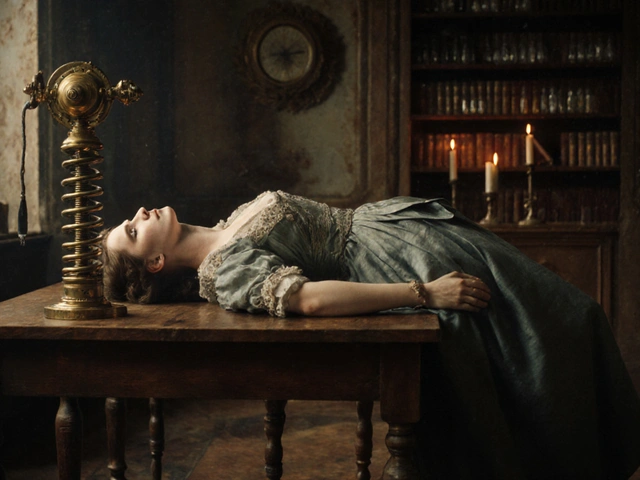
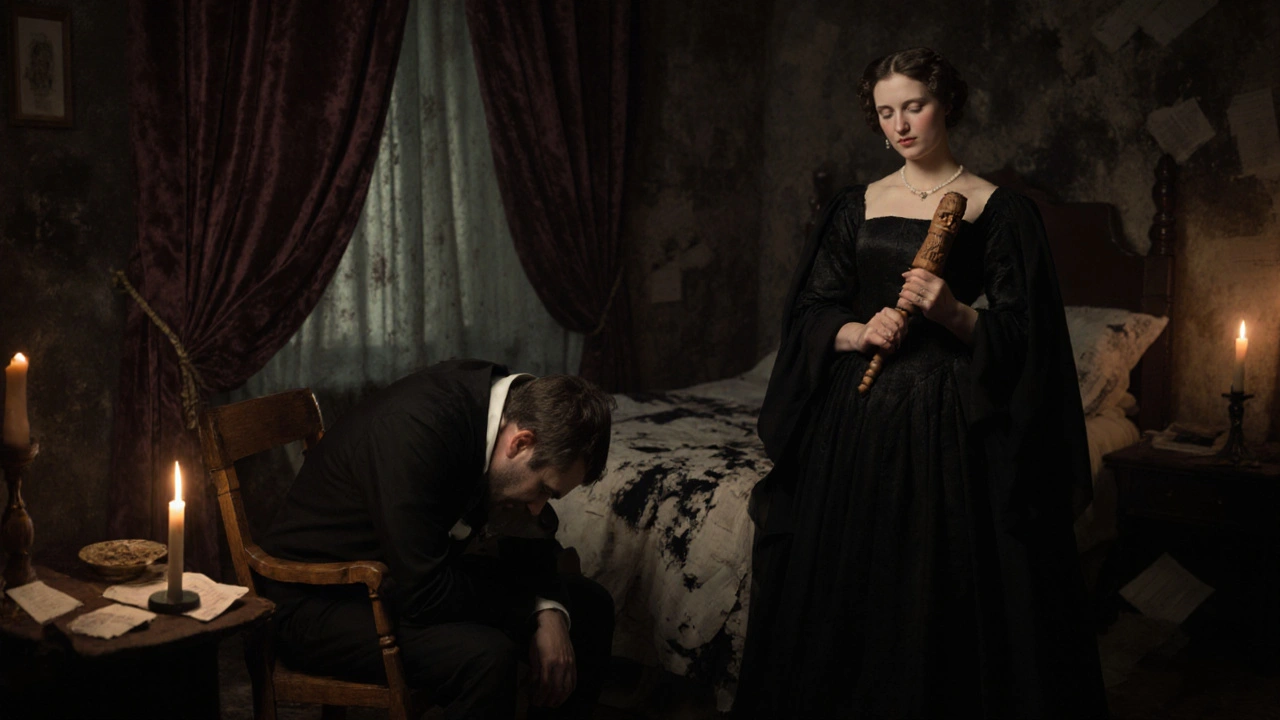
Thomas Nashe, a sharp-tongued pamphleteer and satirist, wrote this poem around 1592. It’s not a love letter. It’s not a romantic sonnet. It’s a gritty, unflinching look at sex, failure, and power in a London brothel. The story follows Tomalin, a boastful, anxious man who tracks down his lover, Mistress Frances, to a brothel. He’s ready for passion. But when the moment comes, he can’t get it up. Humiliated, he watches as she takes matters into her own hands-using a bodkin, a slang term for a dildo made of wood or leather, to satisfy herself.
The poem doesn’t shy away. Nashe describes the mechanics in detail: the sound, the motion, the coldness of the object, the way it replaces Tomalin’s inadequacy. And then, in the middle of it all, he drops a sudden, jarring religious prayer: “Beauty is but a flowre, / Which wrinckles will deuoure…” It’s like someone switching from a porn film to a sermon. Critics in the 1700s called it madness. Modern scholars call it satire.
Why Was It Banned? The 1586 Bishop’s Ban
England in the 1590s was a place of strict moral control. The Church of England, under Queen Elizabeth I, enforced censorship through the Bishop’s Ban of 1586. This wasn’t just about nudity. It targeted anything that mocked authority, exposed vice, or made sex too real. Satire was dangerous. Obscenity was treasonous. And Nashe’s poem did both.
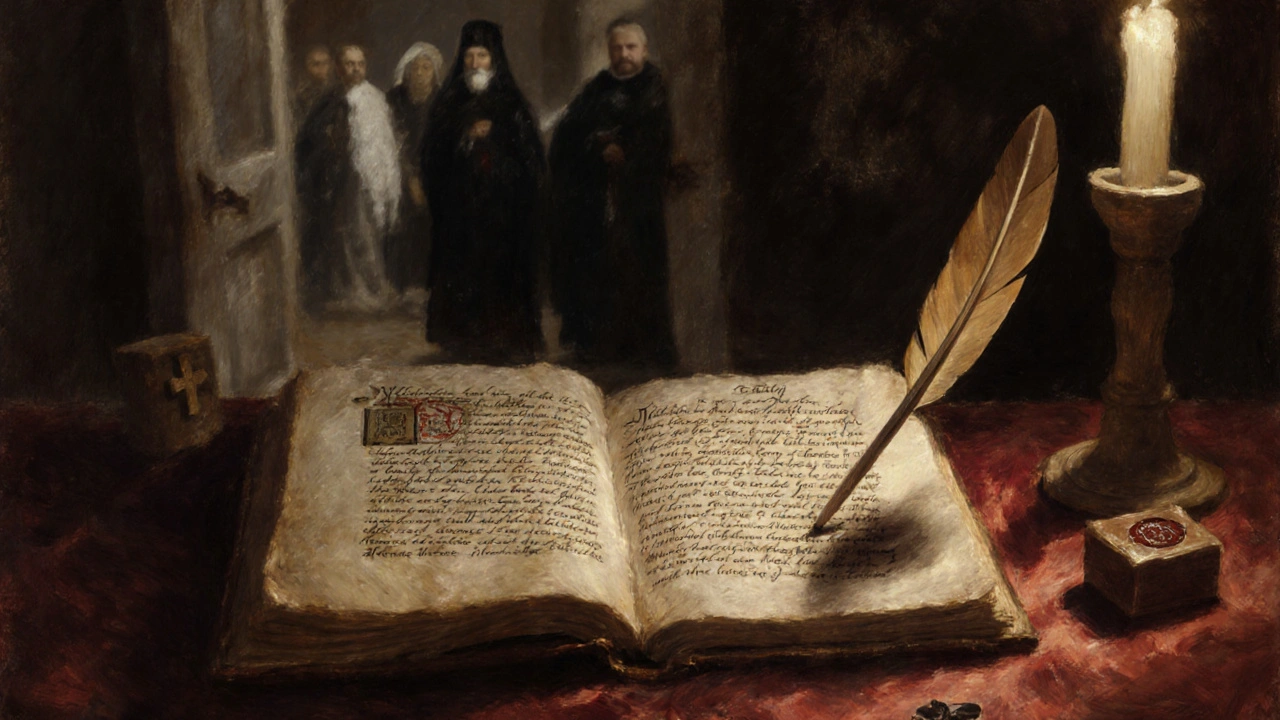
The poem was never officially printed in Nashe’s lifetime. It circulated in handwritten copies among the elite-nobles, poets, courtiers-who knew better than to be caught with it. The first printed version didn’t appear until 1602, and even then, it was falsely attributed to Christopher Marlowe, another controversial writer. Why? Because publishing it under Nashe’s name would’ve been professional suicide. He was already known for his attacks on the clergy and his scandalous pamphlets. This poem was the final nail.
The Dildo Episode: Not Porn, But Protest
Most people hear “dildo poem” and think of cheap shock value. But Nashe wasn’t writing for titillation. He was writing about failure. Tomalin’s impotence isn’t a joke-it’s a metaphor. He’s a man who thinks he’s entitled to sex, to women, to power. But when the moment arrives, he’s useless. The dildo isn’t there to please the woman. It’s there to show that she doesn’t need him.
Modern scholars like Hannah Lavery argue this is a satire of patronage culture. In Elizabethan courts, men like Nashe depended on wealthy patrons-like Henry Wriothesley, the Earl of Southampton-for money and protection. But those relationships were transactional, often humiliating. Tomalin’s failure mirrors the poet’s own dependence on powerful men who could discard him at any moment. The dildo? It’s the tool that replaces broken systems. It’s not about sex. It’s about control.
How Did People React Then-and Now?
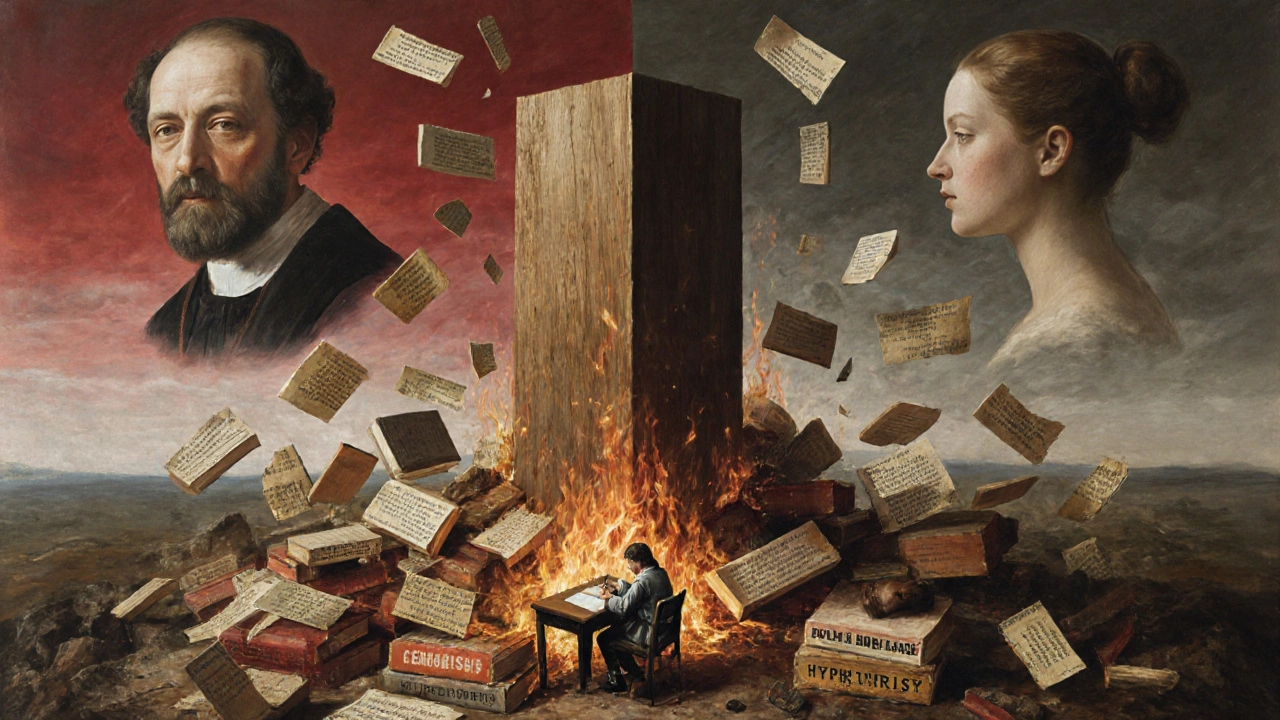
In the 1700s, Samuel Johnson called the poem “the disjointed ravings of an inebriated mind.” He couldn’t handle the tonal whiplash. But by the 1990s, scholars like Leah Marcus flipped the script. She argued Nashe was playing with boundaries-using the manuscript-to-print transition to create a forbidden text that thrived because it was hidden. The more you couldn’t read it, the more you wanted to.
Today, reactions are split. On one side, feminist scholars like Joan Jacob Brumberg call it misogynistic-reducing Mistress Frances to a sexual object without voice. On the other, Joseph L. Black and others say the poem actually undermines male privilege. Tomalin is the one humiliated. Frances is the one who acts. She’s not passive. She’s resourceful. And she doesn’t apologize.
Reddit threads from 2022 show the same divide. One user calls it “a surgical dissection of male sexual anxiety.” Another says, “It’s still dehumanizing. She has no name, no inner life.” Both are right. The poem is messy. That’s the point.
Why Is It Taught in Universities Today?
Despite the discomfort, The Choise of Valentines is now required reading in over 78% of graduate Renaissance literature seminars. Why? Because it’s one of the few texts that shows how sex, power, and satire worked in early modern England. It’s not a relic. It’s a key.
Students struggle with it. Elizabethan slang, religious references, and the sudden shifts in tone make it hard. But once they get past the shock, they see something deeper: a man terrified of being seen as weak, a woman who refuses to play the role he expects, and a poet who dares to write it all down.
Unlike Shakespeare’s Venus and Adonis, which wraps eroticism in myth and beauty, Nashe’s poem is dirty, urban, and real. No gods. No nymphs. Just a brothel, a man’s shame, and a woman with a wooden phallus.
The Legacy: From Manuscript to Digital Archive
The original manuscript of The Choise of Valentines is held in the British Library, tucked away in Harley MS 6395. Since 2021, the Thomas Nashe Project at the University of Sheffield has made 32 known variants available online. Over 14,000 people have visited the site in its first year-42% of them high school and college students.
What’s changed? Access. When you can read the full text, you stop treating it as a myth. You start analyzing it. You notice how Nashe uses Ovidian references to mock the idea of classical purity. You see how he mocks the idea of “courtly love” by setting the whole scene in a brothel. You realize this isn’t pornography. It’s protest.
And now, with new archaeological finds of 16th-century dildos from Southwark brothels, scholars are rethinking the poem’s realism. These weren’t fantasy objects. They were everyday tools. Nashe wasn’t inventing. He was documenting.
What Makes This Poem Different From Other Erotic Works?
Other writers wrote about sex. But Nashe wrote about failure. He didn’t glorify. He exposed. He didn’t idealize women. He showed them acting independently. He didn’t make the man the hero. He made him the joke.
Compare it to John Wilmot’s Imperfect Enjoyment (1673) or Aphra Behn’s The Disappointment (1684). Both deal with male impotence. But neither has the same rawness. Neither has the same moral chaos. Nashe’s poem doesn’t end with a lesson. It ends with silence. Tomalin leaves. Frances stays. And the dildo? It’s still there.
Why This Matters Now
In the #MeToo era, we’re re-examining old texts for how they treat power, consent, and gender. The Choise of Valentines doesn’t give easy answers. But it forces us to ask harder questions. Who gets to speak? Who gets to act? Who gets to be humiliated? Who gets to be silent?
This poem survived because it was too dangerous to burn. It was too honest to ignore. And now, centuries later, it’s still making people uncomfortable. Good. That’s what good literature does.
Nashe didn’t write this to shock. He wrote it because he saw the truth-and knew no one else would say it. He knew the church would ban it. The court would disown him. His peers would laugh. But he wrote it anyway. And that’s why we still read it today.