Etruscan Sexual Depictions
When you think of ancient sexuality, you probably imagine Greeks with idealized bodies or Romans with brothel graffiti—but the Etruscan sexual depictions, a rich, unfiltered visual record of intimacy, pleasure, and gender expression from pre-Roman Italy. Also known as Etruscan erotic art, these images weren’t hidden in tombs to scare off spirits—they were displayed in homes, painted on walls, and carved into mirrors, showing couples in embraces, same-sex encounters, and playful nudity with no shame. Unlike the Greeks, who mythologized sex, or the Romans, who often turned it into satire or punishment, the Etruscans treated desire as part of daily life. Their art didn’t just show bodies—it showed connection, laughter, and mutual pleasure, even in same-gender pairings that were rarely depicted elsewhere in the ancient world.
What makes these depictions so striking isn’t just their openness—it’s how they challenge modern assumptions. In Etruscan tombs, women are shown reclining beside men, drinking wine, touching each other’s faces, sometimes even initiating contact. Men aren’t always the dominant figures; women hold power, gaze directly at the viewer, and aren’t reduced to passive objects. This isn’t fantasy—it’s a cultural norm. The Etruscan art, a broad category of visual expression from a civilization that thrived in central Italy before Rome’s rise. Also known as Etruscan civilization, it included complex burial rituals, metalwork, and a language still only partially deciphered didn’t shy away from the body. Fertility symbols, genitalia, and intimate scenes appear alongside religious imagery, suggesting that sex wasn’t separate from spirituality—it was woven into it. And while Greek and Roman writers later mocked Etruscan women for their freedom, calling them "licentious," their own laws kept women under tight control. The Etruscans didn’t need to justify pleasure. They just lived it.
The Etruscan culture, a sophisticated, pre-Roman society known for its trade networks, urban planning, and unique gender dynamics. Also known as Tyrrhenian culture, it lasted over 700 years and influenced Roman religion, gladiatorial games, and even the toga didn’t just tolerate sexual diversity—it celebrated it. Scenes of group sex, cross-dressing figures, and non-reproductive acts appear with the same casualness as a family meal. This wasn’t rebellion. It was normal. And when Rome absorbed Etruria, they buried these images, replaced them with moralizing statues, and rewrote history to make their own repression look like virtue. What’s left are fragments—on walls, on mirrors, in tombs—waiting to be seen again. Below, you’ll find articles that dig into how ancient societies handled desire, shame, and power, from Victorian myths to modern erasure. The Etruscans didn’t have those problems. They just knew how to live.
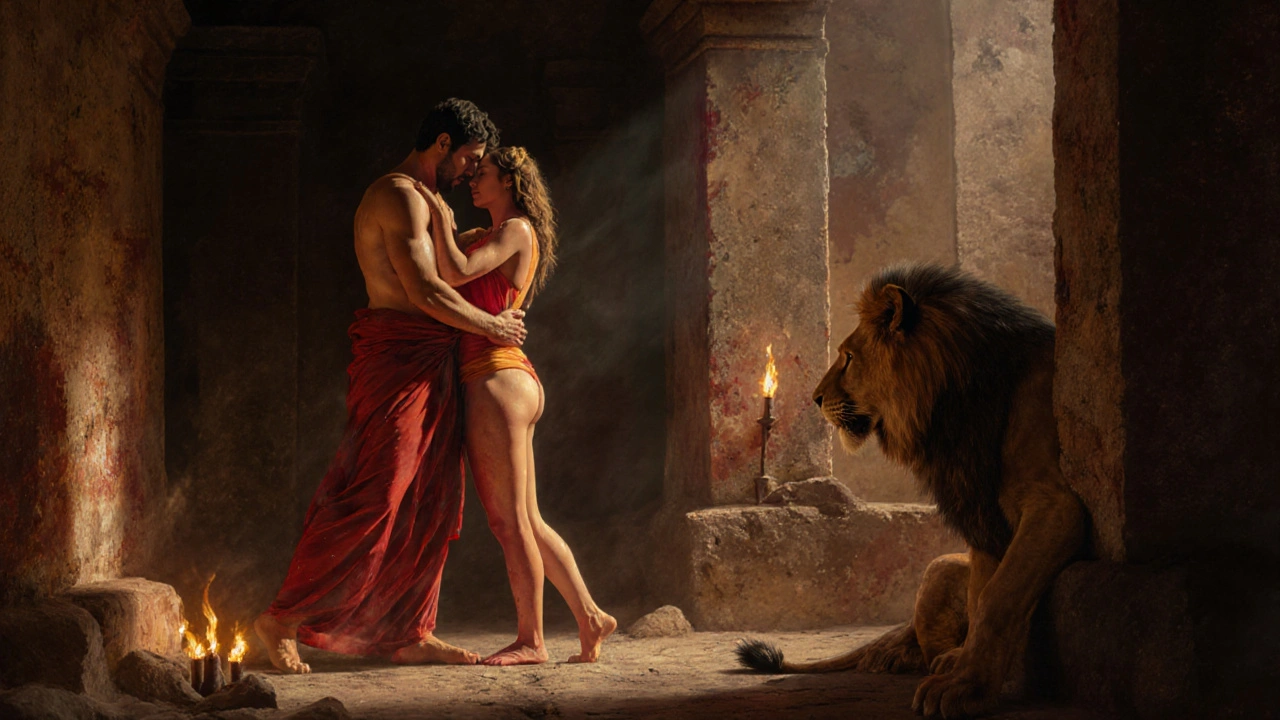
Etruscan Funerary Scenes: What Sexual Depictions Reveal About Death and the Afterlife
Nov 26 2025 / History & CultureEtruscan funerary art features explicit sexual scenes not as decoration, but as sacred rituals to guide the soul into the afterlife-revealing a culture that embraced pleasure, death, and spiritual transformation.
VIEW MORE