Eugenics and Disability: How Pseudoscience Shaped Sex, Health, and Human Value
When we talk about eugenics, a movement that claimed to improve human genetics by controlling reproduction. Also known as scientific racism, it wasn’t just fringe ideology—it was law in the U.S., Canada, Sweden, and Nazi Germany, backed by universities, doctors, and courts. At its core, eugenics wasn’t about health. It was about who society decided deserved to live, love, and have children—and who didn’t.
disability, a broad term covering physical, cognitive, and mental differences. Also known as neurodiversity or impairment, it became a target because it challenged the idea of the "perfect" human. People labeled as disabled—whether they had epilepsy, Down syndrome, mental illness, or just lived differently—were seen as a burden. Doctors called them "defective." Courts ordered their sterilization. Institutions locked them away. And in some cases, they were killed. This wasn’t secret. It was taught in medical schools, praised in newspapers, and signed into law by elected officials.
The link between eugenics and forced sterilization, the legal removal of reproductive ability without consent. Also known as compulsory sterilization, it was used to stop "undesirable" traits from being passed down. Between 1907 and the 1970s, over 60,000 people in the U.S. alone were sterilized under eugenic laws. Many were women with intellectual disabilities, poor women of color, and people in state homes. Their consent? Often forged. Their voices? Ignored. This wasn’t just about preventing births—it was about controlling sexuality, punishing poverty, and enforcing racial purity.
And it didn’t end in the 1900s. The same logic still echoes today in how we treat people with disabilities in healthcare, parenting, and sex education. Why are people with intellectual disabilities told they "can’t" have sex? Why are prenatal tests pushed so hard for conditions like Down syndrome? Why do some doctors still assume a disabled person’s life isn’t worth living? These aren’t neutral medical questions—they’re echoes of eugenics dressed up as progress.
The posts here don’t shy away from this. You’ll find how Victorian doctors used "female hysteria" to justify controlling women’s bodies, how marriage laws were built to exclude "unfit" people, and how sexual shame was weaponized against those who didn’t fit the mold. You’ll see how medical myths about masturbation and orgasm were tied to ideas of moral purity—and how those same myths still haunt modern attitudes toward disability and sexuality.
This isn’t ancient history. It’s the foundation of how we still think about who deserves pleasure, autonomy, and dignity. The articles below uncover the hidden laws, the silenced voices, and the real people who fought back. You’ll learn how resistance started in courtrooms, in archives, and in bedrooms—and why understanding this history matters more than ever.
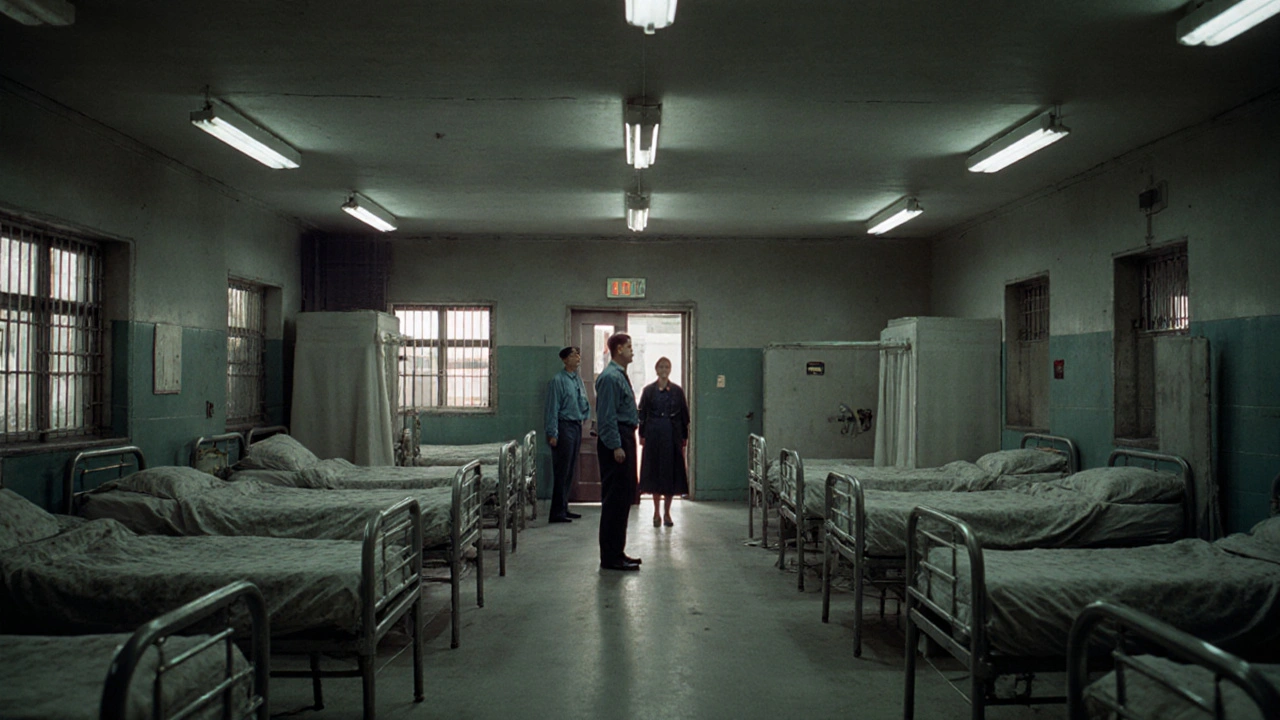
Institutionalization and Sexual Control: How Disabled People Were Segregated
Nov 15 2025 / History & CultureFrom forced sterilizations to marriage bans, disabled people in the U.S. were systematically controlled for over a century. This is the hidden history of how eugenics shaped their bodies, their rights, and their lives.
VIEW MORE