Historical Timeline of Disabled People's Rights
1848
First major institution for disabled people opens in Boston (Experimental School for Teaching and Training Idiotic Children)
1896
Connecticut passes first law making it illegal for people with disabilities to marry or have sex
1907
Indiana becomes first state to legalize forced sterilization of disabled people
1927
Supreme Court's Buck v. Bell case upholds forced sterilization of Carrie Buck
1931
30 states have forced sterilization laws
1950s
Deinstitutionalization movement begins; new drugs and growing outrage
1970s
Many institutions shuttered, but few had proper community support
1973
Walter E. Fernald State School stops recording sterilizations
1999
Olmstead decision states disabled people have right to live in community
2001
Virginia formally apologizes for forced sterilization
2006
UN Convention on the Rights of Persons with Disabilities adopted
2013
North Carolina establishes compensation program for sterilization survivors
For over a century, thousands of disabled people in the United States were locked away-not just to be cared for, but to be controlled. Their bodies were monitored, their relationships banned, and their ability to have children taken away without consent. This wasn’t the work of a few rogue doctors or isolated institutions. It was state policy, backed by laws, courts, and medical authority, rooted in the belief that some lives were not meant to continue.
The Birth of Institutional Control
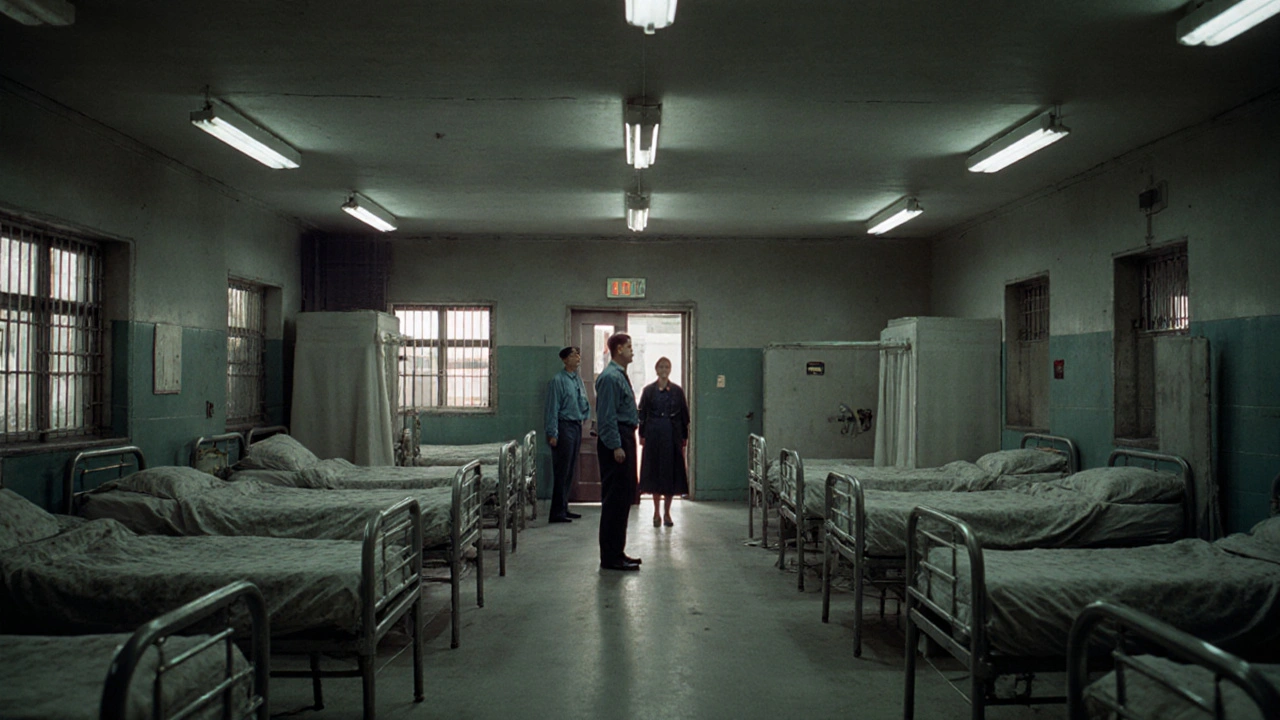
The first major institution for disabled people in the U.S. opened in Boston in 1848, founded by Samuel Gridley Howe. It was called the Experimental School for Teaching and Training Idiotic Children. The name alone tells you how it saw its residents: not as people, but as problems to be fixed. By the 1950s, over half a million people with intellectual and developmental disabilities were living in similar facilities across the country. These weren’t hospitals or schools. They were warehouses with locked doors, barred windows, and no privacy. People shared showers, slept in rows of beds, and were never alone. The design wasn’t accidental. It was meant to prevent intimacy, to crush any chance of sexual expression.Marriage, Sex, and the Law
In 1896, Connecticut passed the first law in the U.S. that made it illegal for people with disabilities to marry or have sex. Violators faced up to three years in prison. This wasn’t an outlier. By the 1940s, at least 32 states had similar laws. They targeted people labeled as "epileptic," "feeble-minded," or "morally deficient." The logic was simple: if disabled people couldn’t reproduce, society wouldn’t be "contaminated." The language of these laws didn’t mention rape, consent, or human rights. It talked about "heredity" and "social purity." Women with disabilities were seen as dangerous temptresses. Men were viewed as predators. Neither view was about actual behavior-it was about fear. Fear that disabled people might want the same things everyone else did: love, touch, pleasure, family. And so, their sexuality was treated like a disease to be quarantined.Forced Sterilization: The Medical Endorsement of Erasure
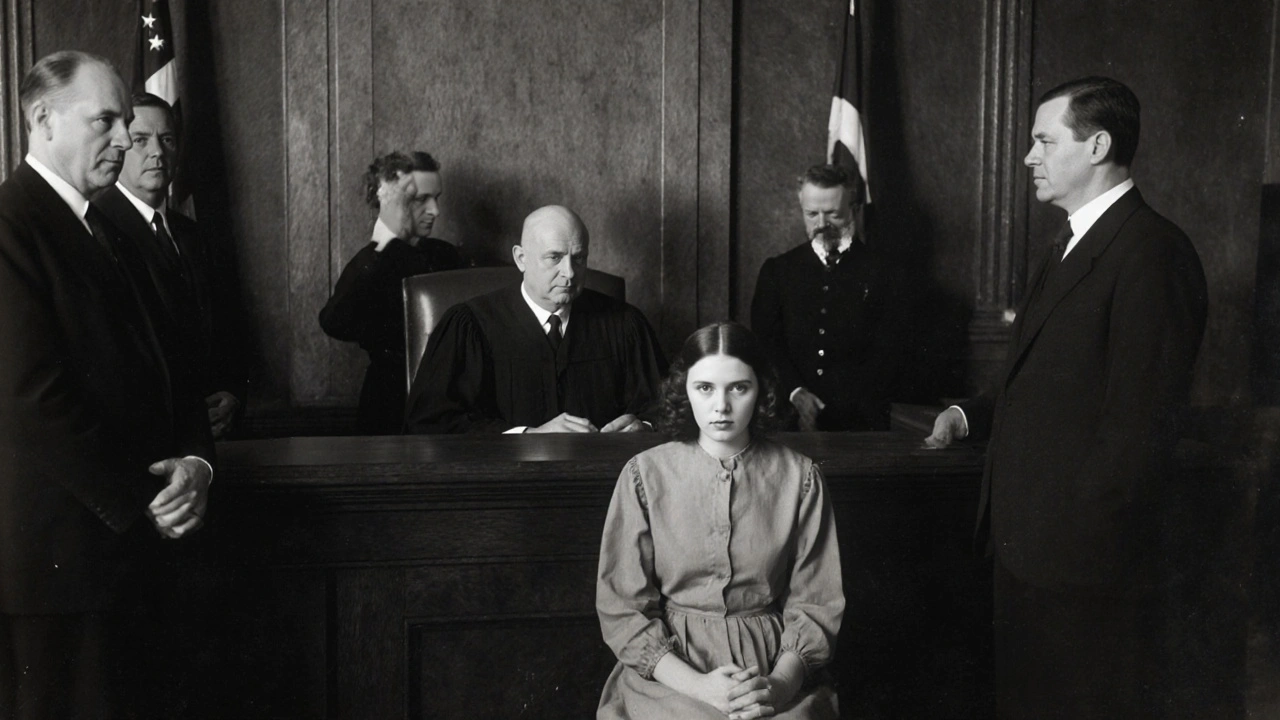
In 1907, Indiana became the first state to legalize forced sterilization of disabled people in institutions. By 1931, 30 states had followed. The procedure was often done without consent. Some people were told they were getting appendectomies. Others were pressured with threats: refuse the surgery, and you’ll stay locked up forever. The most infamous case was Buck v. Bell a 1927 U.S. Supreme Court case that upheld the forced sterilization of Carrie Buck, a young woman institutionalized after becoming pregnant following what was likely rape. The court’s ruling, written by Justice Oliver Wendell Holmes Jr., declared, "Three generations of imbeciles are enough." Over 65,000 people were sterilized under these laws before they were mostly abandoned in the 1970s.Most of the victims were women. Tubal ligations were common. Men received vasectomies. The surgeries were often done in institutional infirmaries, with no anesthesia, no witnesses, and no record of consent. The doctors didn’t see themselves as criminals. They saw themselves as scientists saving society from "degeneracy." The Walter E. Fernald State School in Massachusetts, once a model institution, kept detailed records of sterilizations. Those records stopped abruptly in 1973. By then, many residents had been there for decades, their lives erased one procedure at a time.
The Role of Eugenics
Eugenics wasn’t a fringe belief. It was taught in universities, supported by philanthropists like the Rockefellers, and promoted by politicians. The movement claimed to improve the human race by preventing "undesirable" people from reproducing. Disabled people were at the top of that list. So were poor people, immigrants, and Black people. The same logic that justified sterilization also justified segregation. If you couldn’t control your sexuality, you couldn’t be trusted in society.The Virginia State Colony for Epileptics and Feebleminded, where Carrie Buck was held, was a factory of sterilizations. Its superintendent, Albert Priddy, openly called it a "safety measure." He didn’t care if the women were raped. He didn’t care if they wanted to be mothers. He only cared about stopping their genes from spreading.
Survivors and Silence
Few spoke up. Those who did were ignored. Institutions punished residents for showing affection. Holding hands could mean isolation. Kissing could mean being strapped down. One survivor recalled being locked in a closet for weeks after she was caught hugging a fellow resident. Another said she was told, "You’re not like other girls. You don’t get to have a boyfriend." The stigma didn’t end when they left. Many were labeled "dangerous" or "unfit" even after release. Some were sent to prisons instead of community homes. Others were told they were "too broken" to date, to marry, to have children. Internalized shame became as powerful as the locks on the doors.
Deinstitutionalization: A Half-Empty Promise
The 1950s brought new drugs and growing outrage. Families began demanding change. The deinstitutionalization movement pushed to close the big facilities. By the 1970s, many were shuttered. But the promise of freedom came with no support. No housing. No counseling. No help finding jobs or relationships.Instead of integration, many people ended up in smaller, just-as-controlling settings. Group homes with rigid rules. Day programs that monitored their every move. Some were still denied access to sex education-except for lessons on avoiding pregnancy. The message didn’t change: your body is not your own.
The Legacy Lives On
As of 2023, around 140,000 people with intellectual and developmental disabilities still live in large institutions in the U.S. The 1999 Olmstead decision said they had a right to live in the community. But funding, bureaucracy, and old attitudes kept them locked in.Forced sterilization was officially banned in most states, but surrogate decision-making still allows guardians to consent to sterilization on behalf of disabled people. In some cases, it’s still done without court review. The same logic that justified Buck v. Bell still whispers in the halls of courts and clinics.
Virginia apologized in 2001. North Carolina paid $50,000 to each living survivor of forced sterilization-about 200 people. But what do you pay someone for a childhood stolen? For a womb taken? For a lifetime of being told they were less than human?
Sexual Autonomy as a Human Right
The United Nations Convention on the Rights of Persons with Disabilities, adopted in 2006, clearly states: disabled people have the right to the same sexual education, relationships, and reproductive choices as anyone else. But in practice, that right is still denied.Today’s disability justice movement is pushing back. Activists are demanding real sex education-not just warnings about pregnancy, but lessons on consent, pleasure, and boundaries. They’re fighting for access to contraception without coercion. They’re telling the world: disabled people aren’t asexual. They aren’t predators. They aren’t burdens. They are people who want to love, to be loved, to choose.
The institutions are gone, but the mindset lingers. The belief that some bodies are too dangerous, too broken, too different to be trusted with their own desires. That belief is what kept people locked away. And it’s what still holds them back.
Were disabled people really sterilized without consent?
Yes. Between 1907 and the 1970s, over 65,000 people in the U.S. were forcibly sterilized under state laws. Many were told they were having routine surgeries like appendectomies. Others were pressured with threats-refuse the procedure and you’ll stay institutionalized. Consent forms were often signed by guardians, not the individuals themselves, and many were not told what the surgery was for.
Why were disabled people targeted for sterilization?
They were targeted because of eugenics-the pseudoscientific belief that certain traits, like disability, poverty, or race, were hereditary and needed to be eliminated. Disabled people were seen as a threat to society’s "genetic health." Medical professionals, lawmakers, and even educators promoted the idea that preventing them from having children would make society stronger. The 1927 Buck v. Bell Supreme Court decision gave this idea legal backing.
Did marriage laws for disabled people actually exist?
Yes. Starting in 1896, at least 32 states passed laws that banned or restricted marriage for people with disabilities. Connecticut’s law was the first-it made it a crime punishable by up to three years in prison. These laws targeted people labeled "epileptic," "feeble-minded," or "insane." The goal was to prevent reproduction, not to protect anyone’s well-being.
What happened to disabled people after institutions closed?
Many were released into communities with little to no support. No housing, no counseling, no access to relationships or sex education. Some ended up in smaller institutions disguised as group homes. Others were wrongly labeled dangerous and sent to prisons. The goal of deinstitutionalization was freedom, but without resources, many just traded one cage for another.
Are forced sterilizations still happening today?
Officially, forced sterilization is banned. But in practice, sterilization of disabled people still occurs under the guise of "surrogate consent." Guardians or parents can legally consent to sterilization on behalf of someone deemed "incapable." In some states, there’s no court review. Advocates say this is a continuation of eugenic thinking-just without the same public brutality.
How did institutions control disabled people’s sexuality?
Institutions used physical design and strict rules. Locked doors, shared showers, no private rooms, and constant supervision made intimacy impossible. Staff enforced bans on holding hands, kissing, or even talking privately. Written policies explicitly prohibited sexual behavior. Punishments included isolation, restraint, or loss of privileges. The message was clear: your body doesn’t belong to you.
What’s the connection between institutionalization and mass incarceration?
Historians like Professor Linda Appleman argue that the system of institutionalizing disabled people laid the groundwork for today’s prison system. Both rely on removing people deemed "undesirable" from society. Both use surveillance, control, and dehumanization. Many people labeled "insane" were moved from institutions to prisons. The same eugenic logic-controlling who belongs in society-still shapes who gets locked up today.
Did any states apologize for forced sterilization?
Yes. Virginia formally apologized in 2001. North Carolina established a compensation program in 2013, paying $50,000 to about 200 living survivors. But most states never acknowledged the harm. Even today, many victims remain unnamed, and their stories are still buried in institutional archives.
What does disability justice say about sexual autonomy?
Disability justice movements argue that sexual autonomy is a fundamental human right-not a privilege. They demand access to comprehensive sex education, the right to choose partners, and freedom from coercion in reproductive decisions. They reject the stereotypes that label disabled people as asexual, dangerous, or childlike. Their message: we are not problems to be solved. We are people who deserve to love, to be loved, and to decide for ourselves.
Why is this history still relevant today?
Because the same beliefs that justified segregation and sterilization still influence how disabled people are treated. From guardianship laws to lack of sex education to assumptions about who can be a parent, the legacy of eugenics lives on. Until we confront this history, we can’t truly support disabled people’s rights to intimacy, autonomy, and dignity.