Gender Roles in Ancient Greece
When we talk about gender roles in ancient Greece, the rigid social expectations that divided men and women into separate spheres of power, visibility, and control. Also known as classical Greek gender norms, these roles weren’t just customs—they were laws written into daily life, religion, and even philosophy. Men were expected to be public figures: soldiers, politicians, philosophers, and participants in the agora. Women, by contrast, were largely confined to the home, managing households, raising children, and staying out of political or intellectual spaces. This wasn’t accidental—it was designed to maintain order, lineage, and male dominance.
One of the most revealing aspects of this system was pederasty, a socially accepted relationship between adult men and adolescent boys, framed as mentorship but deeply tied to power, sexuality, and status. This practice was never about equality—it was a way for elite men to reinforce hierarchy while avoiding the perceived moral risks of adult female relationships. Meanwhile, women in ancient Greece, especially in Athens, had no legal rights to own land, appear in court, or participate in public rituals without male supervision. Their value was measured by their ability to produce legitimate heirs, not by their voices or desires. Even in Sparta, where women had more physical freedom, their primary role remained tied to reproduction and state service.
These roles didn’t exist in a vacuum. They were supported by myths, art, and laws. The goddess Athena was revered as a virgin warrior—powerful, but only because she rejected traditional femininity. The myth of Pandora blamed women for bringing suffering into the world. And in the theater, female characters were played by men, reinforcing the idea that women’s voices didn’t belong on stage. These weren’t just stories—they were tools of control.
What you’ll find here isn’t a textbook summary. It’s a raw look at how these systems shaped desire, silence, and survival. From the hidden lives of hetairai (courtesans) who navigated the edges of power, to the erased histories of women who defied norms, these articles uncover the contradictions, hypocrisies, and quiet rebellions that modern history often ignores. You’ll see how ancient ideas still echo in today’s debates about autonomy, consent, and who gets to define what’s normal.
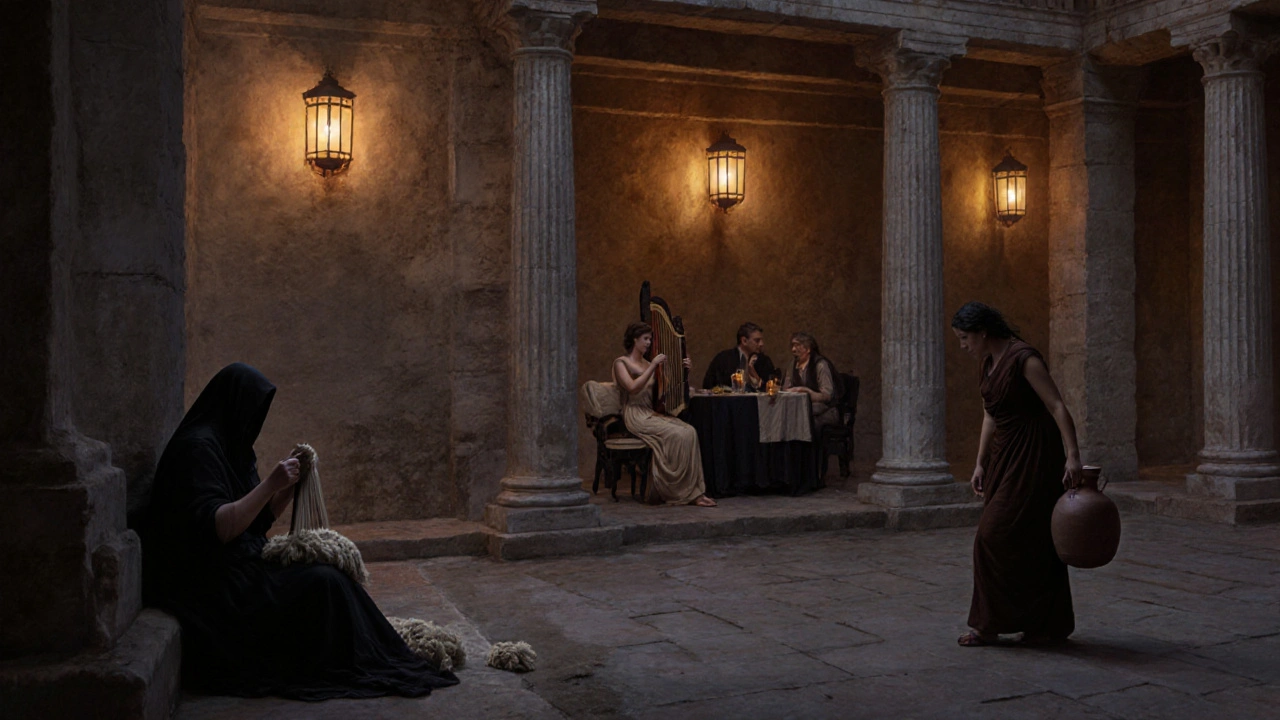
Concubines, Wives, and Mistresses: Gendered Sexual Roles in Ancient Greek Households
Nov 12 2025 / History & CultureAncient Greek households enforced strict gender roles: wives bore legitimate heirs, hetaerae offered companionship, and enslaved women served as de facto concubines. This system upheld male control while keeping women confined to silent, functional roles.
VIEW MORE