Historical Euphemisms: How Secret Words Shaped Sex, Power, and Silence
When people in the 1800s talked about historical euphemisms, coded phrases used to avoid direct talk about sex, the body, or desire. Also known as sexual code words, they weren’t just polite tricks—they were tools of control, survival, and resistance. A woman visiting a "rest cure" wasn’t just tired. She was being treated for "hysteria," a catch-all diagnosis that turned her pleasure into a disease. A man buying a "vibrating device" wasn’t shopping for relaxation—he was secretly buying relief from the shame doctors had convinced him was natural. These weren’t harmless nicknames. They were the language of a world that punished open talk about sex but couldn’t stop people from seeking it.
Behind every Victorian euphemisms, the elaborate, sanitized phrases used to describe sexuality in 19th-century Britain. Also known as moral code language, it was a system built to keep women silent and men in control. The word "masturbation" was whispered like a curse. "Onanism" sounded biblical. "Self-abuse" made it feel like a sin. Meanwhile, women were told their bodies were "delicate" or "nervous"—never sexual. But if you knew where to look, the truth was hiding in plain sight: in the steam-powered vibrators sold as medical devices, in the "pleasure gardens" that were really brothels, in the poems banned for describing a dildo as a "corked tube." Even the word "prostitution" was softened into "commercialized sexuality," making it sound like a business, not a human act. These weren’t just words. They were masks. And behind them, people were still living, touching, loving, and resisting.
And then there’s the silence. Not the quiet kind—the kind that was forced. Lesbian relationships were erased from records by calling them "close friendships." Male same-sex desire was hidden as "intimate companionship." The word "bisexual" didn’t even exist in most dictionaries until the 1900s. People didn’t just avoid saying the truth—they rewrote it. But history doesn’t stay buried. The same women who were told their orgasms were "vaginal" were quietly learning their clitoris was the real source of pleasure. The same men who were told masturbation caused insanity were using vibrators anyway. And today, when we uncover these old phrases, we’re not just reading history—we’re hearing the whispers of people who refused to be silenced.
What you’ll find below isn’t a list of old slang. It’s a map of how power worked through language. You’ll see how medical myths turned pleasure into pathology, how religion shaped shame, and how women, queer people, and the working class used coded words to survive—and sometimes, to thrive. These aren’t just footnotes. They’re the hidden stories behind every modern conversation about sex, consent, and identity.
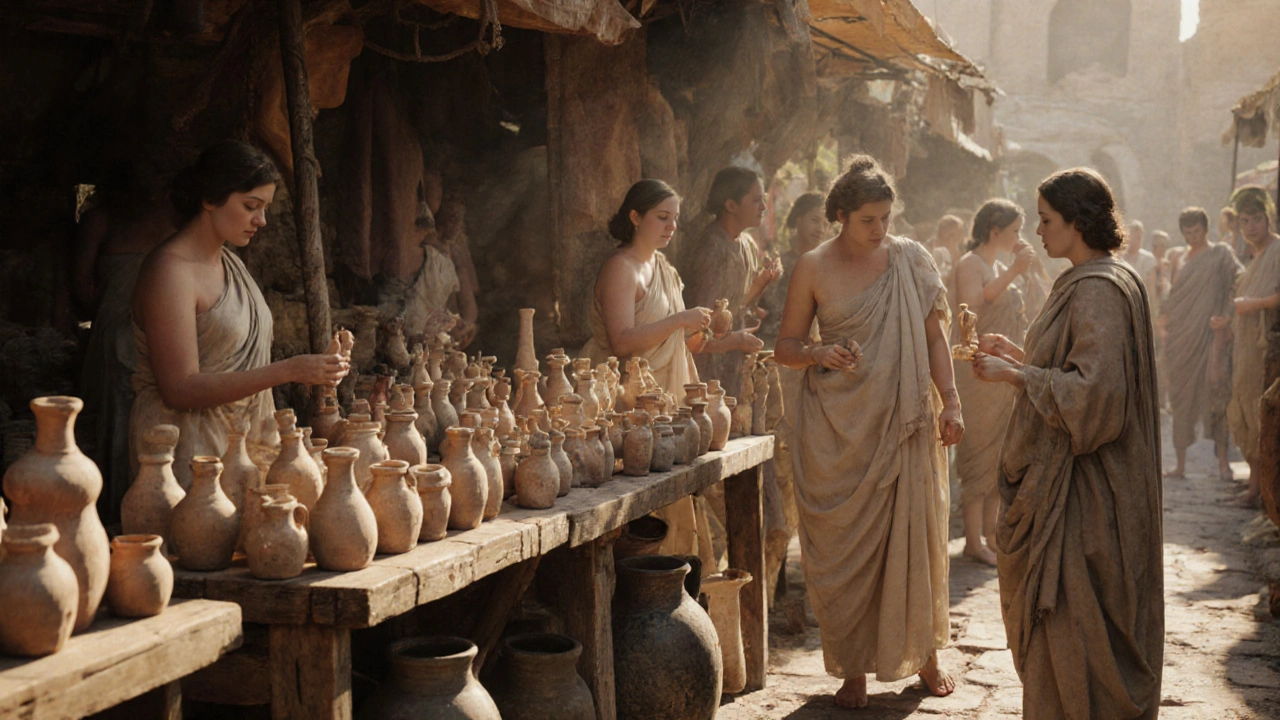
Early Words for Sex Toys: How Language Hid Desire Behind Euphemisms and Humor
Oct 25 2025 / History & CultureFrom ancient Greek 'olisbos' to Victorian 'vibrating massagers,' the language of sex toys has always hidden desire behind euphemisms, humor, and medical lies. Here's how we learned to speak the truth.
VIEW MORE