
Long before modern brands advertised sleek silicone toys online, people in ancient Greece, Rome, and China were using sexual devices - and they didn’t call them what we call them today. If you walked into a marketplace in 500 BC and asked for a dildo, you’d likely be met with confusion, laughter, or suspicion. Instead, people used words like olisbos, a Greek term meaning ‘to glide’ or ‘to slip,’ or referred to these objects as ‘toys’ - a word that, back then, carried no childish connotation. It was just a neutral label for something that brought pleasure. And that’s the story of how language became a shield, a joke, and sometimes, a disguise for desire.
The First Words: Olisbos, Ben-Wa, and the Birth of Euphemism
The oldest known term for a sex toy comes from Ancient Greece: olisbos. Archaeologists have found clay and stone versions of these objects in ruins dating back to the 6th century BC. In Miletus, merchants sold them to women whose husbands were away at war or on long trade journeys. These weren’t hidden in back rooms - they were openly traded, though never openly named. The plural, olisboi, showed they were common enough to be counted. And yet, Greek texts never called them ‘sex tools.’ They were simply ‘toys.’
Even the Romans, who loved phallic symbols for protection and luck, didn’t use blunt language. They wore tiny penis-shaped pendants as amulets, not as pleasure devices. The word phallus entered Latin and later English as a scholarly term - clean, clinical, detached. It let scholars talk about them without scandal. The same trick was used centuries later when doctors in Victorian England called vibrators ‘medical instruments.’
The term ben-wa didn’t appear until the 1900s, but the objects themselves - small weighted balls - were used in Asia as early as 500 AD. In Japan and Burma, they were worn internally to strengthen pelvic muscles, not just for pleasure. No one called them ‘sex toys.’ They were ‘health aids.’
From Italy to Shakespeare: How ‘Dildo’ Got Its Name
The word dildo didn’t come from English. It arrived around the 1400s, borrowed from Italian diletto, meaning ‘to delight.’ Some linguists argue it came from Latin dilatare, meaning ‘to open wide.’ Either way, it was never meant to be crude. It was just a word that stuck.
By the time Shakespeare wrote Twelfth Night in 1600, dildo had slipped into everyday English - not as a dirty word, but as a punchline. In Act II, a character mutters, ‘Diddle, diddle, how dost thou now?’ It’s nonsense. It’s funny. And it’s clearly sexual. Shakespeare didn’t need to spell it out. His audience already knew. The word had become a cultural shorthand, a wink between friends.
That’s the pattern: when direct language was too risky, people used humor. Or foreign words. Or made-up sounds. It was safer to laugh than to admit what you meant.
When Medicine Took Over: The Victorian Era’s Biggest Lie
The 1800s changed everything. As sexuality became a medical issue - not a personal one - sex toys were rebranded as treatments. Doctors diagnosed ‘hysteria’ in women, a catch-all term for anxiety, irritability, or sexual frustration. Their solution? Vibration.
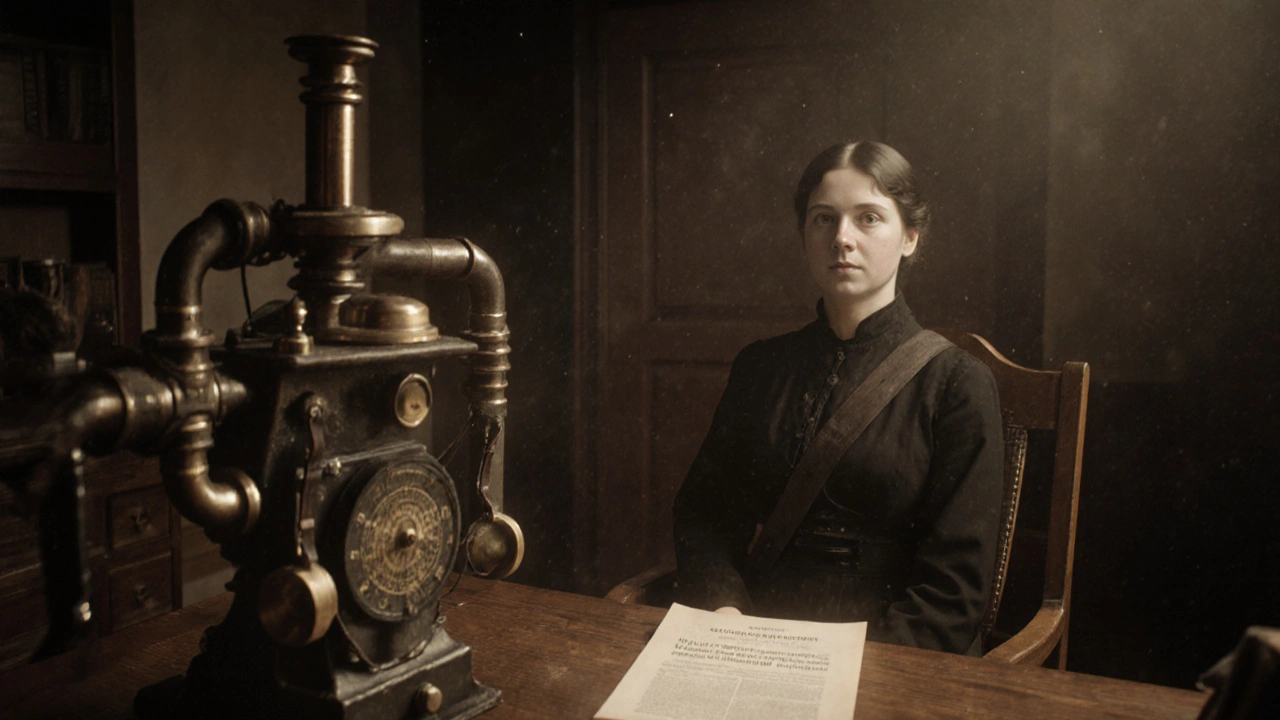
George Taylor’s 1869 steam-powered ‘Manipulator’ and Joseph Mortimer Granville’s 1883 electromechanical vibrator weren’t sold for pleasure. They were sold to relieve ‘nerve exhaustion’ and ‘muscle tension.’ Sears Roebuck’s 1897 catalog listed a vibrator as an ‘Electric Vibrating Massager’ for headaches - priced at $16.50, or about $550 today. The instructions never mentioned orgasm. The ads never showed women. The device was a tool, not a toy.
Women were told these machines were for health. And many believed it. The language of medicine made it respectable. The same device that could bring a woman to climax was legally sold as a ‘therapeutic appliance.’ No one said the real reason. No one had to. The euphemism did the work.
Hidden in Plain Sight: How Catalogs and Ads Masked Desire
Even when sex toys were sold openly, they were never called what they were. In the 1920s and 30s, mail-order catalogs offered ‘feminine hygiene devices’ and ‘marital aids.’ The term marital aid was especially clever - it made the product sound like a tool for strengthening marriage, not satisfying desire.
Oil was another early euphemism. Around 350 BC, Greeks and Romans used olive oil as a lubricant. It wasn’t labeled ‘sex oil.’ It was ‘cooking oil’ or ‘skin salve.’ Same substance. Different meaning. The same trick appeared in 19th-century pharmacies, where lubricants were sold as ‘medicinal ointments’ for ‘irritation.’
Even the word vibrator was borrowed from physics - a device that vibrates. No one thought about what it vibrated against. That silence was intentional. Language wasn’t just hiding the object - it was hiding the experience.
The Shift: When the Words Finally Changed
It wasn’t until the 1960s and 70s that the veil began to lift. The sexual revolution didn’t just change behavior - it changed vocabulary. People started saying ‘dildo,’ ‘vibrator,’ ‘cock ring’ out loud. No more whispers. No more catalogs disguised as medical supply lists.
Dr. Carol Queen, a leading sexologist, documented how the shift wasn’t just about openness - it was about ownership. Women began naming their own pleasure. They stopped waiting for doctors to give them permission. And with that, the euphemisms lost their power.
Today, you can buy a silicone dildo on Amazon with a description that says exactly what it’s for. No more ‘feminine implement.’ No more ‘muscle relaxer.’ Just the truth.
Why Did We Need Euphemisms at All?
It wasn’t just shame. It was control. For centuries, religion, medicine, and law tried to regulate women’s bodies and sexuality. If you couldn’t name something, you could pretend it didn’t exist. Euphemisms were a survival tactic - a way to access pleasure without punishment.
Humor helped, too. Calling a dildo a ‘diddle’ or a vibrator a ‘headache cure’ let people laugh while they learned. It made the taboo feel lighter. And laughter, in those days, was often the only safe way to talk about sex.
Even now, when we say ‘intimate device’ or ‘personal massager,’ we’re still echoing those old patterns. The language has changed, but the instinct hasn’t. We still want to say what we mean - but sometimes, we still need a buffer.
What’s Left of the Old Words?
Some of the old terms are gone. Olisbos is only found in academic papers. Tremoussoir, the French word for an 18th-century vibrator, is forgotten outside museums. But the patterns remain.
Today’s euphemisms - ‘sensual enhancer,’ ‘wellness tool,’ ‘relationship accessory’ - are just the latest version of the same game. We’ve traded Latin for marketing jargon. We’ve swapped medical reports for influencer captions. But the core idea hasn’t changed: we still use language to soften the truth.
And yet, we’re also the first generation that can say ‘dildo’ without blushing. That’s progress. Not because we’re less shy - but because we finally stopped letting fear write the dictionary.
What’s the oldest known sex toy?
The oldest known sex toys are stone and clay dildos found in ancient Greece, dating back to around 600 BC. These were called olisboi and were used by women while their husbands were away. Similar artifacts have been found in Roman and Chinese ruins, showing that sexual devices were widespread across early civilizations.
Why did people use euphemisms for sex toys?
Euphemisms were used to avoid shame, legal trouble, or social punishment. In many cultures, openly discussing sex - especially women’s pleasure - was dangerous or forbidden. Words like ‘marital aid’ or ‘vibrating massager’ let people buy and use these items without drawing attention or judgment.
Did ancient people think of sex toys as ‘toys’?
Yes. The Greeks were among the first to use the word ‘toy’ to describe sexual devices. For them, ‘toy’ didn’t mean child’s play - it meant something used for pleasure, recreation, or relief. It was a neutral, practical term, not a childish one.
When did vibrators become associated with sex instead of medicine?
While vibrators were sold as medical devices from the 1880s to the 1950s, the shift began in the 1960s and 70s during the sexual revolution. Feminist writers and sex educators started openly discussing female pleasure, and by the 1980s, the term ‘vibrator’ was commonly understood as a sexual tool - not a medical appliance.
Are modern euphemisms like ‘intimate device’ still hiding the truth?
Sometimes. Terms like ‘intimate device’ or ‘personal massager’ are often used for marketing or retail compliance - especially in places where direct language is restricted. But unlike in the past, most people today know what these words mean. The difference is that now, we can choose to say ‘dildo’ if we want to - and we’re not punished for it.