History of Sexology: How Science, Shame, and Society Shaped Modern Sexuality
When we talk about the history of sexology, the scientific study of human sexuality, including desire, identity, and behavior, also known as sexual science, we’re not just looking at old books and weird medical tools. We’re tracing how power decided what was normal, what was sick, and who got to speak about sex at all. For centuries, sex wasn’t studied—it was controlled. Doctors labeled women’s pleasure as hysteria, priests called masturbation a sin, and governments banned any discussion of same-sex desire. The sexual repression, the systemic suppression of sexual expression through law, religion, and medicine wasn’t accidental. It was the tool used to keep people in line.
But change didn’t come from politicians. It came from people who refused to stay quiet. In the late 1800s, doctors like Richard von Krafft-Ebing started documenting what people actually did in bed—not what they were supposed to do. His book, Psychopathia Sexualis, was full of cases no one else dared write down. Around the same time, women like Havelock Ellis and Magnus Hirschfeld began pushing back, arguing that homosexuality wasn’t a disease and that female pleasure wasn’t a myth. These early researchers didn’t have MRI machines or online surveys. They had notebooks, secret interviews, and raw courage. Their work laid the foundation for everything we now call sex research, systematic study of human sexual behavior, often challenging cultural norms. But even today, the legacy of shame lingers. Why? Because knowledge doesn’t erase power. It just gives people the tools to fight it.
The gender roles, socially constructed expectations about how men and women should behave, especially in sexual contexts we still see today? They were written by men in white coats and clergy robes who believed women’s only purpose was reproduction. That’s why the history of sexology is full of contradictions: a field that claimed to be scientific, yet built on moral panic. It’s why a steam-powered vibrator was sold as a medical device to treat "female hysteria"—because pleasure had to be disguised as therapy. It’s why lesbian relationships vanished from archives, why bisexual people were told they didn’t exist, and why men were told to never show vulnerability. But every article in this collection shows how people fought back—with research, with art, with protest, and with their own bodies.
What you’ll find below isn’t just a list of old facts. It’s a map of resistance. From Victorian-era myths about masturbation to Etruscan tomb paintings that celebrated sex as sacred, from Anne Koedt’s fight for the clitoris to the rise of AI porn and the legal battles over consent—this is the unfiltered story of how sex became something we can talk about, question, and claim as our own. No fluff. No sugarcoating. Just the truth, one piece at a time.
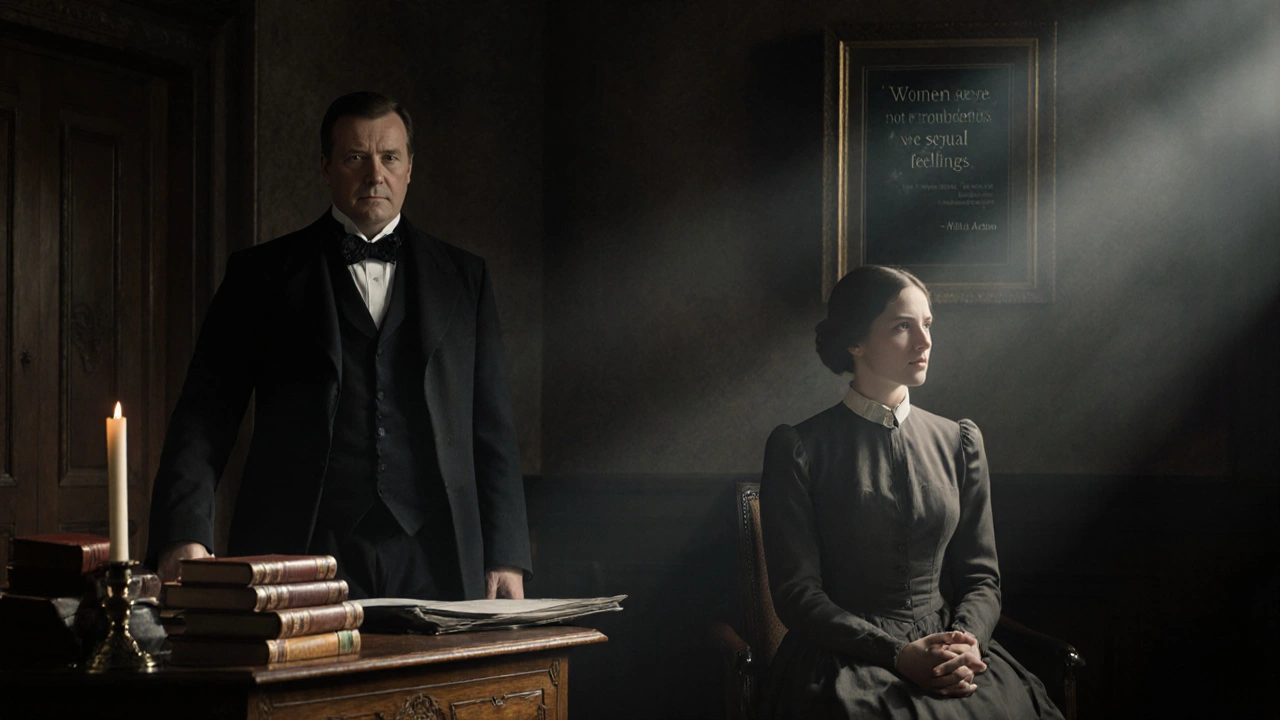
Havelock Ellis and William Acton: How Victorian Medicine Pathologized and Later Humanized Desire
Oct 31 2025 / History & CultureHavelock Ellis and William Acton shaped how Victorian medicine viewed desire-one pathologized it, the other studied it. Their clash laid the groundwork for modern sexology and continues to influence how we understand sexuality today.
VIEW MORE