Hittite Laws: Ancient Rules on Sex, Gender, and Justice
When we think of ancient legal systems, we often picture harsh punishments and rigid hierarchies. But the Hittite laws, a 16th–12th century BCE legal code from Anatolia that blended punishment with compensation and showed surprising flexibility in gender roles. Also known as the Code of the Hittites, this system was less about revenge and more about restoring balance—often through fines, not death. Unlike Babylon’s eye-for-an-eye approach, Hittite justice treated crimes like sexual assault or adultery as offenses against families and social order, not just divine law. That shift alone tells you something important: they were thinking about consequences, not just retribution.
These laws didn’t just cover theft or murder—they dug into the messy details of daily life. One rule says if a man rapes a free woman, he pays a fine to her family. But if he rapes a slave woman, he pays less—because the damage was to her owner, not her. Another law states that if a man has sex with a married woman and she doesn’t report it, he’s punished. But if she does report it, both she and the man face consequences. That’s not just law—it’s a snapshot of power, silence, and survival in a patriarchal world. And then there’s the rule about men who have sex with animals: they’re fined, but if they’re caught having sex with another man, they’re fined even more. The Hittites didn’t just record behavior—they ranked it, graded it, and tried to control it. These aren’t just legal texts. They’re social maps.
What’s missing in these laws is just as revealing. There’s no mention of lesbian relationships. No rules about female same-sex acts. That silence isn’t an accident. It’s erasure. Meanwhile, the laws detail how women could own property, initiate divorce, and even serve as witnesses. They weren’t equal, but they weren’t invisible either. The Hittites didn’t fit neatly into modern categories of gender or sexuality. Their system was practical, messy, and human. Below, you’ll find articles that connect these ancient rules to modern debates—how shame still shapes consent, how medical myths echo Victorian fears, and how ancient cultures used sex to navigate death, power, and identity. These aren’t just history lessons. They’re mirrors.
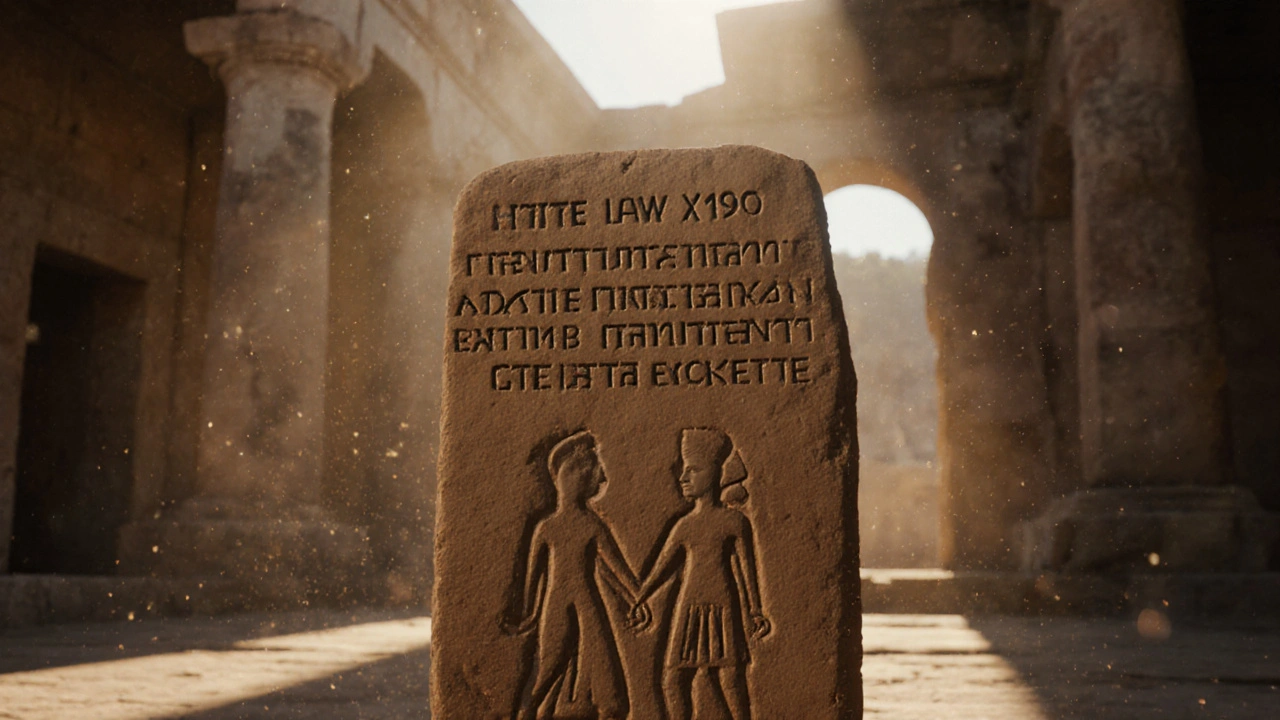
Hittite and Assyrian Laws on Sexual Consent: Early Codifications and Gaps
Nov 24 2025 / History & CultureThe Hittite and Assyrian legal codes from 1650-1100 BCE contain some of the earliest known laws addressing sexual consent, revealing stark differences in how ancient societies handled rape, consent, and gender roles - with the Hittites recognizing mutual willingness and the Assyrians enforcing brutal retribution.
VIEW MORE