Lupae: The Hidden History of Female Sexuality and Sexual Autonomy
When we talk about Lupae, the term used in ancient Rome for independent female sex workers who operated outside state control. Also known as meretrices, they weren't just prostitutes—they were economic actors, sometimes property owners, and often the only women in their society with direct control over their income and bodies. Unlike state-regulated prostitutes, lupae worked on their own terms, advertised in public spaces, and sometimes even ran brothels. Their existence challenges the myth that women in antiquity were passive or powerless in matters of sex and commerce.
The erotic art, explicit imagery found in Pompeii’s homes and temples, often depicting sexual acts with no shame of the time didn’t hide the role of women like lupae—it celebrated them. Frescoes show women initiating sex, negotiating prices, and even dominating male partners. This wasn’t just decoration; it reflected a culture where female sexual agency, though complex, was visible. Meanwhile, the gender socialization, how families and institutions taught men and women their expected roles in society of later centuries erased this legacy. Victorian doctors labeled female desire as illness, and 19th-century laws turned sex work into a moral crime. The lupae didn’t disappear—they were rewritten out of history.
What’s left today are fragments: legal records that call them ‘disreputable,’ tomb inscriptions that name them with pride, and art that shows them as central figures in intimate scenes. These aren’t just relics—they’re proof that women have always claimed space in sexuality, even when society tried to silence them. The same debates we have now—about consent, autonomy, stigma, and economic survival—were already happening in the streets of Pompeii. Below, you’ll find articles that trace how female desire was pathologized, how erotic expression was censored, and how modern movements are finally reclaiming what was lost. From Victorian myths about masturbation to the erased lesbian archives, these stories connect directly to the legacy of the lupae: women who refused to be invisible.
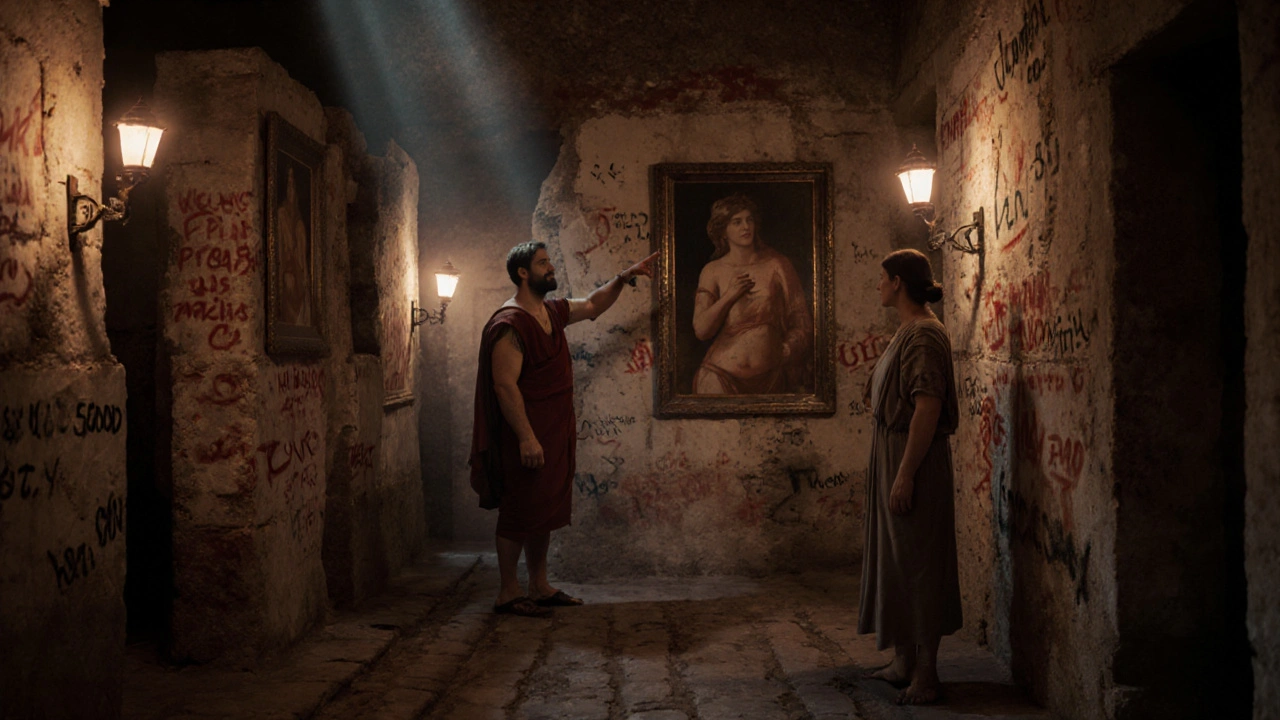
Roman Sex Work Categories: Meretrices, Lupae, and Tabernae Differentiation
Oct 28 2025 / History & CultureRoman sex work was legal, taxed, and strictly categorized. Meretrices were registered workers with limited rights, lupae were unregistered street workers with no protection, and tabernae were the brothels where it all happened. This system reflected Rome’s complex views on gender, class, and power.
VIEW MORE