Male-Female Duality: How Gender Roles Shaped Sex, Power, and History
When we talk about male-female duality, the cultural and historical separation of men and women into distinct, opposing roles. Also known as binary gender norms, it’s the unspoken rulebook that told men to be providers and women to be nurturers—and made sure no one forgot it. This isn’t just about who holds the wallet or who does the laundry. It’s about who got to speak in court, who could own property, who was called hysterical for wanting pleasure, and who was told their body was a threat to social order.
The Victorian separate spheres ideology, the 19th-century belief that men belonged in public life and women in the private home turned this duality into law. Men worked, voted, built empires. Women stayed home, raised children, and were medicated for "female hysteria" when they wanted more. Meanwhile, gender socialization, how families and society teach children what it means to be a boy or girl from day one locked these roles in place—not with chains, but with toys, praise, and silence. A boy who cried was weak. A girl who masturbated was corrupted. Both were trained to believe their desires were wrong, or worse, dangerous.
But here’s the thing: this duality was never natural. It was built. Medieval marriages were economic deals, not love stories. Etruscan tomb art showed men and women enjoying sex together as sacred ritual. Ancient Egyptians used lipstick as a signal of power, not femininity. And in the 1960s, feminism and gay liberation didn’t just ask for equality—they shattered the whole framework. Anne Koedt proved the clitoris, not the vagina, was the center of female pleasure. Havelock Ellis studied desire without shame. The Victorian doctors who called masturbation a disease were wrong—and we’re still cleaning up their mess.
Today, the male-female duality is cracking. Men are speaking up about loneliness and mental health. Women are reclaiming their orgasms. Bisexual and nonbinary people are refusing to fit into boxes that were never meant for them. But the old script still echoes—in how we talk about sex work, who gets labeled "promiscuous," and why consent still feels like a negotiation instead of a right.
Below, you’ll find real stories from history that show how this duality was enforced, challenged, and sometimes flipped on its head. From steam-powered vibrators sold to cure "hysteria," to banned poems about dildos in Elizabethan England, to the quiet erasure of lesbian history in archives—this isn’t theory. It’s lived experience. And understanding it isn’t about blaming the past. It’s about seeing the patterns so you can break them.
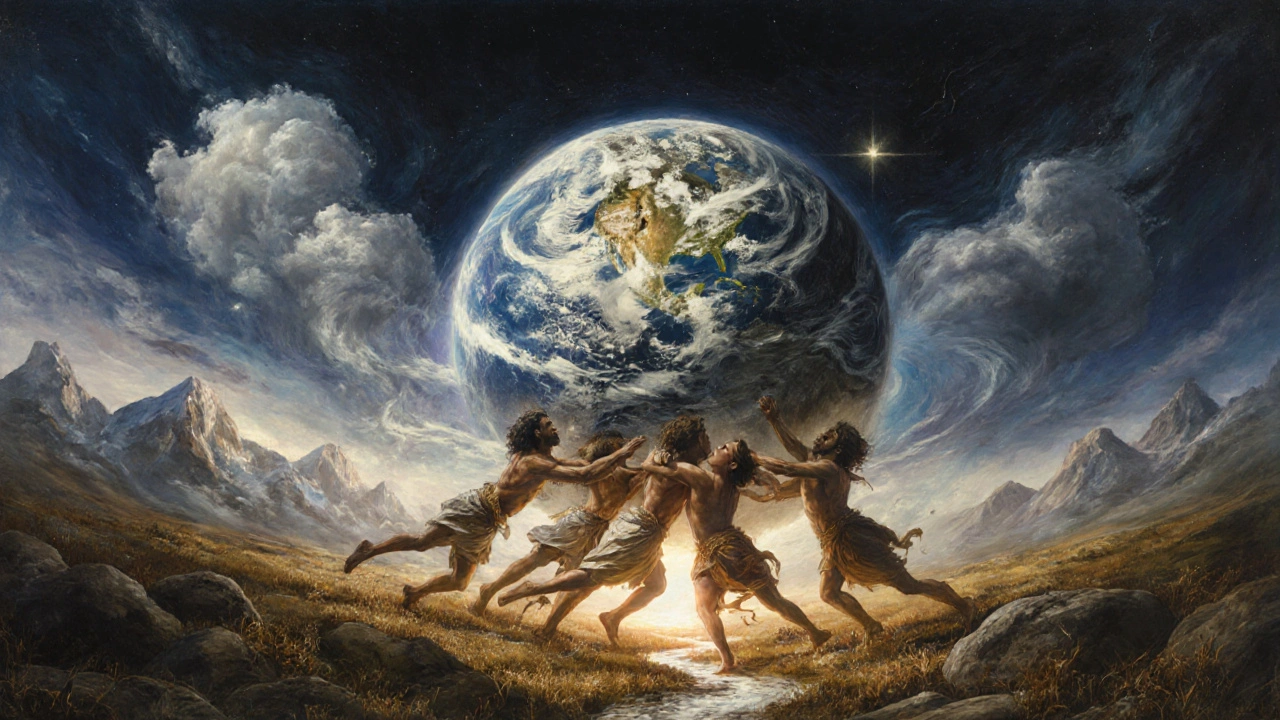
Creation Myths and Gender Dualities: How Male and Female Forces Shape Human Origin Stories
Nov 9 2025 / History & CultureCreation myths across cultures use male-female dualities to explain human origins, but these symbols vary widely-from sun goddesses to two-faced beings. These stories reflect societal values, not universal truths about gender.
VIEW MORE