Medieval Family Alliances: How Marriages Shaped Power, Politics, and Sex in the Middle Ages
When you think of medieval family alliances, strategic marriages between noble houses used to consolidate land, wealth, and military power. Also known as dynastic unions, these were never about romance—they were cold, calculated moves in a game where the stakes were kingdoms, not hearts. A daughter wasn’t given away; she was traded. A son didn’t choose a wife—he inherited a treaty. These alliances were the original political mergers, binding families across regions through blood, not ballots.
Behind every arranged marriage was a web of power: a duke marrying a countess to seal a border truce, a king marrying his sister to a foreign prince to avoid war, or a widow marrying her late husband’s rival to keep his lands out of enemy hands. These weren’t just social customs—they were survival tactics. And while the Church preached chastity and modesty, the nobility used sex as currency. A bride’s virginity was a legal asset. A dowry was a contract. A pregnancy? A political win. The noble marriages, strategic unions designed to extend lineage and control territory were the engine of feudal politics, and women were the gears.
These alliances didn’t just shape borders—they shaped bodies. Women were expected to produce heirs, but their bodies were also tools for control. If a wife failed to bear sons, she was discarded or confined. If she bore too many, she was exhausted. If she resisted, she was labeled a heretic or a witch. Meanwhile, men had multiple lovers, mistresses, and bastards—all while their wives kept the family name alive. This is where medieval gender roles, rigid expectations of male authority and female submission enforced through marriage and law became brutal reality. The separate spheres of Victorian times? They had roots here, buried under chainmail and parchment.
And let’s not forget the quiet rebellion. Some women turned these alliances into leverage. Some used their position to fund churches, influence court politics, or even lead armies when their husbands died. Others used coded letters, hidden lovers, or secret pregnancies to carve out tiny freedoms. The archives are full of erased stories—women who negotiated terms, bribed officials, or faked pregnancies to survive. These aren’t just footnotes. They’re the hidden history of how power really worked.
What you’ll find in the posts below isn’t a dry history lesson. It’s the raw, messy truth of how sex, power, and survival tangled together in the Middle Ages. From how dowries controlled female sexuality to how noblewomen used religion as a shield, these articles pull back the curtain on the real rules of medieval life. You’ll see how today’s ideas about marriage, gender, and control didn’t start with modern law—they started in castles, with ink, and with women who had no voice but found ways to be heard anyway.
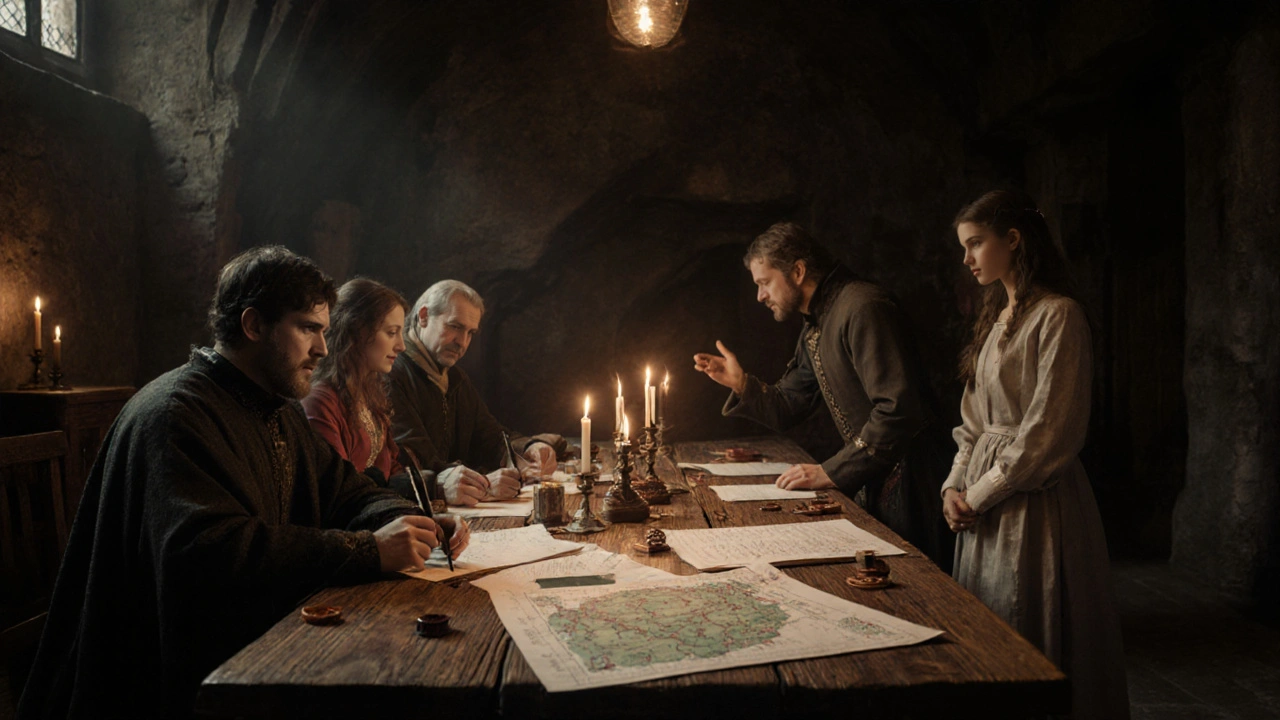
Marriage as Economic Alliance: How Medieval Families Used Unions to Build Wealth and Power
Oct 25 2025 / History & CultureMedieval marriages were economic contracts designed to transfer land, wealth, and power between families. Dowries and dowers ensured financial security, while alliances shaped politics. This system protected both men and women-and its legacy still shapes modern marriage laws.
VIEW MORE