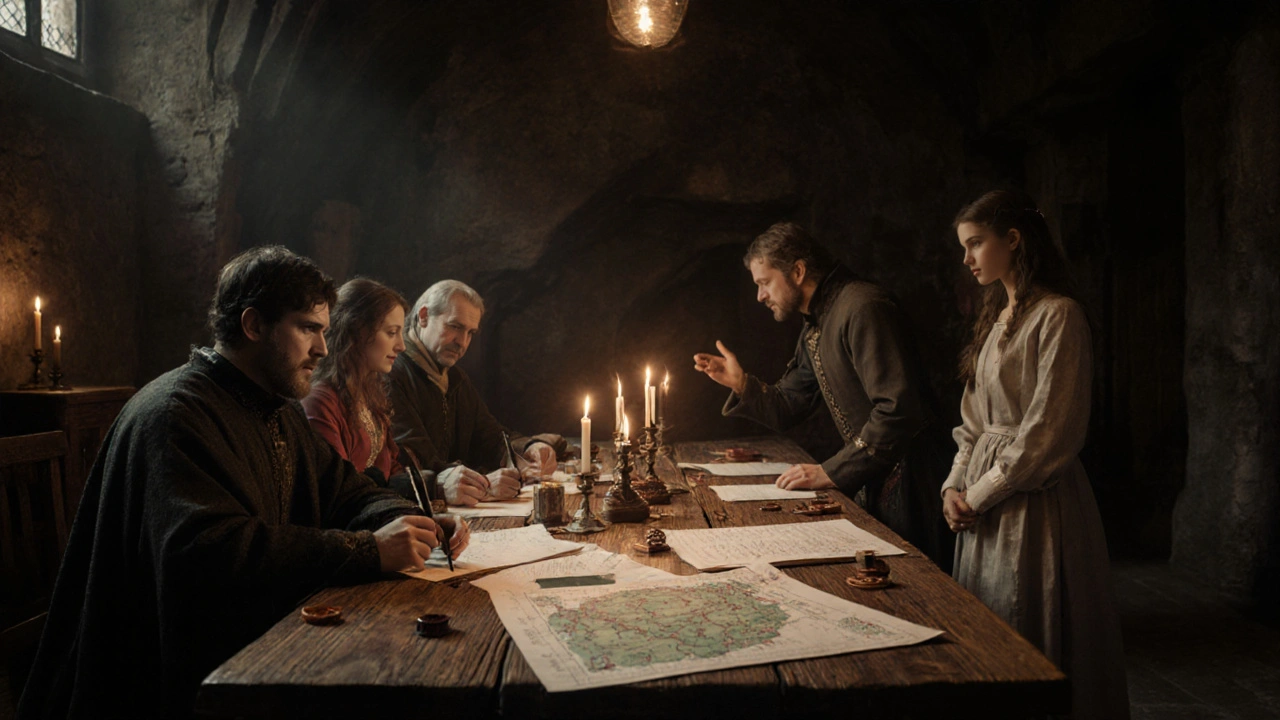
When you think of marriage, you probably imagine love, commitment, or maybe a big party with cake and dancing. But in medieval Europe, marriage wasn’t about romance-it was a business deal. Families didn’t arrange unions because their children were in love. They did it to secure land, protect wealth, and build political power. A daughter wasn’t given away-she was transferred, like a piece of property, with a contract that spelled out exactly what each side would get.
Marriage Was a Contract, Not a Ceremony
In the Middle Ages, marriage was legally binding the moment two people gave their consent. That’s right-no priest, no church, no fancy ring needed. The 12th-century theologians Peter Lombard and Gratian made this official: if both people said yes, the marriage was real. But consent didn’t mean love. It meant paperwork. Families spent months negotiating terms. The bride’s family paid a dowry-cash, land, livestock, or tools. The groom’s family promised a dower-a share of his estate that would support the bride if he died. These weren’t gifts. They were guarantees.
One 12th-century contract from Wiltshire shows how serious this was. Earl Humphrey gave 40 pounds’ worth of land to Sir Ralph’s son, Roger, along with his daughter Alice. The contract didn’t say, “We’re joining two families in love.” It said: if Alice dies before the wedding, her younger sister takes her place-with the land. Alice wasn’t a person in that deal. She was a clause.
Who Got What? The Dowry and the Dower
Dowries came from the bride’s side. They were her share of the family inheritance-often things her own mother had brought into her marriage. Land was the most valuable, but it could also be silver, wool, horses, or even a working mill. The groom’s family didn’t just take it. They had to promise something back: the dower. This wasn’t optional. Clerics called it essential. It was income from land or property that the bride would control after her husband’s death. For many noblewomen, this meant they became landowners in their own right.
Historical records show widows managing estates worth hundreds of pounds annually. One woman in 13th-century England inherited a manor, rented out fields, collected taxes, and even hired laborers-all because her marriage contract gave her that right. That’s not powerlessness. That’s economic agency. The system wasn’t perfect, but it protected women in a world where they couldn’t own property outright on their own.
Nobles vs. Peasants: Same System, Different Stakes
The same rules applied to everyone-but the scale changed everything. For nobles, marriage was about kingdoms. When Matilda, daughter of William Marshal, married Hugh Bigot around 1206, she was 13. Her marriage tied two powerful families together. Their three sons and one daughter all married into other noble houses. One union created a chain of alliances that stretched across England.
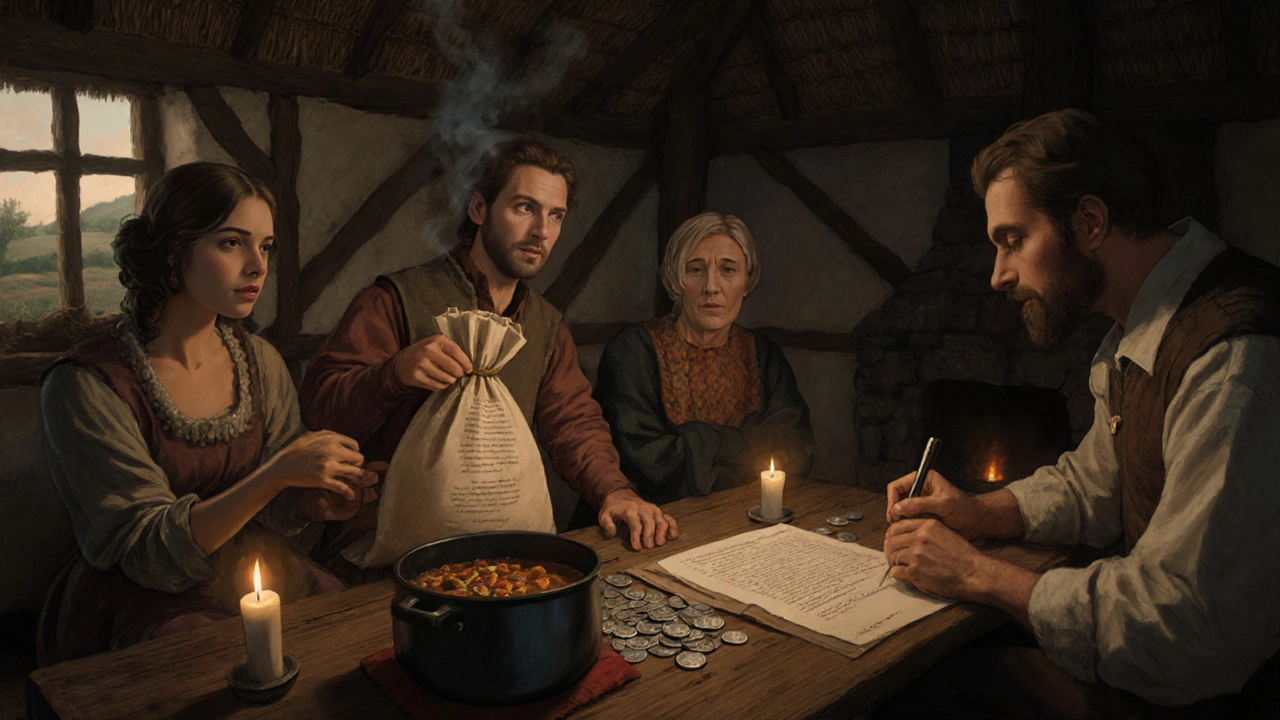
For peasants, marriage was about survival. No castles. No titles. Just a house, a patch of fertile land, a cow, or a shared mill. A peasant couple needed to pool resources just to eat next winter. Their marriage contract might say: “We’ll combine our fields and split the harvest.” But there was a catch. Peasants had to pay a marriage fine to their lord. In 13th-century England, villeins paid 2 pence. Free tenants paid 6 pence. That might sound small, but it was weeks’ worth of wages. Many couldn’t afford it. Some delayed marriage until their 30s just to save up.
And then there was the feast. Every marriage, no matter how poor, required a big meal. No skimping. Records show fines for families who served too little food. It wasn’t about celebration-it was about proving you were stable enough to support a new household. Failure meant social shame and legal trouble.
Age, Consent, and the Myth of Forced Marriages
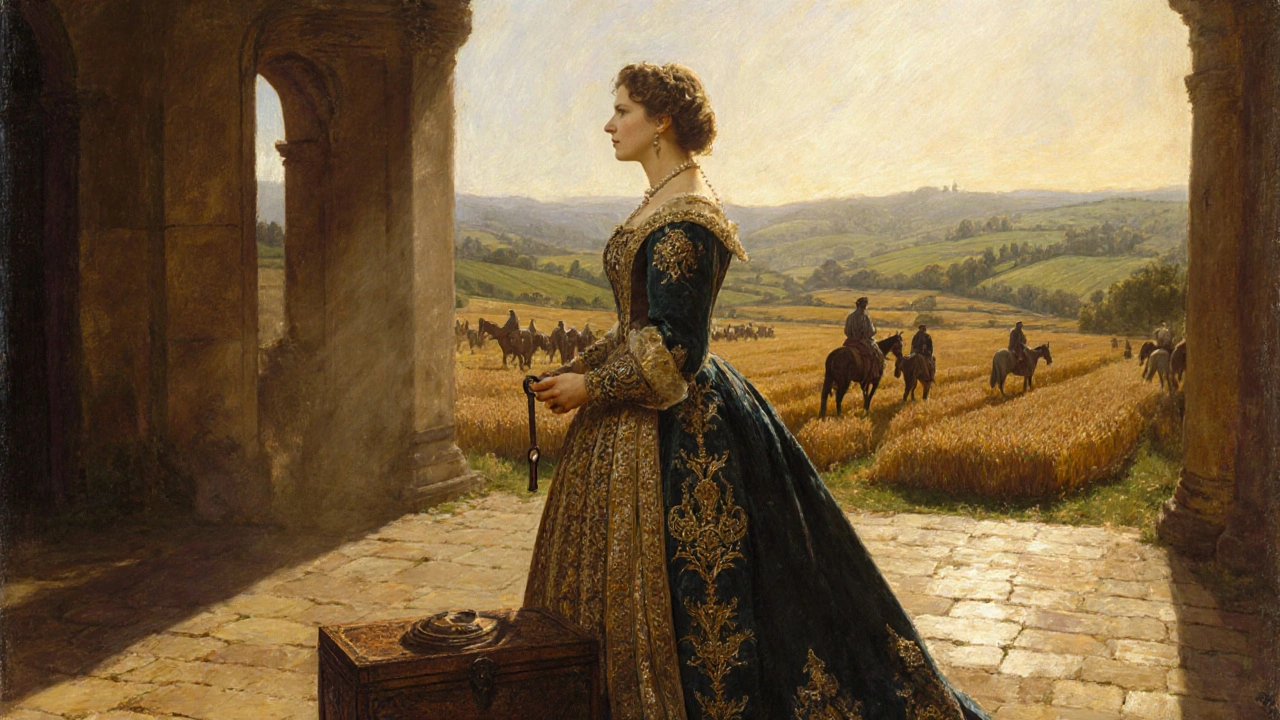
People assume medieval girls were married off as children. True, the legal age for girls was 12. Boys, 14. But that didn’t mean they married at 12. Betrothals could happen earlier-sometimes at age 7-but actual marriage usually came later. The real issue wasn’t age. It was control. A girl could refuse a match after she turned 12. A boy could refuse after 14. If they changed their mind, they could walk away-unless they’d already consummated the union.
There were exceptions. Edmund Tudor married Margaret Beaufort when she was 12 and he was 24. It caused a scandal even back then. But most marriages were negotiated with input from the future spouses. Consent mattered-not because of love, but because a forced marriage could be broken. And if the bride’s family didn’t deliver the dowry? The groom could sue. If the groom didn’t provide the dower? The bride’s family could take him to court. This wasn’t a one-sided system. It was a legal balancing act.
The Dark Side: Brides as Assets, Not People
Let’s be clear: women were treated as economic units. The contract that replaced Alice with her sister wasn’t unusual. It was standard. A daughter’s value was tied to her fertility, her lineage, and her dowry. Dr. Jennifer Heise calls this “bodies as currency.” And she’s right. A noblewoman’s worth was measured in acres, not affection.
But here’s what many modern readers miss: men were assets too. A son’s marriage was just as calculated. His job was to inherit land, manage estates, and produce heirs. If he refused a match, his family lost a strategic advantage. He wasn’t free to choose love-he was bound by duty. Both sides were trapped in the same system. The difference? Women had the dower. Men didn’t have a safety net if they were widowed.
How the Black Death Changed Everything
The Black Death wiped out nearly half of Europe’s population between 1347 and 1351. That changed marriage forever. With so many workers dead, the survivors became valuable. Peasants could demand better terms. Landlords couldn’t afford to lose tenants. Marriage fines dropped. Women gained leverage. Some refused arranged matches. Others negotiated higher dowries. For the first time, love started creeping into the equation-not because people suddenly became romantic, but because they had more power to say no.
By the late 1400s, some families began to mention “mutual affection” in contracts. Not as the reason for the marriage, but as a bonus. A 2022 study of 400 medieval marriage documents found that 68% included clauses allowing either side to dissolve the union under certain conditions. That’s not control. That’s flexibility. People weren’t just following tradition-they were adapting it.
Why This Still Matters Today
You might think this is ancient history. But the roots of modern family law come from these medieval deals. Dower rights evolved into today’s spousal inheritance laws. The idea that marriage involves shared property? That came from the dower. Even the legal requirement for both parties to consent? That started in the 1100s.
And the idea that marriage is both emotional and economic? That hasn’t gone away. Today, couples still combine finances, merge assets, and plan for inheritance. The tools have changed-prenups instead of dowries, trusts instead of dowers-but the underlying structure is the same. Marriage still protects wealth. It still builds alliances. It still carries weight beyond love.
The medieval world didn’t get marriage wrong. It just saw it for what it was: a system designed to keep families alive, strong, and in control. Love? That came later. And sometimes, it never came at all.