Medieval Theology and Sex: How Religion Shaped Desire, Shame, and Power
When we think of medieval theology, the system of religious thought that dominated Europe from the 5th to the 15th century, often centered on the Church’s authority over morality, sin, and the body. Also known as Christian scholasticism, it didn’t just ask what God wanted—it decided what bodies were allowed to do, and who got to decide. This wasn’t abstract philosophy. It dictated whether a woman could touch her own body, whether a marriage was legal, and if pleasure was a gift from God or a trap from the devil.
Sexual sin, a central focus of medieval moral teaching, was treated as a spiritual crime worse than theft or violence. Also known as carnal sin, it was linked to pride, greed, and rebellion against divine order. Masturbation? A mortal sin. Premarital sex? A crime against God’s plan. Even the act of enjoying sex within marriage—unless it was strictly for procreation—was viewed with suspicion. The Church didn’t just condemn desire; it turned the body into a battlefield where every urge was a potential sin. Meanwhile, medieval marriage, wasn’t about love—it was a legal and economic contract between families, approved by the Church to transfer property and secure alliances. Also known as dowry marriage, it gave men control over women’s bodies and labor, while women had limited rights even within the union. The idea that sex should be tied to reproduction came straight from these rules, and the fear of female pleasure? That came from sermons warning that women’s bodies were naturally more lustful—and therefore more dangerous.
And yet, history isn’t just what the Church wrote down. Hidden in court records, letters, and even tomb art, there are signs that people didn’t always obey. Women found ways to control their bodies. Couples made secret agreements. Some even used erotic imagery in religious spaces—not to mock faith, but to express something deeper about life, death, and desire. Gender in medieval religion, wasn’t fixed—it was constructed, policed, and sometimes quietly resisted. Also known as ecclesiastical gender norms, it shaped everything from who could read scripture to how widows could inherit land. The rules were strict, but people lived around them.
What you’ll find here isn’t a dry history lesson. It’s a collection of real stories—how Victorian doctors inherited medieval shame, how marriage was always about power, how silence around female pleasure wasn’t accidental, and how the Church’s control over sex still echoes in today’s laws, language, and attitudes. These aren’t ancient myths. They’re the roots of modern beliefs about bodies, consent, and who gets to decide what’s natural.
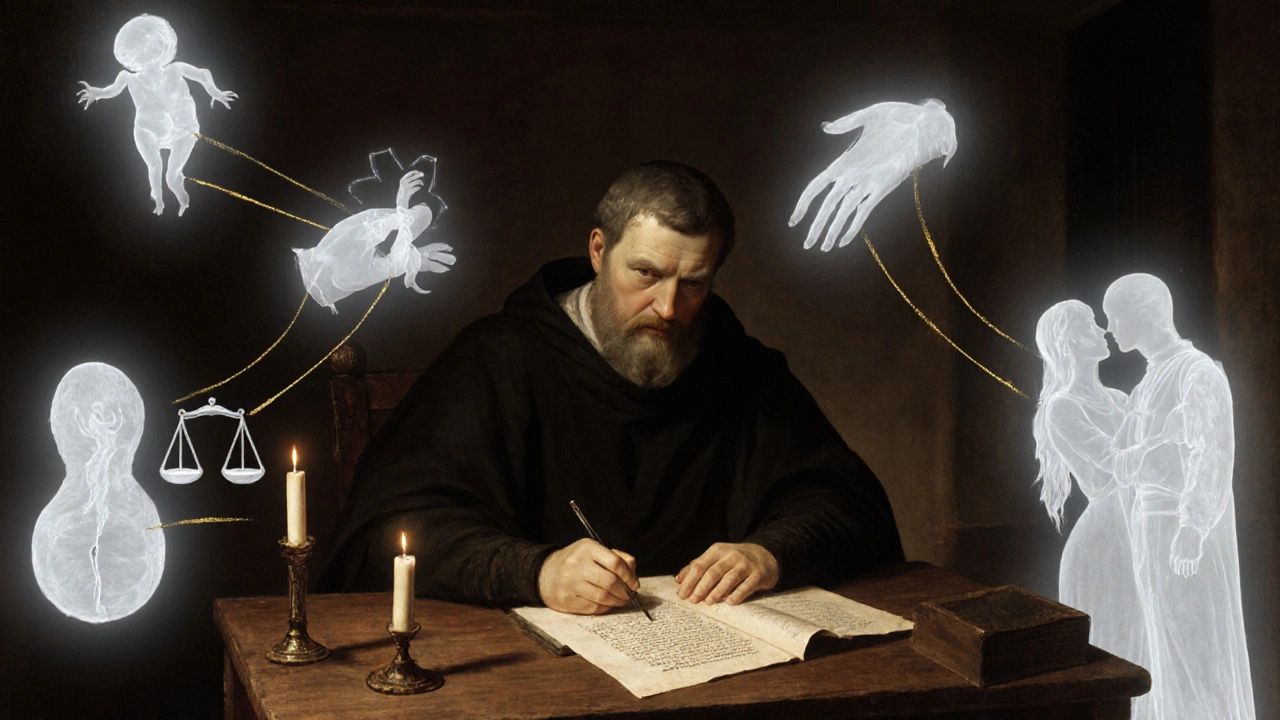
Aquinas’s Procreative Logic: How Medieval Theology Ranked Sexual Sins by Procreation
Nov 1 2025 / History & CultureThomas Aquinas ranked sexual sins by how much they blocked procreation-not by harm or consent. His medieval logic shaped Catholic teaching for 700 years and still influences Church doctrine today.
VIEW MORE