Natural Law and Sex: How Ancient Ideas Shape Modern Sexuality
When we talk about natural law, a system of ethics based on the belief that certain moral truths are inherent in human nature and discoverable through reason. Also known as moral law, it’s the quiet backbone behind centuries of rules about who can love whom, what bodies are acceptable, and why pleasure was once called sinful. This isn’t just old philosophy—it’s why women were told masturbation was dangerous, why same-sex relationships were criminalized, and why consent wasn’t even a legal concept until recently.
Think about it: if something is "unnatural," who gets to decide? Victorian doctors called female orgasm a medical anomaly. Medieval courts punished sex outside marriage because it broke God’s design. Even today, debates over abortion, gender identity, and sex work often circle back to what’s "natural." But history shows us that what’s called "natural" changes with power. Etruscans painted explicit sex scenes in tombs as sacred rites. Ancient Egyptians used lipstick as a signal of status and sexual power. Meanwhile, Victorian England called those same acts immoral. sexual ethics, the moral framework guiding how people should behave in sexual relationships didn’t come from nature—it came from priests, judges, and doctors trying to control bodies.
moral philosophy, the study of right and wrong in human conduct, often rooted in religious or cultural traditions didn’t just influence laws—it shaped how we feel about our own desires. The shame around female pleasure? That’s not biology. That’s natural law twisted into a tool of control. The erasure of bisexuality? The silence around lesbian history? These aren’t accidents. They’re the result of systems that defined "natural" to exclude anyone who didn’t fit the mold. Even today, when courts debate transgender rights or sex workers’ safety, they’re still using the same old logic: if it doesn’t match a 2,000-year-old idea of nature, it must be wrong.
What you’ll find below isn’t just history. It’s the story of how people fought back. From Anne Koedt proving the clitoris was the center of female pleasure, to Etruscan tombs showing sex as part of the afterlife, to Nashe’s banned poem about dildos in Elizabethan England—these posts expose the lies behind "natural." They show how power, not nature, decided what was right. And they remind us: when we reclaim sex from dogma, we don’t break nature—we finally start to understand it.
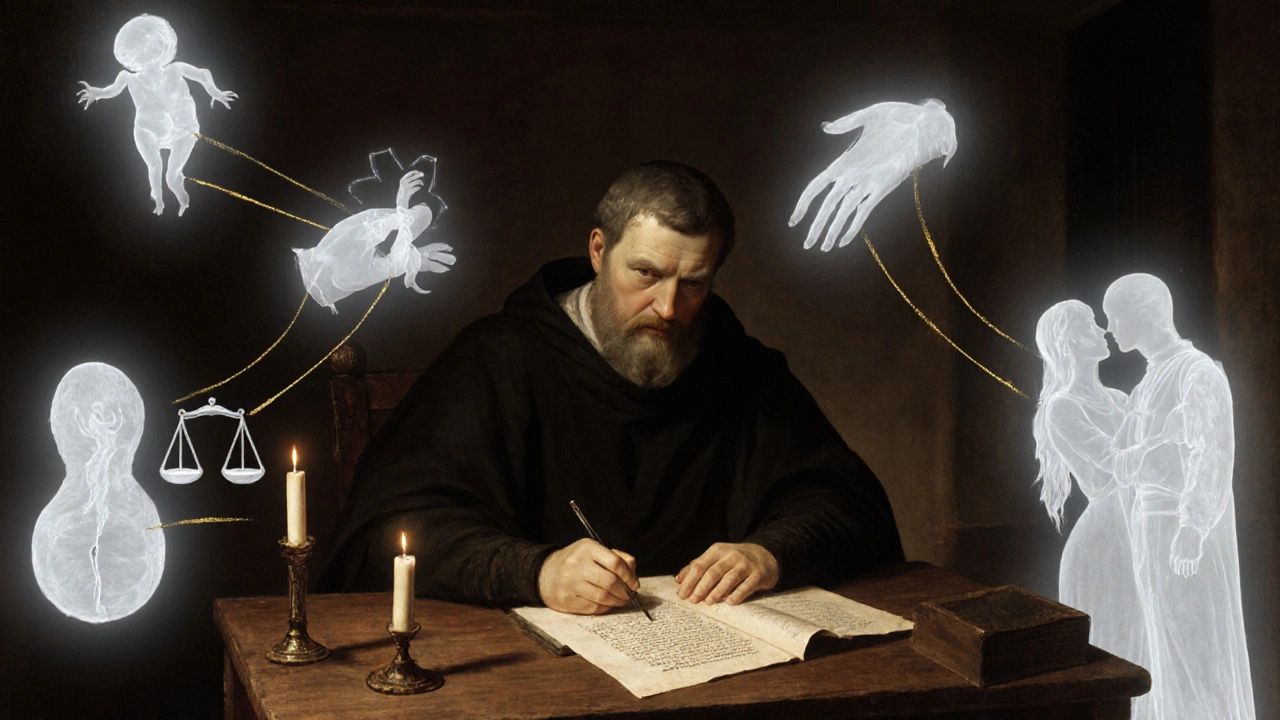
Aquinas’s Procreative Logic: How Medieval Theology Ranked Sexual Sins by Procreation
Nov 1 2025 / History & CultureThomas Aquinas ranked sexual sins by how much they blocked procreation-not by harm or consent. His medieval logic shaped Catholic teaching for 700 years and still influences Church doctrine today.
VIEW MORE