Obscenity Law: How Sex, Power, and Censorship Shaped Modern Rules
When we talk about obscenity law, legal standards that define what sexual content is too offensive to be protected under free speech. Also known as pornography regulation, it’s not about morality—it’s about control. Who gets to say what’s too much? And why do the same acts get labeled obscene in one state and legal in another? This isn’t just about nudity or sex acts. It’s about power—who has it, who loses it, and how the law has been used for over a century to silence voices, punish minorities, and enforce gender norms under the guise of public decency.
Censorship, the suppression of speech or media deemed offensive or dangerous by authorities. Also known as moral regulation, it’s been a tool to target everything from feminist writing to LGBTQ+ visibility. In the 1950s, postal workers seized books about homosexuality. In the 1970s, police raided bookstores selling feminist erotica. Today, algorithms block sex education videos while allowing violent content. The rules change, but the pattern doesn’t: those in power decide what’s dangerous, and they almost always pick things that challenge their control. Meanwhile, sexual expression, the ways people communicate desire, identity, and pleasure through art, language, or behavior. Also known as erotic communication, it’s been criminalized for being too honest. From Thomas Nashe’s banned 1592 dildo poem to modern TikTok clips of women discussing pleasure, the law has always feared open talk about sex—not because it’s harmful, but because it’s liberating. And then there’s the First Amendment, the U.S. constitutional right protecting freedom of speech, including controversial or explicit expression. Also known as free speech protection, it’s the only thing standing between artists, educators, and sex workers and jail. But courts have spent decades twisting it. The 1973 Miller test still decides what’s obscene based on "local community standards," meaning a conservative town can ban what a big city allows. That’s not law—it’s chaos dressed up as justice.
These aren’t abstract legal concepts. They’re the reason sex workers get arrested for posting ads. They’re why educators can’t teach consent in some states. They’re why a video of two consensual adults can be flagged as illegal while a violent clip stays up. The history of obscenity law isn’t about protecting children or morals—it’s about controlling who gets to speak, who gets to be seen, and who gets punished for being real.
Below, you’ll find articles that dig into the real stories behind these laws—the banned poems, the police raids, the medical myths, the forgotten activists. This isn’t just history. It’s the reason the rules still hurt people today.
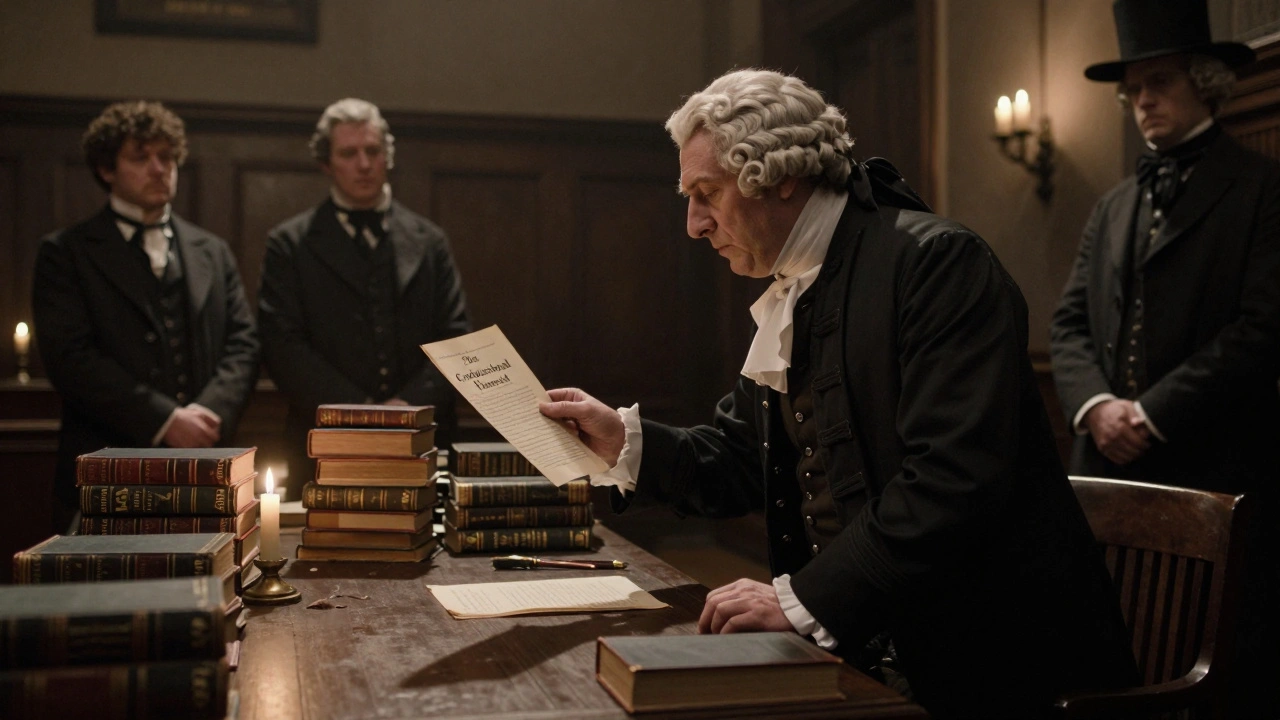
The Hicklin Test: How Courts Once Defined Obscenity
Dec 5 2025 / History & CultureThe Hicklin Test was a 19th-century legal standard that banned any material deemed potentially corrupting to vulnerable readers. It led to the censorship of literature, medical texts, and art for over 60 years in the U.S. until it was overturned in 1957.
VIEW MORE