Philaenis sexual texts: Ancient erotic writings and the forgotten voices of female sexuality
When we think of ancient erotic writing, names like Ovid or Catullus come to mind—but what about Philaenis, a legendary female writer from ancient Greece credited with some of the earliest known erotic manuals. Also known as Philaenis of Samos, she was said to have authored texts on sexual techniques, positions, and female pleasure—works so bold they were cited by Roman satirists and later banned as obscene. Her name survives not in full manuscripts, but in fragments, insults, and references from men who feared what she represented: a woman writing openly about sex on her own terms. For centuries, scholars dismissed her as a fictional figure invented to shame real women. But recent research suggests Philaenis may have been real—a woman who turned sexual knowledge into power, and whose voice was erased because it threatened the male-controlled narrative of ancient sexuality.
Her writings, if they existed, likely covered topics that still echo today: clitoral stimulation, female orgasm, consent in relationships, and the use of sex toys. These aren’t modern ideas—they’re ancient ones, buried under layers of censorship and moral panic. The Etruscan funerary scenes, where sex was part of sacred death rituals, and the Victorian separate spheres ideology, which forced women into silence both show how culture shapes what gets recorded—and what gets destroyed. Philaenis’ texts, if they survived, would have been part of a hidden tradition of female-authored sexuality, alongside the lesbian history, systematically erased from archives and the female-female sex in the archives, hidden through coded language and institutional neglect. She wasn’t an outlier—she was part of a pattern of silenced voices.
What’s striking is how modern debates about female pleasure, masturbation, and sexual agency mirror the same fights from 2,000 years ago. The female orgasm, long dismissed as biologically unnecessary, was clearly understood by those who wrote for women’s pleasure. The medical views on masturbation, once labeled a disease echo the same moral panic that targeted Philaenis’ work. Even the Nashe’s ‘Choice of Valentines’, a banned Elizabethan poem featuring a dildo scene—written centuries later—still carries the same rebellious energy. These aren’t isolated stories. They’re threads in the same fabric: women claiming their bodies, their language, and their pleasure—and being punished for it.
Below you’ll find articles that uncover these hidden histories—the erased texts, the silenced women, the forgotten practices. From how ancient cosmetics signaled sexual power to how modern science finally confirms what ancient women already knew about their own bodies. This isn’t just about the past. It’s about who gets to write the story of sex—and who gets left out.
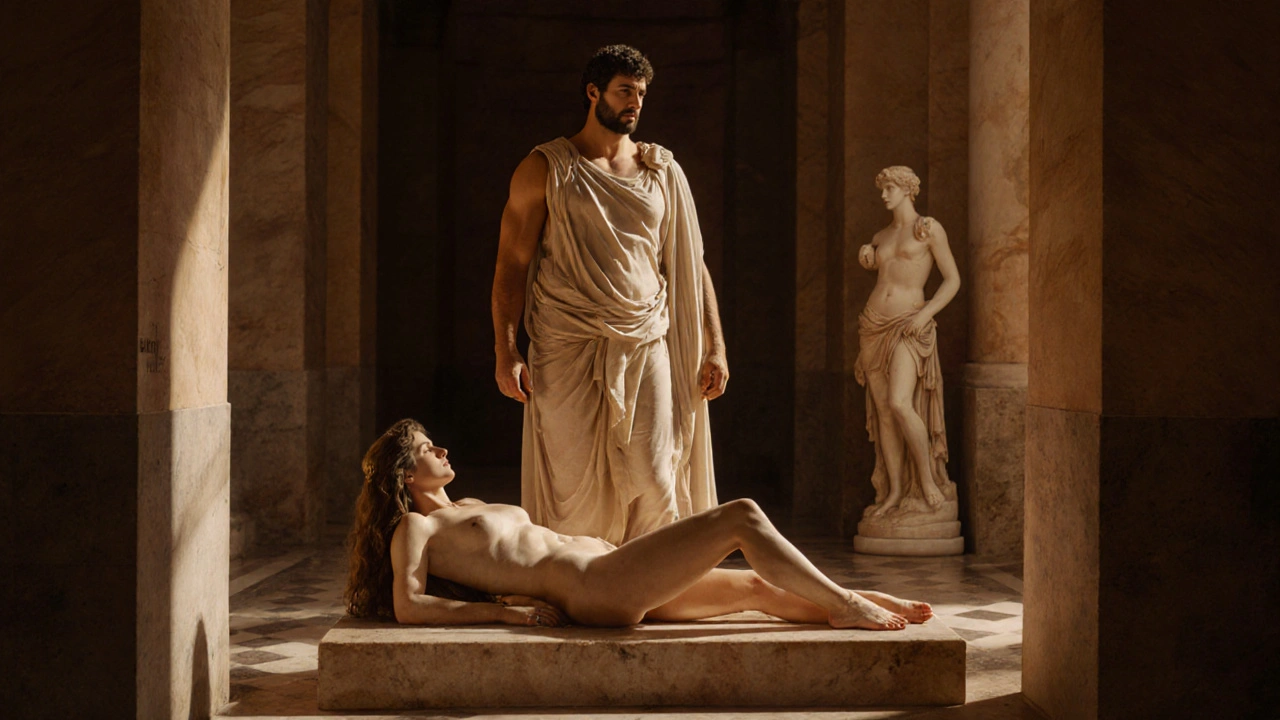
Sexual Positions and Technique in Roman Texts: Sources and Meanings
Nov 12 2025 / History & CultureAncient Roman sexual practices were governed by power, not pleasure. Texts and art reveal strict roles: men dominated, women submitted, and slaves had no rights. Positions, oral sex, and even female agency were shaped by hierarchy-not morality.
VIEW MORE