Procreative Purpose: The History and Myths Behind Sex for Reproduction
When we talk about the procreative purpose, the biological and cultural idea that sex exists primarily to produce offspring. Also known as reproductive function, it’s been used for centuries to control who has sex, when, and with whom. But here’s the thing: most sex people have today isn’t for having babies. Ever wonder why? It’s not because we’ve forgotten biology—it’s because human sexuality has always been messier than any rulebook.
The idea that sex must serve reproduction isn’t natural—it’s manufactured. Ancient Egyptians saw sex as sacred, tied to gods and cosmic balance, not just pregnancy. Medieval marriages were economic deals where fertility mattered, but so did land, alliances, and status. Even in Victorian times, when doctors claimed sex was only for procreation, women were secretly using vibrators to relieve "hysteria"—a diagnosis that had nothing to do with babies and everything to do with controlling female pleasure. Meanwhile, in Etruscan tombs, couples were painted having sex not to honor fertility gods, but to guide souls into the afterlife. The sexual reproduction, the biological process where genetic material from two parents combines to create offspring. It’s the foundation of complex life on Earth. is a biological fact, but the procreative purpose, the cultural belief that sex should be limited to reproduction. Also known as reproductive morality, it’s a social construct. is a story we’ve told to keep power in certain hands.
Modern science shows the procreative purpose doesn’t explain why women orgasm, why same-sex relationships exist, or why people have sex when they’re infertile, post-menopausal, or using contraception. Evolutionary biologists call the cost of sexual reproduction the "two-fold cost"—it’s inefficient compared to cloning. So why did it stick around? Because it helps wipe out bad mutations and fight off parasites. That’s biology. But the moral panic around non-reproductive sex? That’s culture. And it’s still shaping laws, religious teachings, and even how we talk about IVF, abortion, and LGBTQ+ rights today.
What you’ll find below isn’t a lecture on why sex exists. It’s a collection of real stories—about women who used steam-powered vibrators to feel pleasure while doctors called it "treatment," about poets banned for writing about dildos, about lesbian histories erased from archives, about how marriage was never just about love. These aren’t footnotes. They’re the real history of sex. And they prove one thing: the procreative purpose was never the whole story. It was just the loudest one.
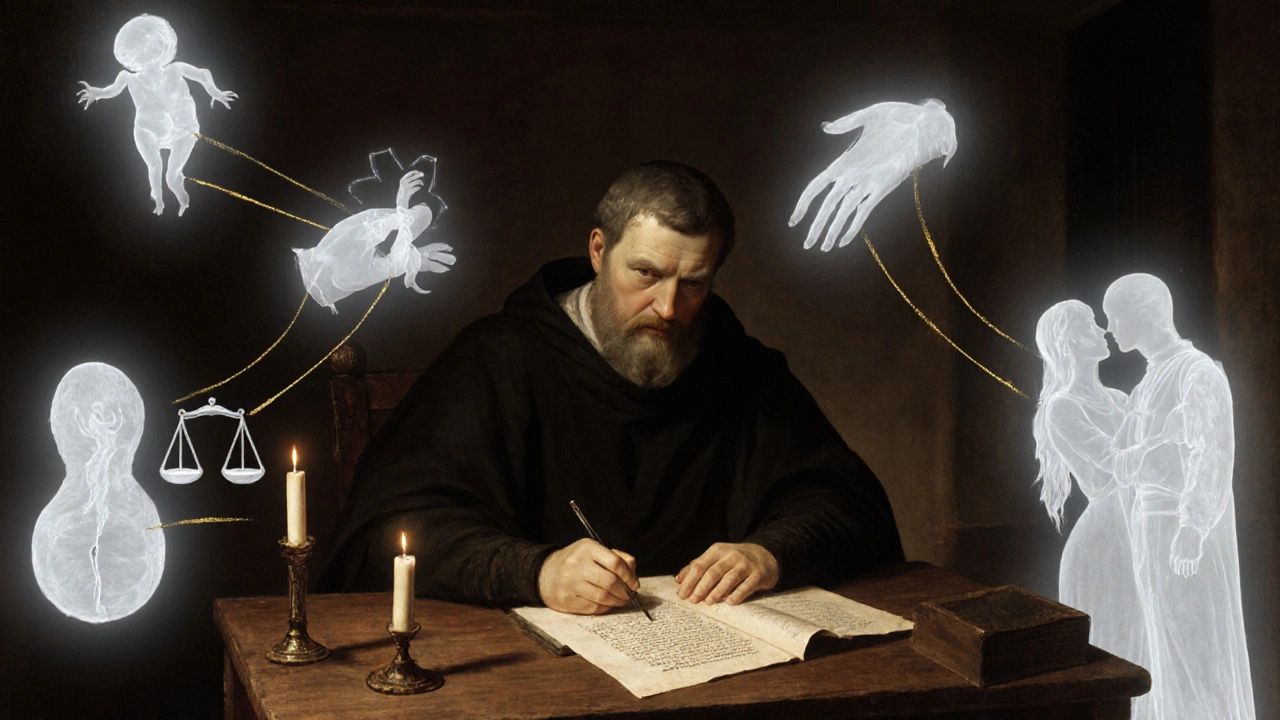
Aquinas’s Procreative Logic: How Medieval Theology Ranked Sexual Sins by Procreation
Nov 1 2025 / History & CultureThomas Aquinas ranked sexual sins by how much they blocked procreation-not by harm or consent. His medieval logic shaped Catholic teaching for 700 years and still influences Church doctrine today.
VIEW MORE