Red Ochre Lipstick: The Ancient Symbol of Power, Pleasure, and Female Identity
When you put on red ochre lipstick, a natural pigment used by humans over 100,000 years ago to mark the lips, face, and body with symbolic meaning. Also known as red iron oxide pigment, it wasn't just decoration—it was a declaration. In ancient burials, on cave walls, and in royal courts, this color signaled status, fertility, spiritual protection, and sexual agency—long before modern cosmetics existed. This isn’t makeup as we know it today. It’s the original tool women used to rewrite their place in the world.
Red ochre wasn’t just applied randomly. In prehistoric graves from the Middle Paleolithic, women were buried with ochre-stained shells and bone applicators—evidence that they used it intentionally, possibly to mimic the color of blood, life, and menstrual cycles. In ancient Egypt, queens like Cleopatra mixed ochre with fat and beeswax to create a long-lasting lip stain, turning color into political theater. In Mesopotamia, priestesses wore it during sacred rites, linking bodily adornment to divine connection. Even in Roman times, wealthy women imported red ochre from distant mines, turning lipstick into a luxury only the powerful could afford. This pigment didn’t just color lips—it carried meaning. It was tied to female beauty, the cultural standards and rituals surrounding how women presented their bodies to the world, and often clashed with male-controlled norms that tried to silence or shame it. It was also deeply connected to prehistoric body paint, the widespread use of natural pigments in early human societies for ritual, identity, and survival, a practice that blurred the line between art, religion, and personal expression.
What’s striking is how often red ochre lipstick resurfaced during moments of female empowerment. During the 1920s, flappers painted their lips bold red to reject Victorian repression. In the 1970s, feminist artists reclaimed it as a symbol of bodily autonomy. Even today, in places where women are banned from public life, wearing red lipstick becomes an act of quiet rebellion. The pigment itself hasn’t changed—but what it means has evolved with every generation. You’ll find this thread running through the articles below: how women have used their bodies, their looks, and their choices to claim power when the world tried to take it away. From Etruscan tomb paintings to Victorian-era beauty myths, from banned erotic poetry to the medicalization of female desire, the story of red ochre lipstick is really the story of women rewriting their own history—one brushstroke at a time.
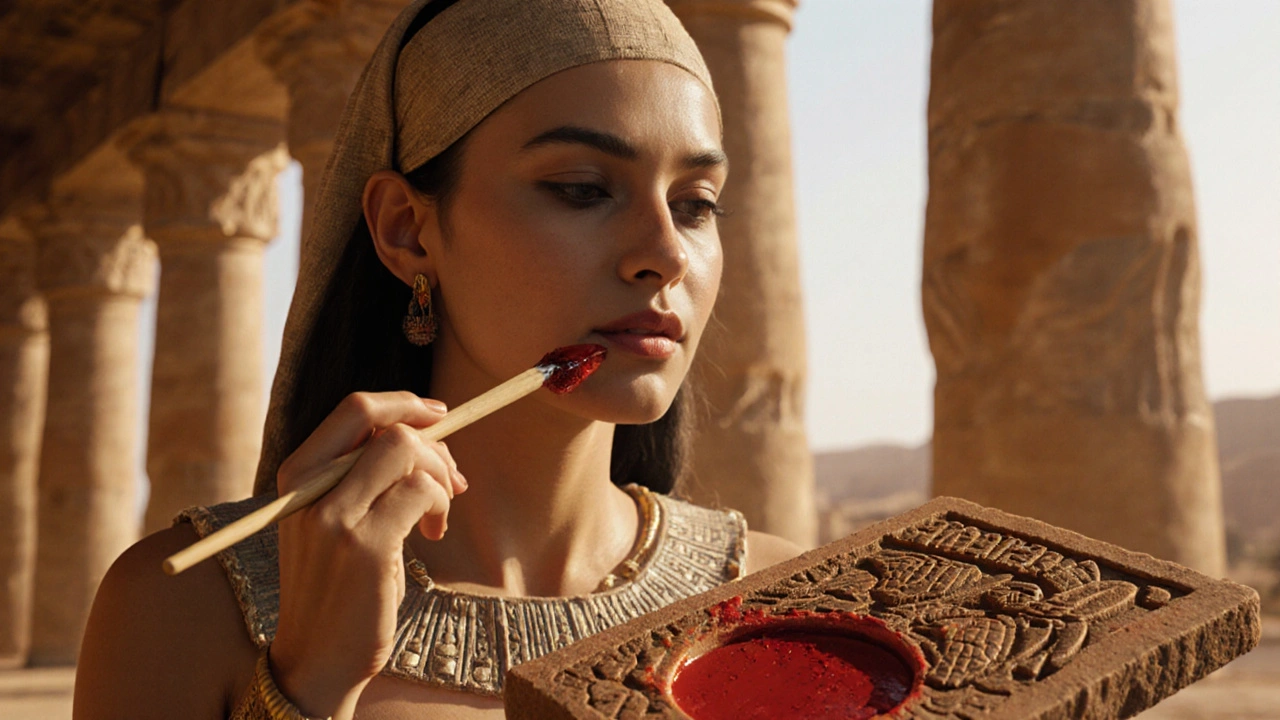
Lipstick and Signals in Ancient Egypt: How Cosmetics Communicated Sex, Status, and Power
Nov 22 2025 / History & CultureAncient Egyptians used lipstick not just for beauty, but as a coded system to signal social status, sexual availability, and spiritual power - with Cleopatra’s crimson lips becoming a symbol of political and erotic authority.
VIEW MORE