Regina v. Hicklin: How a 19th-Century Court Case Shaped Pornography Laws
When you think about what makes something illegal to share or sell, you’re probably thinking about Regina v. Hicklin, a landmark 1868 British court case that defined obscenity based on the most vulnerable reader, not the average adult. This ruling didn’t just label a book as dirty—it created a legal tool that silenced entire genres of writing, art, and later, film and digital media, for generations. It didn’t matter if the material had literary merit, scientific value, or was meant for adults. If a single child could stumble upon it and be corrupted, the whole thing was banned. That’s the core of the Hicklin test, a legal standard that judged obscenity by its potential effect on the most susceptible mind. This wasn’t about what the average person would find offensive—it was about what the most impressionable person might be harmed by. And it gave censors, police, and prosecutors a weapon with almost no limits.
The case itself came from a pamphlet called The Private Practices of the Holy Father, which attacked Catholic priests and included graphic descriptions of sexual acts. The court didn’t care about the political satire or the context. The judge ruled that if any part of the text could "deprave and corrupt those whose minds are open to such immoral influences," then the whole thing was obscene. That standard stuck for nearly 100 years. In the U.S., it was used to ban everything from James Joyce’s Ulysses to birth control pamphlets, and even medical textbooks on anatomy. Victorian pornography, a term that covers everything from risqué novels to underground prints, was targeted under this law not because it was common, but because it was seen as a threat to public morality. The law didn’t care about intent, context, or audience—it cared about fear. Fear of influence. Fear of corruption. Fear of sex outside strict religious control.
Modern courts eventually moved away from the Hicklin test, replacing it with standards like "community standards" and "prurient interest." But its DNA is still in today’s laws. When platforms remove content for being "too explicit" or when politicians push for bans on "inappropriate" material online, they’re echoing the same logic: protect the vulnerable, even if it means silencing everyone else. The legal history of sex, especially in Anglo-American law, is full of cases that tried to control desire through censorship, and Regina v. Hicklin was the blueprint. You’ll find its echoes in the way we still debate what’s acceptable in art, education, and media. The posts below dive into how this ruling shaped everything from Victorian book burnings to modern digital censorship, how it ignored consent and context, and why its legacy still affects how we talk—or don’t talk—about sex today.
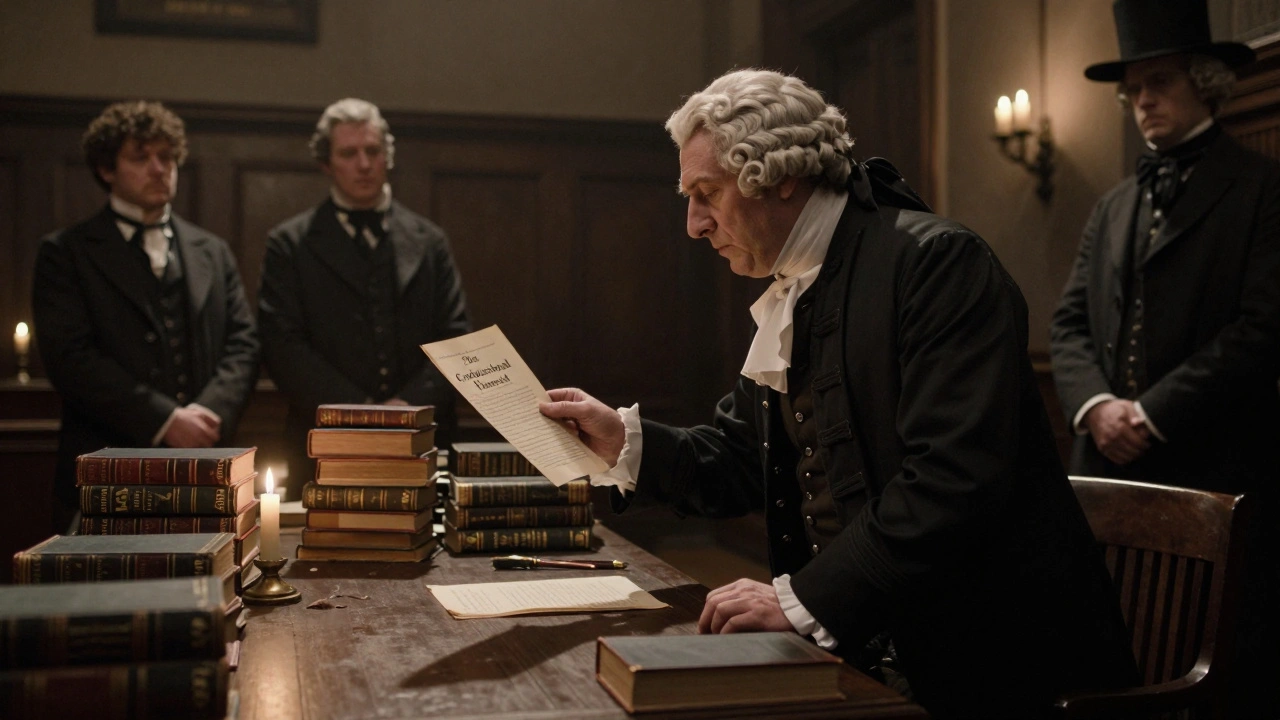
The Hicklin Test: How Courts Once Defined Obscenity
Dec 5 2025 / History & CultureThe Hicklin Test was a 19th-century legal standard that banned any material deemed potentially corrupting to vulnerable readers. It led to the censorship of literature, medical texts, and art for over 60 years in the U.S. until it was overturned in 1957.
VIEW MORE