Religious Fragmentation and Its Impact on Sex, Gender, and Power
When we talk about religious fragmentation, the splitting of religious beliefs into competing doctrines that often clash over moral authority. Also known as doctrinal division, it’s not just about who prays how—it’s about who gets to decide what’s sinful, natural, or acceptable in bed. This isn’t ancient history. The way different branches of Christianity, Islam, Judaism, and even secular movements define morality directly shaped laws on abortion, marriage, masturbation, and gender identity. Religious fragmentation didn’t just create different churches—it created different rules for bodies, especially women’s bodies.
Take Victorian gender roles, the rigid separation of men into public life and women into domestic purity. Also known as separate spheres ideology, it wasn’t born in a vacuum—it was pushed by Protestant moral reformers who saw female sexuality as dangerous unless tightly controlled. Meanwhile, in other parts of Europe, Catholic authorities were busy labeling masturbation a sin that caused madness, while Eastern Orthodox traditions quietly tolerated more fluid views of intimacy. These splits didn’t just change prayer habits—they changed who could speak about pleasure, who could own their orgasm, and who got punished for it. Even today, when a state bans abortion or blocks sex education, it’s often because one religious faction won the power struggle over another. sexual repression, the suppression of sexual expression through moral, legal, or institutional pressure. Also known as moral censorship, it thrives where religious authority is unchallenged. The same groups that once banned erotic poetry like Nashe’s "Choice of Valentines" are still influencing laws on LGBTQ+ rights, contraception, and even how schools teach about consent.
Religious fragmentation didn’t just silence people—it made them doubt themselves. If one church says the female orgasm is irrelevant to reproduction, and another says sex is only for procreation, what’s a person supposed to believe? That’s why Anne Koedt had to write her essay on the clitoris. That’s why bisexual erasure still exists in both religious and secular spaces. That’s why Etruscan tomb paintings showing couples in pleasure were buried for centuries—because later religions saw them as heresy, not sacred art. The fight over sexuality isn’t just about freedom. It’s about who gets to define truth when religion fractures into a thousand competing voices.
Below, you’ll find articles that trace how these divisions played out—in medicine, law, art, and everyday life. From steam-powered vibrators sold to cure "hysteria" to how medieval marriage was really a business deal blessed by the church, these stories show how religious power didn’t just influence sex—it built the rules we still live under.
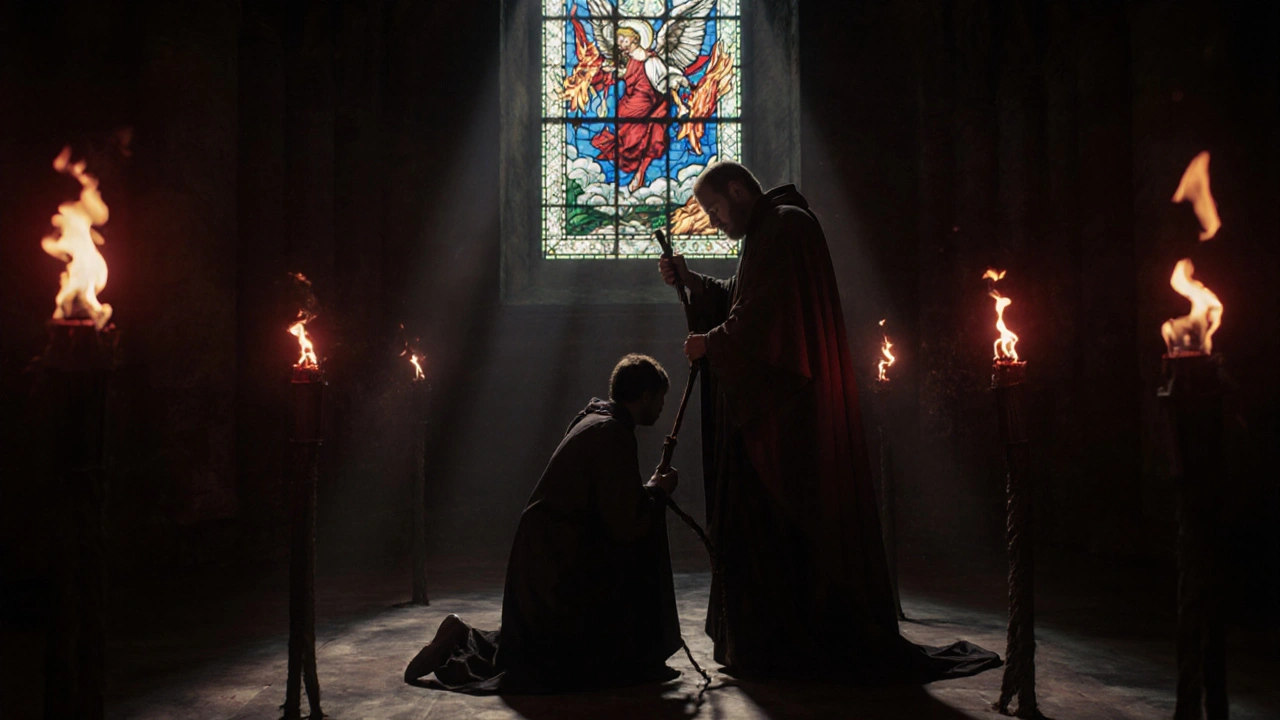
Religious Fragmentation and the Decline of Sexual Damnation
Nov 13 2025 / History & CultureReligious fragmentation has shattered centuries of unified sexual morality. As denominations split over LGBTQ+ rights, contraception, and premarital sex, the fear of divine punishment for sex has collapsed-replaced by personal choice.
VIEW MORE