Religious Fragmentation Calculator
Sexual Morality Belief Calculator
Calculate how religious fragmentation affects beliefs about sexual morality based on demographic factors from the article.
Sexual Morality Belief Score
Estimated percentage who believe sex is not sinful:
Key factors:
Age 18-24 group shows highest shift
Affiliation Non-religious groups show strongest rejection
Identity Former members most likely to reject sin framing
For centuries, the fear of sexual damnation shaped how millions lived. Sex outside marriage? Sin. Birth control? Sin. Same-sex relationships? Eternal punishment. The Church didn’t just discourage these acts-it told people they were risking hellfire. But that fear isn’t what it used to be. Today, fewer people believe sex is a sin. Why? Because religion itself has shattered into hundreds of pieces.
The Old Rules: Sex as Sin, Enforced by Fire
In the early Christian world, sex wasn’t just private-it was dangerous. Church Fathers like Augustine called it the root of original sin. Jerome went further, saying anything that sparked sexual pleasure was poison. By the 4th century, the Roman Empire backed these ideas with law. Emperor Theodosius made non-procreative sex a crime. Later, Emperor Justinian added fines, imprisonment, even castration for those who broke the rules.
The Middle Ages turned this into a system of control. The Fourth Lateran Council in 1215 forced every Christian to confess sexual sins once a year. The Albigensian Crusade wiped out entire communities-like the Cathars-because they believed sex was not inherently sinful. This wasn’t theology. It was enforcement. Fear kept people in line.
Even into the 20th century, the punishment didn’t fade. In the U.S., girls as young as 12 were subjected to clitoridectomies to stop masturbation. Doctors called it a cure. The Church called it protection. The message was clear: your body was not your own. And if you disobeyed, God would burn you.
The Crack in the Wall: The Protestant Reformation
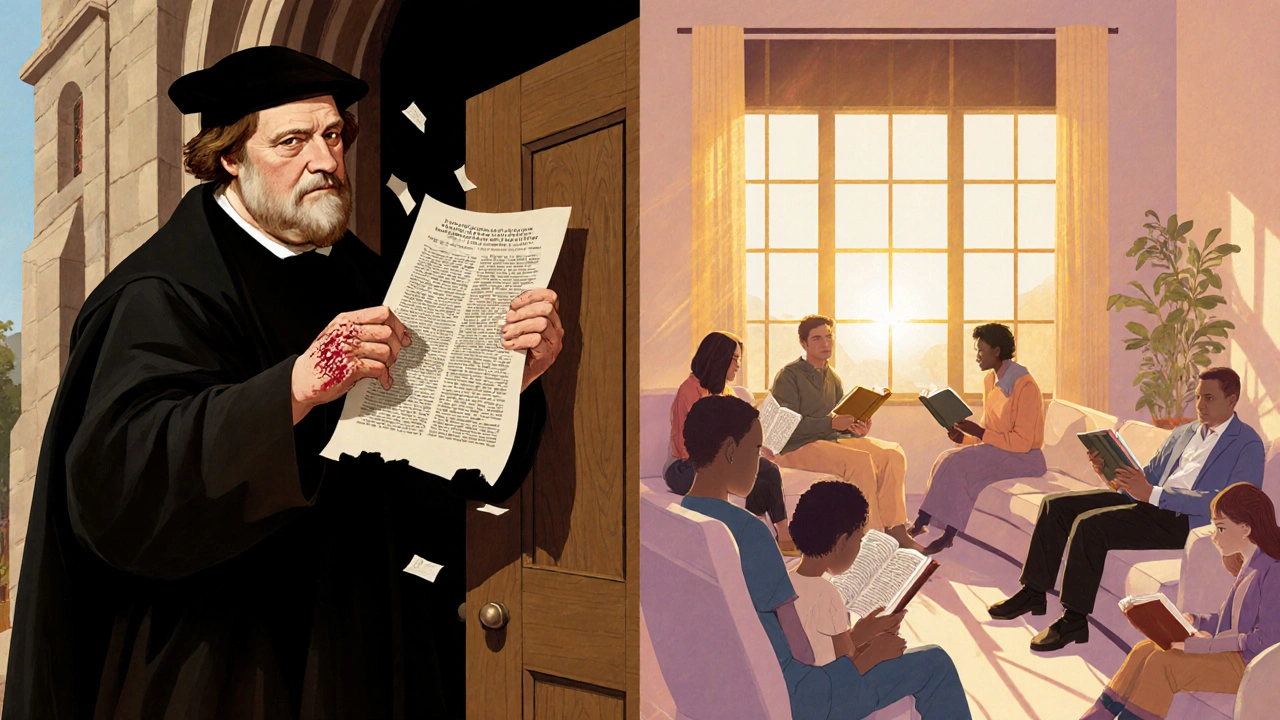
All of this began to unravel in 1517, when Martin Luther nailed his 95 theses to a church door. He didn’t just challenge indulgences-he challenged the idea that priests should be celibate. He married a former nun. He said sex within marriage wasn’t sinful. It was good.
That was the first major crack. Luther didn’t invent a new morality. He just said the Church didn’t have the right to control it. His actions opened the door. Suddenly, people could read the Bible themselves. They didn’t need a priest to tell them what sin was.
By the 1540s, Thomas Cranmer’s Book of Common Prayer softened penalties for premarital sex. It didn’t endorse it-but it stopped treating it like a death sentence. This wasn’t rebellion. It was reinterpretation. And it spread. Dozens of Protestant groups formed, each with their own take on sex, marriage, and sin.
When the Church Split: The 20th Century Shatters Unity
By the 1930s, even the Anglican Church couldn’t hold the line. In 1930, bishops voted 19 to 16 to allow contraception within marriage. That was the first time a major Christian body officially broke from 1,900 years of unified teaching. It wasn’t a revolution-it was a whisper. But it echoed.
Then came 1968. Pope Paul VI wrote Humanae Vitae, banning birth control. Six hundred theologians signed a public statement rejecting it. They didn’t leave the Church-they just stopped listening. The Vatican didn’t lose members overnight. But it lost authority. People realized: if the Pope could be wrong on this, what else might he be wrong about?
By the 1970s, new churches began forming that didn’t just tolerate LGBTQ+ people-they welcomed them. The Metropolitan Community Church ordained its first openly lesbian minister in 1972. The United Church of Christ, the Episcopal Church, and others followed. In 2003, Gene Robinson became the first openly gay bishop in the Episcopal Church. The backlash was loud. But the movement didn’t stop.
The Numbers Tell the Story
It’s not just about who’s ordained or what churches say. It’s about what people believe.
- In 1969, 83% of U.S. Christians thought premarital sex was always wrong. Today? Only 28%.
- 72% of mainline Protestants support same-sex marriage. Only 17% of evangelicals do.
- 41% of former Catholics say disagreement with Church teaching on sex was their main reason for leaving.
- 68% of people who identify as “spiritual but not religious” reject the idea that sex is sinful.
These aren’t random trends. They’re the result of decades of fragmentation. When there’s only one voice telling you what’s right, you listen. When there are hundreds, you pick the one that fits your life.
People Are Leaving-And They’re Not Coming Back
Every year, 31% of Americans switch religious affiliations. That’s triple the rate from the 1990s. Why? Because people aren’t just leaving churches-they’re leaving doctrines.
Reddit’s r/exchristian has 427,000 members. The top post? “How I stopped fearing hell for having sex before marriage.” It has 28,000 upvotes. Thousands of comments say the same thing: “I thought I was going to burn. I didn’t.”
The Secular Therapy Project reports that 73% of clients seeking help for anxiety or depression cite religious sexual shame as their core issue. That’s not guilt. That’s trauma. And people are healing by walking away.
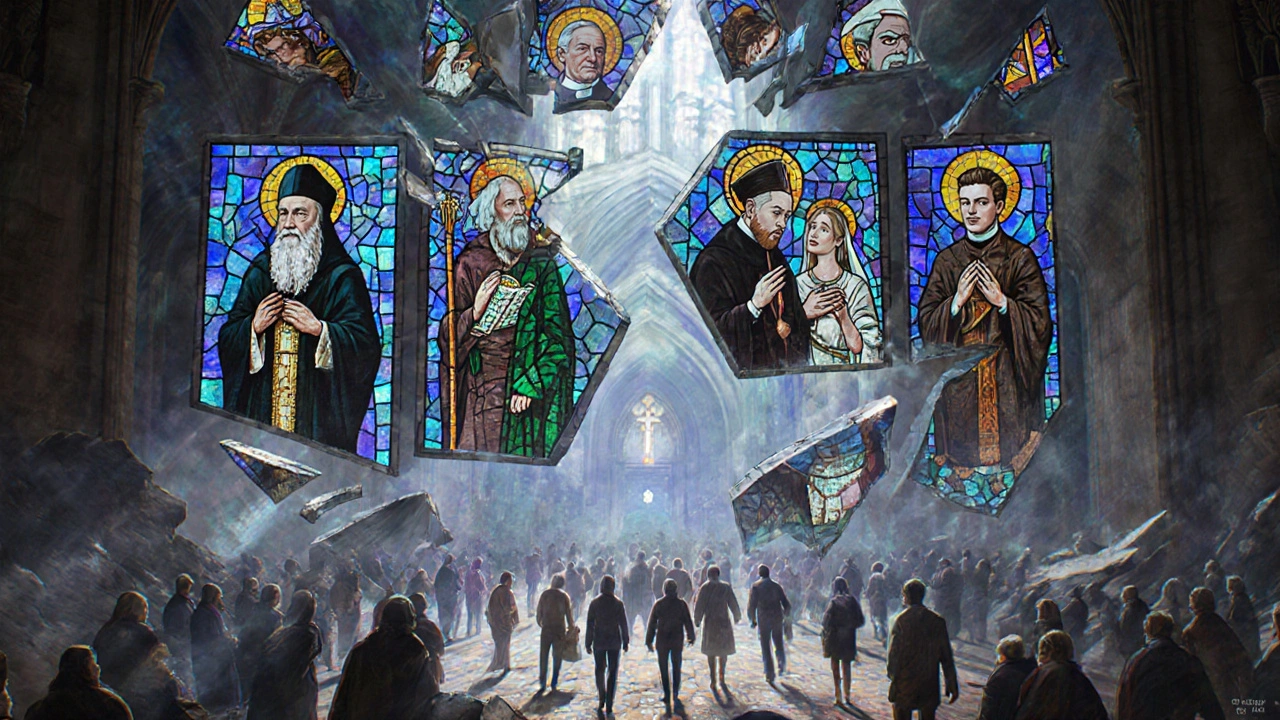
The New Divide: Sorting by Belief, Not Denomination
Today, religion isn’t about tradition. It’s about alignment. People don’t choose a church because their parents went there. They choose it because it agrees with how they live.
In 2022, 56% of U.S. seminaries required training on LGBTQ+ inclusion. In 2023, the Catholic Church issued Fiducia Supplicans, allowing priests to bless same-sex couples. Eighty-two percent of European dioceses accepted it. Thirty countries rejected it. That’s not disagreement. That’s schism.
The Southern Baptist Convention expelled 15 churches in 2023 for being “too soft” on sexual ethics. Instead of tightening control, it accelerated the exodus. More people left than joined.
Meanwhile, the Global Methodist Church was formed in 2022 by 2.8 million members who wanted to keep traditional rules. They didn’t win. They just created a new group. And the rest kept moving forward.
What Comes Next?
Some say this is the end of Christianity. Others say it’s its rebirth. David French, a conservative writer, predicts that by 2035, churches will be perfectly sorted-conservative churches for conservative people, progressive churches for progressive people. No more confusion. No more guilt.
Sociologist Penny Edgell thinks even that’s too slow. Based on trends from the General Social Survey, she says by 2040, fewer than 20% of Americans will link sex to damnation. Not because people are more liberal. Because the idea of divine punishment for sex simply doesn’t make sense anymore.
The fear of sexual damnation didn’t die because people stopped believing in God. It died because people stopped believing that God cared about their bedrooms.
Religion didn’t lose its power. It lost its monopoly. And once people realized they could choose their own moral compass, the chains fell off.