Roman Power Dynamics: How Sex, Gender, and Control Shaped Ancient Society
When we talk about Roman power dynamics, the invisible systems that decided who held authority, who was silenced, and whose desires mattered in ancient Rome. Also known as Roman social hierarchy, it wasn’t just about who ruled the empire—it was about who got to define pleasure, morality, and even the body itself. Power in Rome didn’t live in laws alone. It lived in who could kiss whom, who could demand sex, who could be punished for it, and who could laugh about it in public. A senator’s right to sleep with a slave wasn’t freedom—it was a signal of status. A woman’s silence wasn’t modesty—it was enforcement.
These dynamics didn’t just affect politics. They shaped how people experienced their own bodies. The gender roles in Rome, the rigid expectations that defined men as active, dominant, and public, while women were passive, private, and controlled. Also known as Roman masculinity and femininity, it created a world where a man’s worth was tied to his ability to dominate others—sexually, socially, economically. Meanwhile, women—especially those without wealth or family backing—had little legal voice. Their sexuality was managed through marriage, dowries, and shame. Even pleasure was political: a woman’s orgasm? Irrelevant to reproduction. A man’s? A sign of control. The sexual politics in antiquity, how desire, consent, and exploitation were coded into daily life under Roman law and custom. Also known as Roman sexual norms, it turned intimacy into a mirror of power. This is why temple prostitution, brothels in Pompeii, and banned erotic poetry weren’t just about sex—they were about who got to own the narrative.
What you’ll find below isn’t a list of ancient scandals. It’s a collection of stories that show how Roman power structures echo in modern debates about consent, gender, and control. From Victorian ideas about female hysteria to today’s legal fights over LGBTQ+ rights, the roots are older than you think. These posts don’t just tell you what happened—they show you how power shaped what people could say, feel, and do with their bodies. And how resistance, even in silence, always found a way.
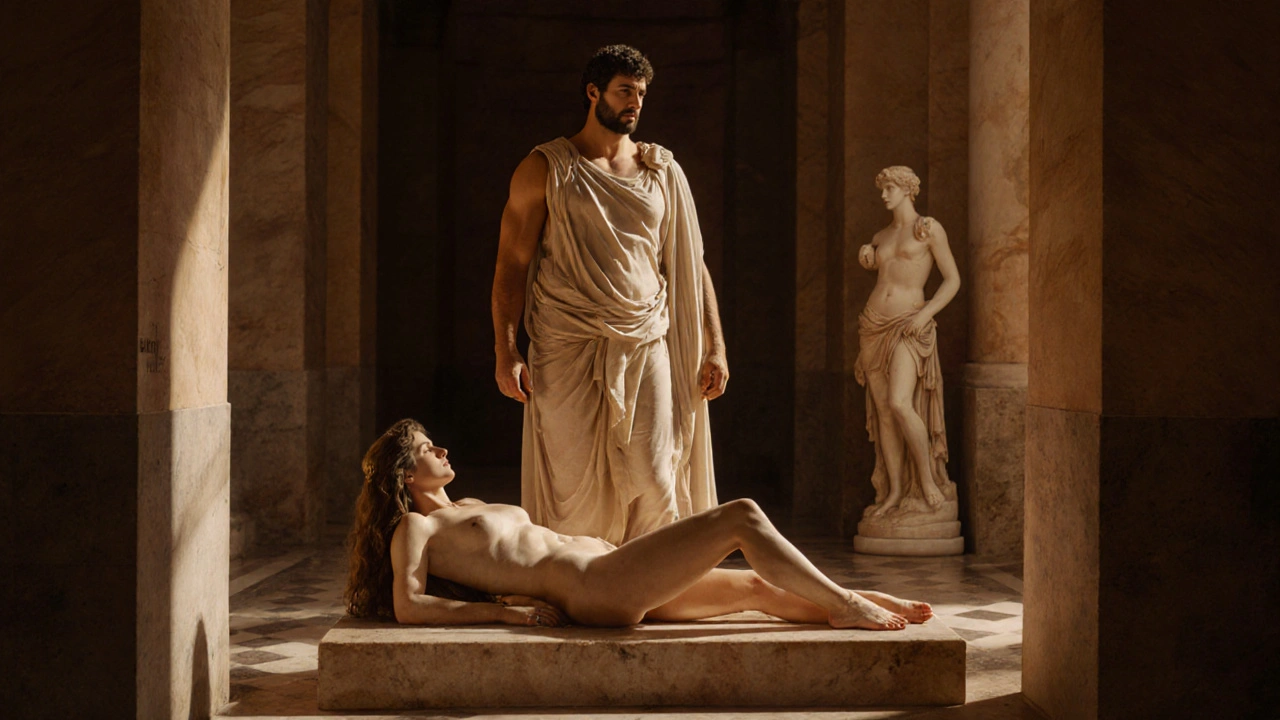
Sexual Positions and Technique in Roman Texts: Sources and Meanings
Nov 12 2025 / History & CultureAncient Roman sexual practices were governed by power, not pleasure. Texts and art reveal strict roles: men dominated, women submitted, and slaves had no rights. Positions, oral sex, and even female agency were shaped by hierarchy-not morality.
VIEW MORE