Roman Sexual Positions: Ancient Practices, Cultural Context, and Historical Myths
When we talk about Roman sexual positions, the specific postures and practices documented in Roman erotic art and literature that reveal how intimacy was understood in ancient Rome. Also known as Roman erotic poses, these depictions weren’t just titillation—they were part of a broader cultural system that linked sex to power, class, and identity. Unlike modern assumptions that equate sexual freedom with liberation, Roman attitudes were deeply tied to social hierarchy. Who you were—man or woman, free or enslaved, citizen or foreigner—determined what was acceptable, what was shameful, and what was simply invisible in the records.
The Roman erotic art, explicit imagery found in Pompeii’s walls, mosaics, and household objects that served as both decoration and social commentary. Also known as Pompeian sex scenes, these weren’t hidden away—they were displayed in dining rooms and bathhouses, suggesting that sex was a normal, even public, part of life for many Romans. But this openness didn’t mean equality. Most surviving images show men in dominant roles, often with women or slaves in submissive ones. The Roman gender roles, rigid expectations that defined men as active penetrators and women as passive recipients, even when reality was far more complex. Also known as Roman masculinity norms, these roles were enforced through law, literature, and daily practice. A free Roman man could have sex with anyone below his status without shame. A woman, even a married one, faced stigma if she pursued pleasure openly. This wasn’t about morality—it was about control.
What we call Roman sexual positions today—like the missionary stance, rear entry, or seated positions—were rarely labeled as such by Romans. They didn’t have a catalog. Instead, they left behind images that show bodies in motion, often with exaggerated expressions or symbolic props. These weren’t instructional manuals. They were reflections of a society that saw sex as a tool for dominance, a sign of wealth (who could afford servants to satisfy desires?), and a way to assert status even in private moments. The Roman marriage customs, the legal and social framework that tied women to men through dowries, inheritance, and reproduction, often ignoring emotional or sexual connection. Also known as Roman conjugal norms, these customs made sex a duty, not a shared experience. Many marriages were arranged for political or economic reasons, and sexual satisfaction was rarely a priority—unless you were a man with slaves or concubines.
What’s missing from these images? Women’s pleasure. Lesbian relationships. Consent. The voices of those who couldn’t write their own stories. That’s why the posts below don’t just show you poses—they unpack the silence. You’ll find how Roman erotic art connects to Etruscan funerary scenes, how Victorian myths about sexuality borrowed from ancient Rome, and how modern ideas of gender and power still echo these ancient patterns. This isn’t a gallery of ancient kinks. It’s a window into a world where sex was never just about the body—it was about who had the right to speak, to touch, and to be seen.
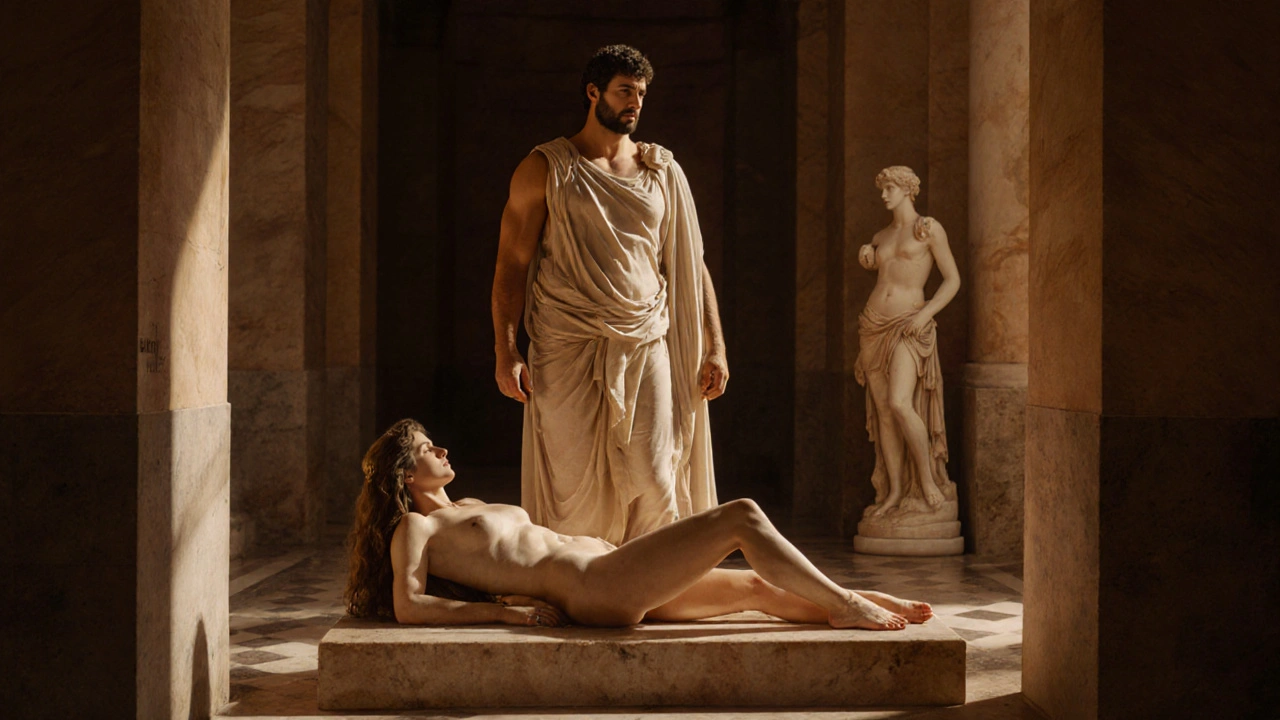
Sexual Positions and Technique in Roman Texts: Sources and Meanings
Nov 12 2025 / History & CultureAncient Roman sexual practices were governed by power, not pleasure. Texts and art reveal strict roles: men dominated, women submitted, and slaves had no rights. Positions, oral sex, and even female agency were shaped by hierarchy-not morality.
VIEW MORE