Sex Education History: How We Learned (or Didn't Learn) About Sex
When we talk about sex education history, the evolving ways societies have taught people about sex, bodies, and relationships. Also known as sexual education, it’s never been just about biology—it’s always been about control, morality, and who gets to decide what’s normal. For most of history, sex wasn’t taught. It was whispered about, punished, or ignored. In the 1800s, doctors told women that thinking about sex could make them go mad. Boys were handed crude pamphlets with warnings about "self-pollution." Girls got nothing but fear—about pregnancy, sin, and losing their virtue.
Even when sex education started showing up in schools, it was rarely about truth. In the U.S., the 1960s brought "abstinence-only" programs that lied about birth control effectiveness. Meanwhile, in Europe, countries like the Netherlands began teaching kids as young as four that bodies are normal, consent matters, and pleasure isn’t shameful. The difference? One system tried to scare people into silence. The other tried to equip them with facts. And it shows—in places with honest sex education, teen pregnancy and STI rates dropped. The consent education, the modern push to teach clear, enthusiastic, ongoing permission in sexual interactions. Also known as affirmative consent, it’s now a legal standard in many countries and a direct result of decades of feminist and LGBTQ+ activism. This shift didn’t come from textbooks. It came from survivors speaking up, from activists demanding change, from people refusing to let shame dictate their bodies.
What you’ll find in the posts below isn’t just a list of old laws or forgotten myths. It’s the real story behind how we got here. You’ll read about Victorian doctors who called masturbation a disease, how lesbian relationships were erased from medical records, and how a single essay by Anne Koedt shattered the myth that vaginal orgasms were the only "real" ones. You’ll see how medieval marriages were economic deals, how Etruscan tombs celebrated sex as sacred, and how police raids on gay bars forced a movement into the open. These aren’t footnotes. They’re the roots of every conversation about sex today—whether it’s about gender, pleasure, or who gets to speak.
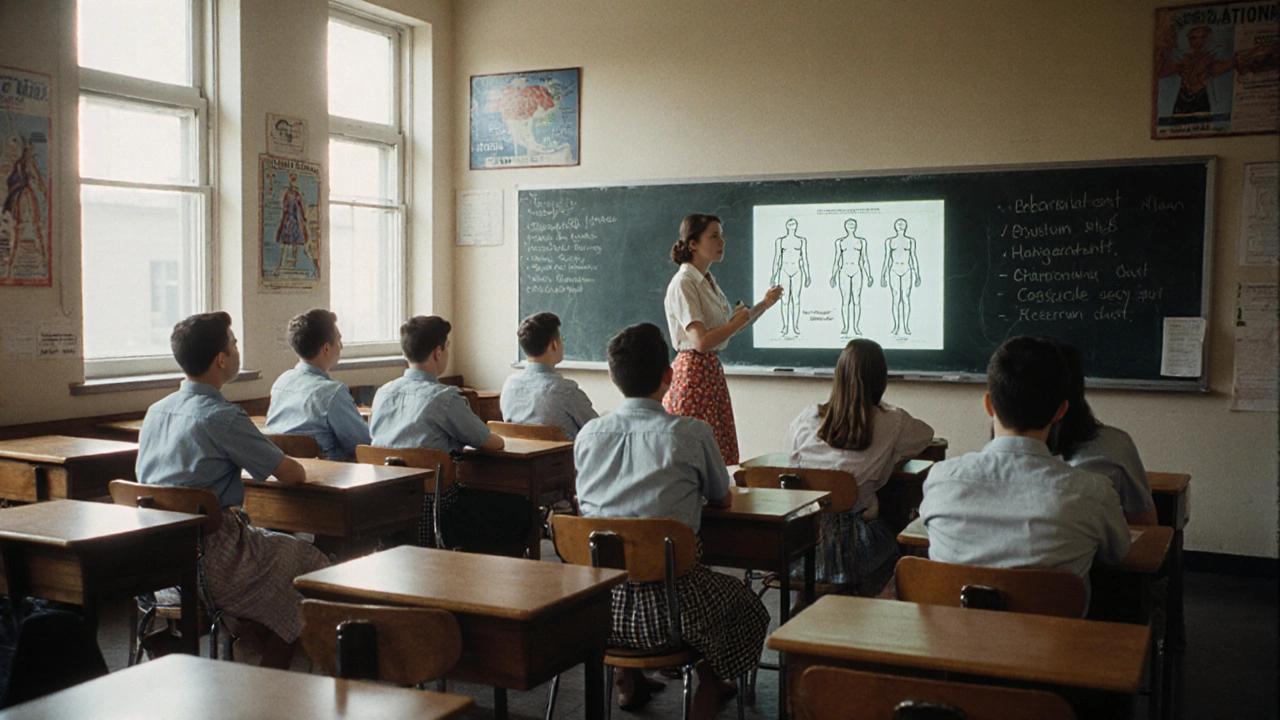
1950s Shift: How the AMA’s Sex Education Series Changed American Schools
Nov 30 2025 / History & CultureIn 1955, the American Medical Association launched the first nationwide sex education program in U.S. public schools. It taught facts, not fear-and reduced teen pregnancy and STDs. Its legacy still shapes how we teach sex education today.
VIEW MORE