Sexual Ethics: Consent, Power, and the History of Moral Choices in Sex
When we talk about sexual ethics, the moral principles guiding how people engage in sexual behavior. Also known as sexual morality, it’s not some abstract philosophy—it’s the quiet rules that decide who gets to say yes, who’s silenced, and who’s punished for wanting pleasure. This isn’t about religion or law alone. It’s about who held power when those rules were written—and who still pays the price when they’re enforced.
Consent, the voluntary agreement to engage in sexual activity. Also known as affirmative consent, it’s the foundation of modern sexual ethics—but it wasn’t always the standard. For centuries, women’s "no" was ignored, marriage was a legal contract for sex, and coercion was disguised as duty. Meanwhile, coercion, the use of pressure, manipulation, or fear to get someone to agree to sex. Also known as emotional pressure, it’s been hidden in plain sight—from Victorian doctors telling women masturbation caused madness, to police raids on gay bars where "consent" didn’t matter because the law saw them as criminals. And then there’s sexual shame, the deep cultural guilt attached to desire, especially for women and queer people. Also known as sexual stigma, it’s why women were told to feel guilty for enjoying their own bodies, why bisexual people were erased for not fitting into binary boxes, and why men were taught that vulnerability was weakness. These aren’t old problems. They’re the same forces behind today’s debates over AI porn, sex robots, and whether a woman’s orgasm "should" exist if it’s not for reproduction.
What you’ll find below isn’t a list of opinions. It’s a collection of real stories—how a 16th-century poem got banned for showing a dildo, how steam-powered vibrators were sold to treat "hysteria," how medieval marriages were business deals, and how feminist writers tore down myths about female pleasure. These aren’t just history. They’re the roots of the rules we still live by. And if you’ve ever wondered why "no" isn’t always enough, why pleasure feels dangerous, or why some bodies are policed more than others—this is where the answers begin.
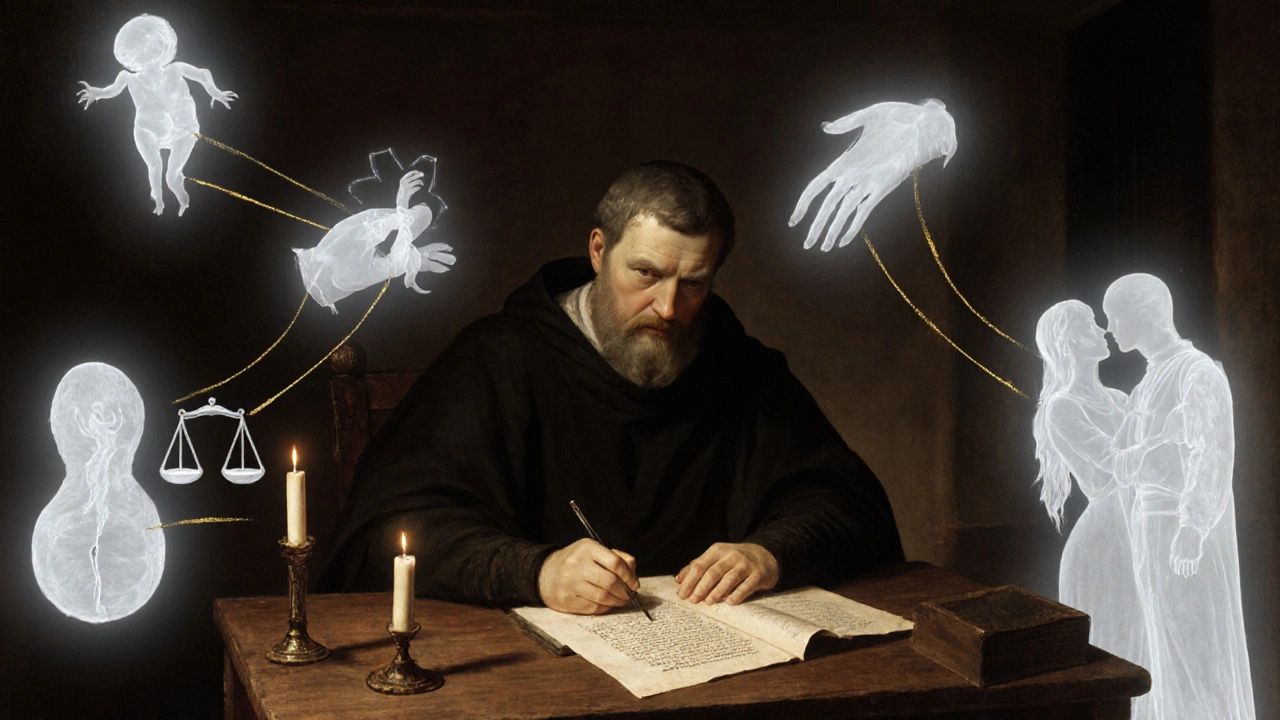
Aquinas’s Procreative Logic: How Medieval Theology Ranked Sexual Sins by Procreation
Nov 1 2025 / History & CultureThomas Aquinas ranked sexual sins by how much they blocked procreation-not by harm or consent. His medieval logic shaped Catholic teaching for 700 years and still influences Church doctrine today.
VIEW MORE