Tabernae: The Ancient Roots of Sex, Commerce, and Social Space
When you think of tabernae, small commercial shops or stalls in ancient Roman cities that often doubled as spaces for sex work, drinking, and socializing. Also known as shops or stalls, these were the everyday arteries of Roman urban life—where bread was sold, wine was poured, and sometimes, bodies were exchanged for coins. They weren’t just places to buy goods. In Pompeii, for example, over 25% of tabernae showed clear signs of being used for prostitution, with erotic murals, beds, and separate entrances still visible today. These weren’t hidden backrooms—they were front-and-center parts of the neighborhood, built into the ground floor of apartment buildings, right next to the bakery and the tanner’s shop.
Tabernae weren’t just about sex. They were where class, commerce, and control collided. A wealthy man might visit a taberna for a quick encounter, while a freedwoman might run one to support her family. The law didn’t ban prostitution—it regulated it. Prostitutes had to register, pay taxes, and wear specific clothing. Their clients? Everyone from soldiers to senators. The taberna was a neutral ground where social rules bent but didn’t break. This system wasn’t unique to Rome—it echoed in Greek porneia, Egyptian market stalls, and later, medieval inns. The idea that sex work must be hidden is modern. In antiquity, it was just another service in a busy street.
What’s often missed is how tabernae shaped gender, power, and public space. Women who ran these spaces had more economic independence than most Roman citizens. Men who frequented them didn’t face stigma—they were expected to. And the erotic art painted on the walls? It wasn’t just decoration. It was advertising, ritual, and instruction all at once. These weren’t crude images—they were part of a culture that saw sex as natural, necessary, and woven into daily survival. The legacy lives on in modern brothels, escort listings, and even digital platforms. The taberna didn’t disappear. It just got Wi-Fi.
Below, you’ll find articles that trace how these ancient spaces evolved—from Roman tabernae to Victorian brothels, from medicalized masturbation to today’s digital sex work. Each post digs into who controlled these spaces, who used them, and how shame, law, and desire have shaped them over centuries. You’ll see how the same questions—about power, consent, and survival—have been asked for over 2,000 years.
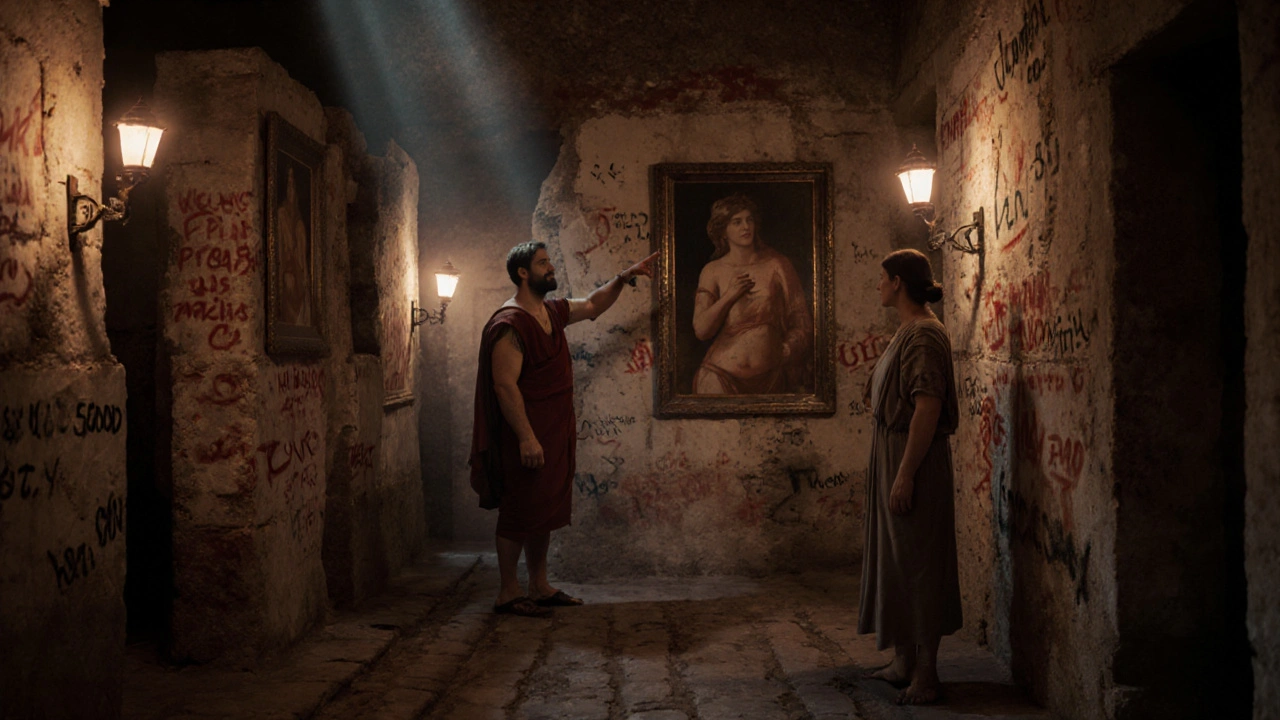
Roman Sex Work Categories: Meretrices, Lupae, and Tabernae Differentiation
Oct 28 2025 / History & CultureRoman sex work was legal, taxed, and strictly categorized. Meretrices were registered workers with limited rights, lupae were unregistered street workers with no protection, and tabernae were the brothels where it all happened. This system reflected Rome’s complex views on gender, class, and power.
VIEW MORE