Tomb Paintings: Ancient Art, Sex, and Death in Early Civilizations
When you think of tomb paintings, decorative murals created inside burial chambers to guide the dead into the afterlife. Also known as funerary art, these images weren’t just about honoring the dead—they were practical magic, meant to ensure survival beyond death. In ancient Egypt, for example, a pharaoh’s tomb wasn’t just a final resting place. It was a portal. Every scene, from farmers harvesting grain to couples embracing, was carefully chosen to recreate life forever. These weren’t random decorations. They were instructions for the soul.
What’s surprising is how often sexual symbolism, the use of erotic or reproductive imagery to represent regeneration and eternal life shows up in these tombs. In the tomb of Nebamun, a nobleman from Thebes, scenes show him fishing and fowling with his wife—both naked, both smiling. It’s not about lust. It’s about fertility. The Nile’s annual flood, the rebirth of crops, the continuation of family—all tied to the idea that sex and pleasure were part of the cycle of life, even after death. The same goes for the burial rituals, ceremonies and practices surrounding the preparation and interment of the dead in ancient Mesopotamia, where offerings of food, drink, and even sexual imagery were left to keep the dead satisfied. Death wasn’t an end—it was a transition, and sex was one of the tools to make it work.
These paintings also reveal who held power. In many tombs, women are shown alongside men, not as servants but as partners in the afterlife. In some, they’re even depicted performing rituals that only priests were supposed to do. That tells us something: in death, gender roles softened. The afterlife didn’t care about your status in life—it cared that you had the right symbols, the right energy, the right connection to life’s forces. And that’s why you’ll find scenes of dancing, drinking, and intimacy in tombs that were otherwise filled with warnings and gods. This wasn’t decadence. It was survival.
What you’ll find in the articles below isn’t just a list of old art. It’s a look at how sex, power, and belief were tangled together in the most private places of ancient cultures. From Cleopatra’s cosmetics to the erased histories of female desire, these posts connect the dots between what was painted on walls and what was lived behind closed doors. You’ll see how the same themes—control, shame, pleasure, resistance—show up in Victorian bedrooms, medieval marriage contracts, and modern legal battles. Tomb paintings didn’t just show us how people died. They show us how they lived, loved, and fought to keep living—even when they were gone.
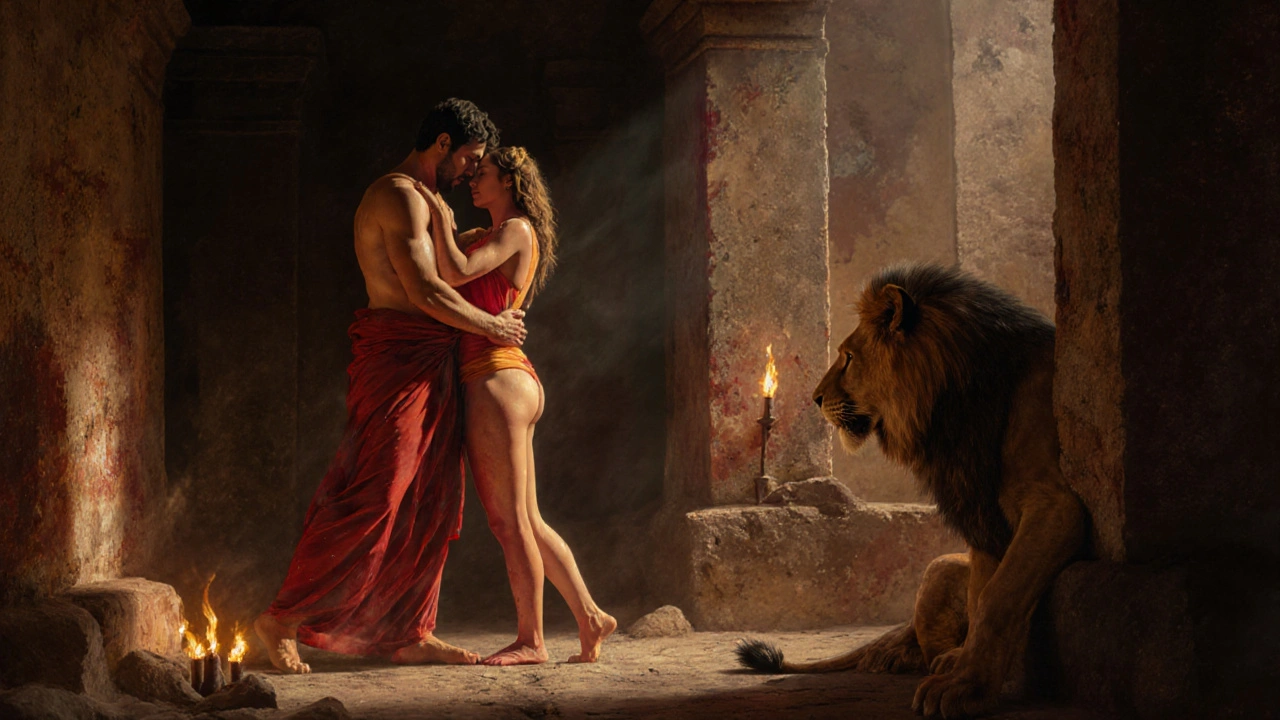
Etruscan Funerary Scenes: What Sexual Depictions Reveal About Death and the Afterlife
Nov 26 2025 / History & CultureEtruscan funerary art features explicit sexual scenes not as decoration, but as sacred rituals to guide the soul into the afterlife-revealing a culture that embraced pleasure, death, and spiritual transformation.
VIEW MORE