Wedding Ritual: The Hidden History of Marriage, Sex, and Social Power
When you think of a wedding ritual, a ceremonial event marking the union of two people, often tied to legal, religious, or cultural norms. Also known as marriage ceremony, it's commonly seen as a celebration of love. But behind the flowers and vows lies a long history of control, economics, and gendered power. The modern white dress, the exchange of rings, even the father walking the bride down the aisle—all of it has roots in systems designed to transfer property, secure alliances, and enforce social order. This isn’t romance. It’s legacy.
Take the dowry system, a payment or gift given by the bride’s family to the groom or his family, often tied to land, wealth, or social standing. Also known as bride price, it was standard across medieval Europe, ancient Rome, and parts of Asia. It wasn’t a gift—it was insurance. A way to ensure the bride’s future, yes, but also a way for families to trade influence. In medieval times, marriage was a business deal. Land changed hands. Bloodlines were locked in. Women weren’t participants—they were assets. Even today, traces of this live on in legal frameworks that still tie financial rights to marital status.
The Victorian marriage, a rigid, gendered institution that confined women to domestic roles while men controlled public and financial life. Also known as separate spheres ideology, it turned weddings into performances of purity and obedience. A bride in white wasn’t symbolizing love—she was symbolizing virginity, a commodity that lost value if lost before the altar. Men, meanwhile, were expected to bring financial stability. This wasn’t about emotion. It was about control. And when women started pushing back—demanding rights to property, to divorce, to their own bodies—they weren’t just fighting for equality. They were dismantling a centuries-old economic structure disguised as tradition.
Wedding rituals today still carry these weights. The pressure to have a big ceremony? It’s not just about family expectations—it’s about proving social worth. The silence around premarital sex before the wedding? It’s a relic of moral codes that once dictated who could own what. Even the word ‘bride’ comes from Old English words tied to ‘to bake’—linking women to domestic labor. The rituals we follow aren’t timeless. They’re constructed. And they were built to serve power, not love.
What you’ll find below isn’t a list of cute traditions. It’s a collection of hard truths—how marriage became a tool of control, how sex was weaponized in legal contracts, and how the people who lived under these rules quietly resisted, adapted, and rewrote the rules. From Etruscan tomb paintings showing couples in intimacy as sacred acts, to Victorian doctors pathologizing desire, to the hidden economic logic behind dowries and dower rights—these stories reveal what wedding rituals really are: not celebrations of romance, but echoes of power.
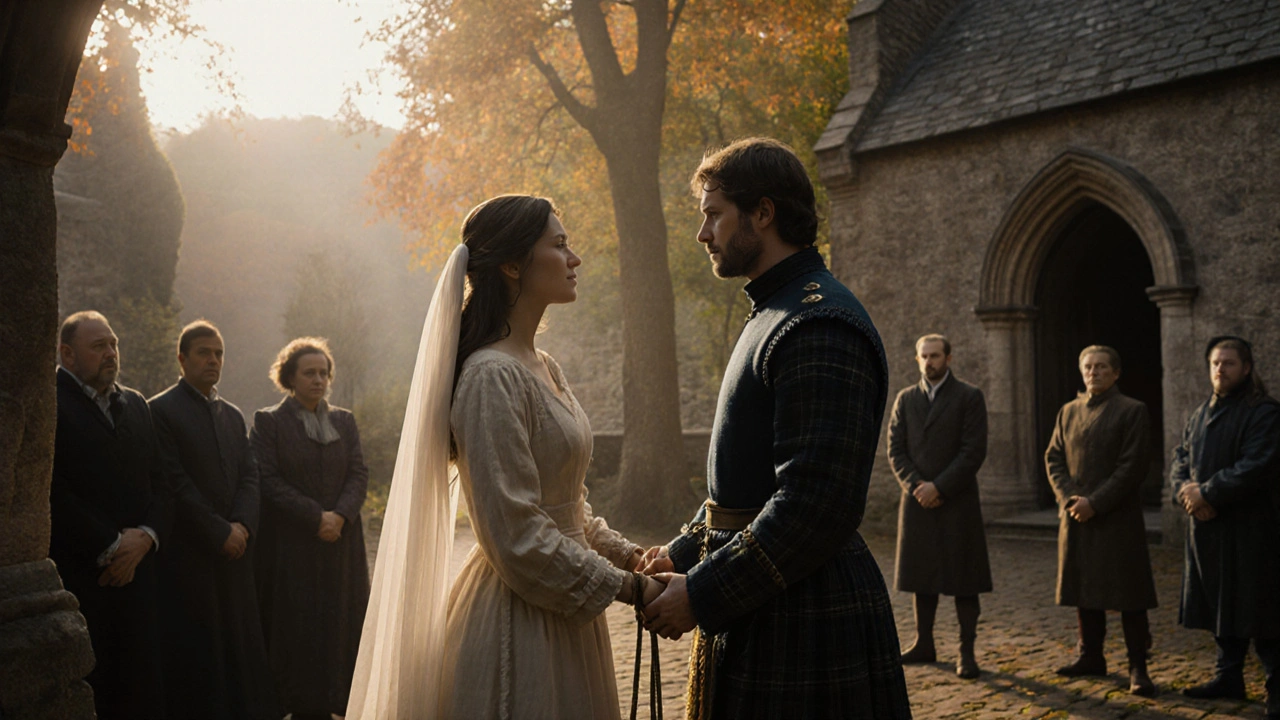
Handfasting and Trial Marriage: The Truth Behind the Celtic Year-and-a-Day Tradition
Nov 20 2025 / History & CultureHandfasting is often called a Celtic trial marriage lasting a year and a day-but that's a myth. Learn the real history of this ritual, how it became a modern wedding symbol, and why the truth is even more powerful than the legend.
VIEW MORE