William Acton and the Victorian Roots of Sexual Morality
When you think about how society talks about sex, you’re often hearing echoes of William Acton, a 19th-century British physician whose writings on sexuality became medical gospel. Also known as the father of Victorian sexual medicine, Acton’s 1857 book Prostitution: Considered in Its Moral, Social, and Sanitary Aspects didn’t just describe sex—it tried to control it. He claimed most women had no sexual desire, called masturbation a dangerous vice, and argued prostitution was a necessary evil to protect "respectable" women. His words weren’t just opinions—they became law, medical practice, and cultural dogma.
Acton’s influence reached far beyond his time. His idea that women were naturally asexual fed into the myth of female hysteria, a fake diagnosis used to pathologize women’s independence, anger, or pleasure. This condition, supposedly cured by manual stimulation from doctors using early vibrators, medical devices originally designed to relieve "hysterical" symptoms, was really just a way to keep women quiet and controlled. Meanwhile, his views on prostitution, the regulation and criminalization of sex work justified police raids, forced exams, and the double standard that punished women while excusing men. These weren’t fringe ideas—they were the foundation of public health policy and sexual education for decades.
Today, we see Acton’s legacy in the silence around female desire, the stigma around masturbation, and the way sex work is still policed instead of protected. His medical authority helped turn morality into medicine, and that blend still shapes how we talk about sex—often without realizing it. The posts below dig into how his ideas took root, how they were challenged, and how we’re still untangling the mess he left behind. From steam-powered vibrators to banned erotic poetry, you’ll find the real stories behind the myths he helped create.
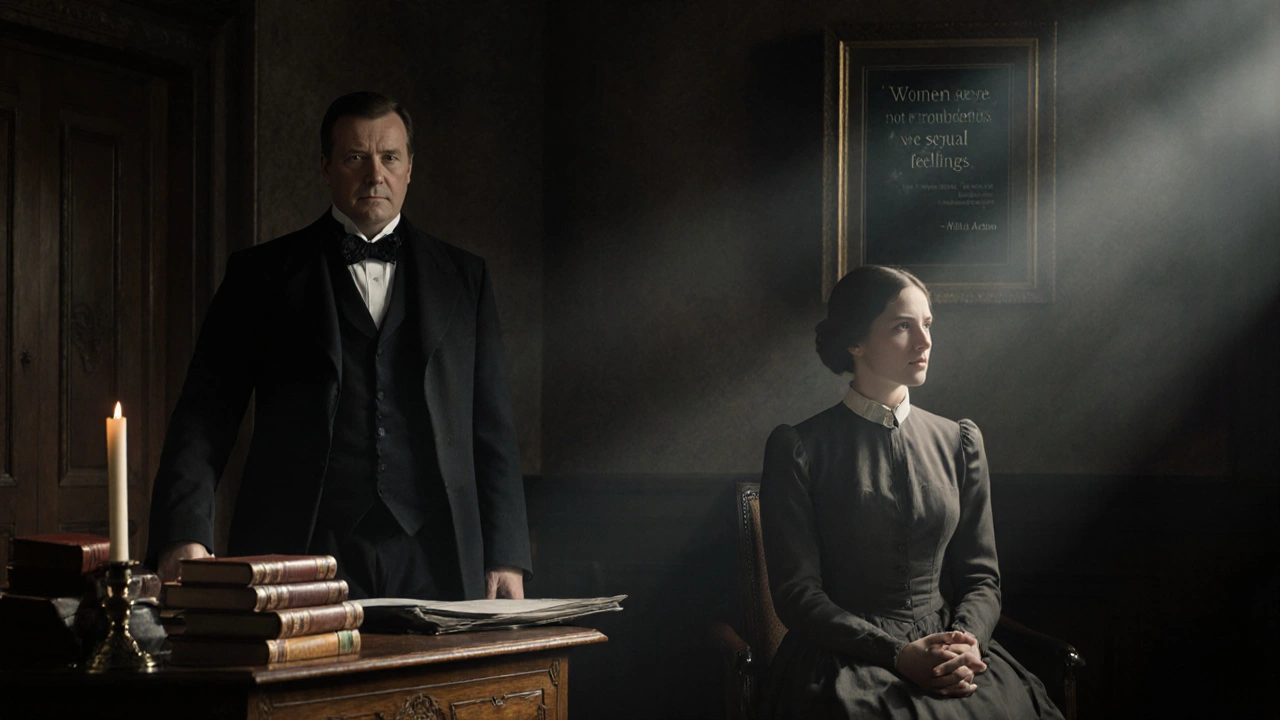
Havelock Ellis and William Acton: How Victorian Medicine Pathologized and Later Humanized Desire
Oct 31 2025 / History & CultureHavelock Ellis and William Acton shaped how Victorian medicine viewed desire-one pathologized it, the other studied it. Their clash laid the groundwork for modern sexology and continues to influence how we understand sexuality today.
VIEW MORE