Inclusive Sex Toy Needs Assessment
Find Your Perfect Fit
Answer these questions to discover which accessibility features matter most for you.
1. What mobility challenges do you face?
2. What sensory considerations are important?
3. What pain management needs do you have?
Your Personalized Recommendations
For decades, sex toys were designed for one body type: able-bodied, neurotypical, and often cisgender. The result? Millions of people with disabilities were left out of conversations about pleasure, intimacy, and autonomy. But that’s changing. Inclusive design in sex toys isn’t a trend-it’s a movement rooted in real stories, real needs, and real people who refused to accept that their bodies didn’t deserve pleasure.
Why Inclusive Design Matters
Pleasure isn’t a privilege. It’s a human right. Yet for years, people with mobility impairments, chronic pain, cerebral palsy, arthritis, spinal cord injuries, and neurodivergent conditions were told to adapt to toys made for someone else. Small buttons. Tight grips. Precise hand movements. These weren’t design choices-they were barriers. The shift started with users speaking up. In 2016, Lewis, founder of Hot Octopuss, received a flood of messages from people with disabilities saying the PULSE vibrator was the first device that let them experience orgasm again after years of loss. That wasn’t luck. It was the result of listening. And it sparked a wave of change. Today, 14 major companies offer accessible sex toys-up from just three in 2019. But this isn’t just about adding a bigger button or a remote control. It’s about rethinking pleasure from the ground up.How Accessible Sex Toys Are Designed
There are three core design approaches that make a difference:- Ergonomic adaptations-shapes that fit the hand, not the other way around. Cute Little Fuckers’ Starsi vibrator, for example, has a 3.2-inch base that lets you cradle it in your palm. No pinching fingers. No gripping. Just pressure spread evenly across your hand.
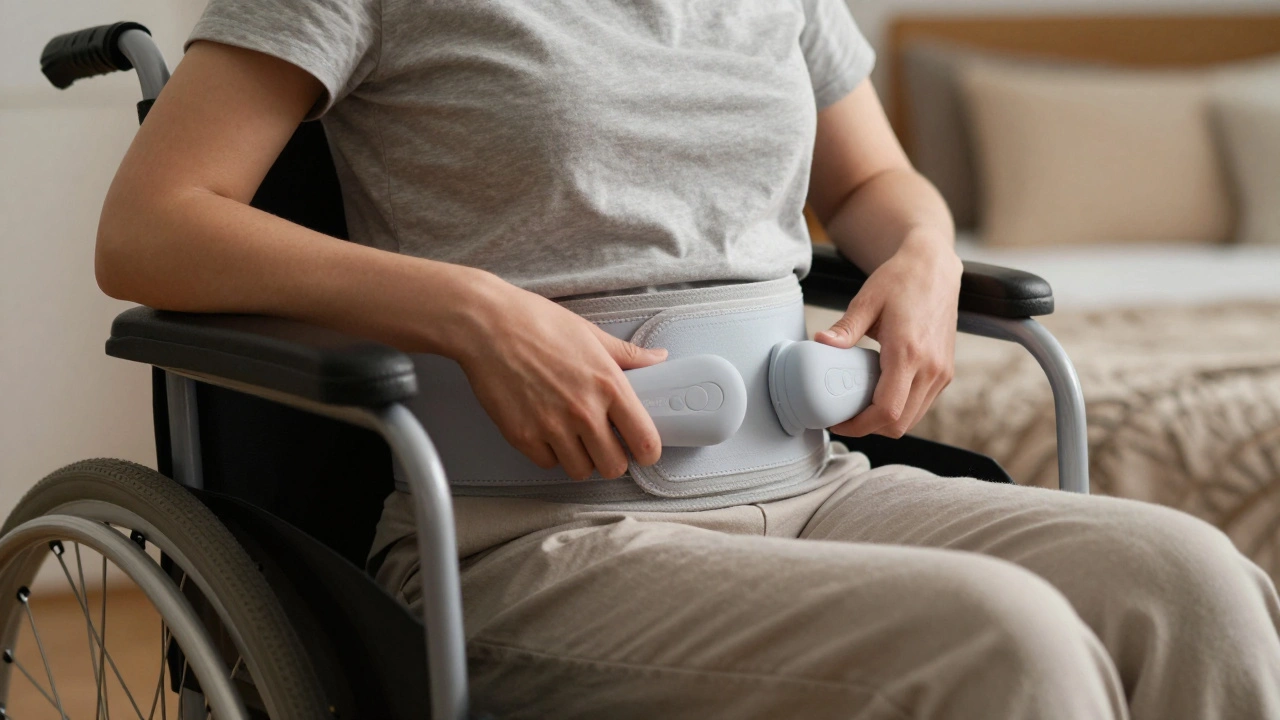
- Hands-free systems-devices that work without hands at all. The Hot Octopuss PULSE II is worn like a belt. It uses suction and vibration to stimulate the penis or clitoris without any manual control. Beta testers with mobility impairments reported 78% success using it independently.
- Multi-sensory interfaces-controls that respond to voice, chin pressure, or even eye movement. Handi’s ‘cuddleplus’ prototype activates with just 0.5 pounds of pressure using a chin-controlled switch. Standard vibrators require 2-3 pounds. That’s the difference between being able to use it… and not.
Real Products, Real Impact
Let’s look at what’s working:- Hot Octopuss PULSE II-8.5 inches long, 1.75-inch head, controlled by a 2.5-inch remote with one large button. In trials, 89% of users with limited hand mobility achieved orgasm. Compare that to 42% with standard wands.
- IntimateRider-a chair designed for spinal cord injuries. It offers 17 adjustable positions and supports up to 350 pounds. Generic pillows? They offer 3-5 positions. Not even close.
- We-Vibe Melt-praised by users with arthritis for its large, textured control button. It requires almost no grip strength. One Reddit user called it “the first toy I didn’t need help to use in 10 years.”
- Ohnut-depth-limiting rings for people with pelvic pain. Clinical trials showed an 82% reduction in pain during intercourse, compared to 41% with standard dilators.
The Hidden Costs of Accessibility
Here’s the hard truth: inclusive design is expensive. The average price for an accessible sex toy is $145. Standard toys? Around $85. That’s a 70% markup. And insurance? Only 3% of U.S. plans cover any sexual wellness product-even when those products are clinically proven to reduce pain or restore function. The FDA still classifies most sex toys as “novelty items,” not medical devices. So even if a toy helps someone with chronic pain walk again, it won’t be reimbursed. Only two companies-Handi and Pleasure Garden-offer sliding scale pricing. The rest? You pay full price or go without.Who’s Still Left Out?
Accessibility isn’t one-size-fits-all. And right now, the market is skewed:- 68% of users are people with mobility impairments.
- 47% have chronic pain.
- But only 19% are neurodivergent-despite high demand for sensory-friendly designs.
What’s Next?
The future is being built now. Hot Octopuss is releasing PULSE III in Q2 2025-with full voice control. LELO’s upcoming ‘Nora’ line lets users swap components to match their specific needs. The Alliance for Inclusive Intimacy, formed in March 2024, now includes 11 manufacturers committed to a global accessibility standard. But true inclusion isn’t just about better products. It’s about changing the narrative. As Dr. Anna Williams wrote in the Journal of Sexual Medicine, “True inclusion requires moving beyond product adaptations to fundamentally reimagining pleasure from disability perspectives.” That means designing for pleasure-not pity. For autonomy-not assistance. For bodies as they are, not as someone thinks they should be.How to Find the Right Toy
If you’re looking for an accessible toy, here’s how to start:- Identify your need-Is it grip strength? Hands-free use? Sensory sensitivity? Pain management?
- Look for co-created designs-Check if the company worked with disabled users during development. Look for testimonials from people with similar conditions.
- Check controls-Can you operate it with your elbow, chin, voice, or foot? If it needs fine finger movement, it’s probably not right.
- Ask about cleaning-Many accessible toys have complex shapes. Make sure they’re easy to sanitize.
- Look for support-LELO offers 24/7 video support. Smaller brands? They rely on Reddit or email. Know what you’re signing up for.
FAQ
Are accessible sex toys only for people with physical disabilities?
No. While many designs focus on mobility, there are products for neurodivergent users, people with chronic pain, sensory sensitivities, and even those recovering from surgery. Toys with soft textures, low noise, and predictable vibration patterns are especially helpful for autistic users. Some brands now offer customizable intensity and rhythm settings to reduce sensory overload.
Can I get insurance to cover an accessible sex toy?
Currently, only 3% of U.S. insurance plans cover any sexual wellness product. Even if a toy reduces pain or restores function, the FDA classifies most as novelty items, not medical devices. Some users have successfully appealed coverage using a doctor’s letter stating the device is medically necessary-but it’s rare. Advocacy groups are pushing for reclassification.
Why are accessible sex toys so expensive?
They’re made in small batches, use medical-grade materials, and require extensive user testing. Unlike mass-produced toys, each accessible product often goes through months of feedback loops with disabled communities. That research and customization adds cost. Only two companies-Handi and Pleasure Garden-offer sliding scale pricing. The rest rely on direct sales, which keeps prices high.
Do these toys work with mobility aids like wheelchairs or Hoyer lifts?
Yes, many are designed with that in mind. The IntimateRider chair integrates with standard wheelchair frames. Some users pair PULSE II with modified Hoyer lifts for positioning. Occupational therapists often help customize setups using pillows, straps, or adaptive mounts. The key is flexibility-look for toys that don’t require you to change your body to fit the device.
Are there gender-neutral options?
Yes. Brands like Cute Little Fuckers design toys that don’t assume anatomy or gender. Their products are marketed as body-agnostic, and their internal survey showed 94% satisfaction across diverse gender identities. Traditional toys often use pink, phallic shapes, and gendered language-which can feel alienating. Inclusive design means offering pleasure without labels.