The Victorian Judgment Simulator
Step into a Victorian drawing room. Your task is to predict how society would judge specific individuals based on their actions, gender, and class. Remember: Respectability was currency, and the rules were not equal.
Verdict
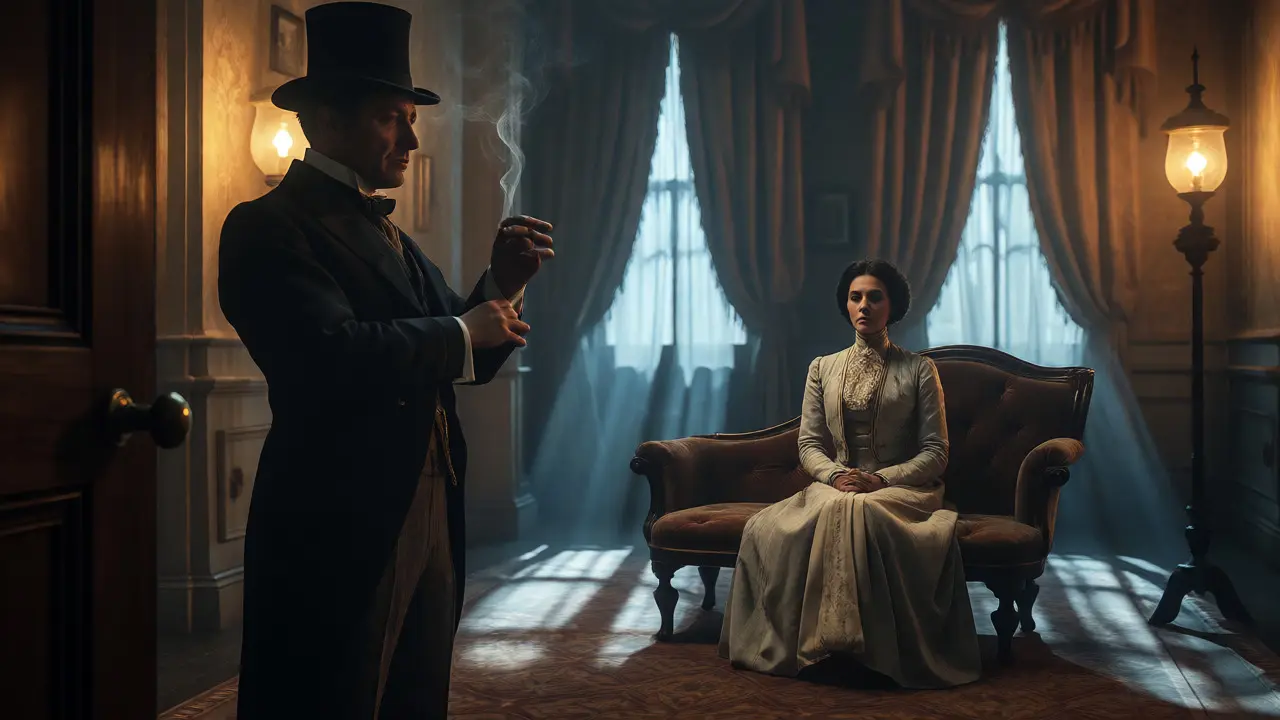
You walk into a Victorian drawing room. The air is thick with the scent of lavender and judgment. A man arrives late from a club, smelling faintly of gin and tobacco. He is forgiven. His wife, who stayed home, is praised for her purity. But what if she had gone to that same club? She would have been ruined. This wasn't just about manners; it was about survival. In Victorian Britain, the rigid social hierarchy of the 19th century enforced strict behavioral codes based on class and gender, creating a system where men could sin quietly while women were punished loudly.
The idea of "respectability" sounds boring today, but back then, it was currency. It determined whether you ate or starved, whether your children went to school or the workhouse. And at the heart of this economy of shame was a brutal sexual double standard. Men were expected to have urges; women were expected to suppress them entirely. If a woman showed desire, she wasn't human-she was dangerous. Let's unpack how this worked in the cities, where the pressure was highest and the consequences were most severe.
The Cult of Domesticity: Women as Moral Guardians
To understand the double standard, you first need to grasp the ideal of womanhood. Historians call this the "Cult of Domesticity." It wasn't just a suggestion; it was a prescription for life. Women were supposed to be pious, pure, submissive, and domestic. These four traits defined their worth. If you lacked even one, you were suspect.
In urban centers like London or Manchester, this ideal clashed violently with reality. Most working-class women couldn't afford to stay home. They worked in factories, served in other people's houses, or sold goods on the street. Yet, they were still judged by middle-class standards. A factory worker who laughed too loud or wore a slightly brighter dress might be labeled "loose." Her morality was tied to her economic status, which she didn't control. This created a trap: to be respected, you needed money; to get money, you often had to work outside the home, which risked your reputation.
Middle-class women fared differently but not much better. Their job was to create a sanctuary from the harsh industrial world. Their bodies were seen as vessels for reproduction, not sources of pleasure. Sex within marriage was a duty, not a joy. Adultery for a woman meant total social exile. For a man, it meant a quiet divorce settlement and a new mistress. The asymmetry was absolute.
Male Privilege and the "Natural" Urge
Men operated under a completely different set of rules. Victorian society viewed male sexuality as an uncontrollable force, almost like weather. You couldn't stop rain, so why blame a man for seeking relief? This belief excused infidelity, prostitution, and general licentiousness among men of means. It wasn't seen as a moral failing; it was biology.
This excuse protected powerful men. Politicians, businessmen, and aristocrats maintained public facades of decency while privately visiting brothels or keeping mistresses. The law reflected this bias. Until the Married Women's Property Acts changed things later in the century, a husband owned his wife's property and her body. Divorce laws heavily favored men. A husband could divorce his wife for a single act of adultery. A wife, however, had to prove adultery plus another aggravating factor like cruelty or desertion to leave her husband. That’s a massive legal imbalance rooted in sexual norms.
But let's be clear: this privilege wasn't universal. Working-class men faced their own pressures. They were often blamed for the poverty of their families, accused of drinking away wages earned by their wives' labor. So while upper-class men enjoyed impunity, poorer men were scrutinized for their lack of self-control. Still, compared to women, their options were vastly wider.
The City as a Stage for Scandal
Rural communities had eyes everywhere, but cities offered anonymity. Or did they? In Victorian urban Britain, neighborhoods were tight-knit networks of gossip. Everyone knew everyone’s business. This made the city a panopticon of judgment. If you stepped out of line, word traveled fast.
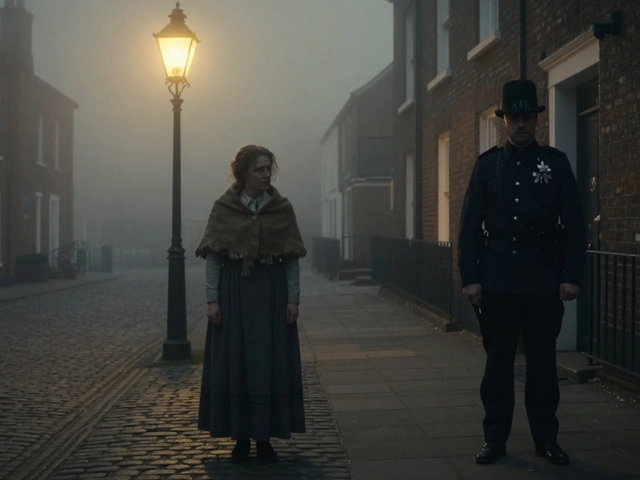
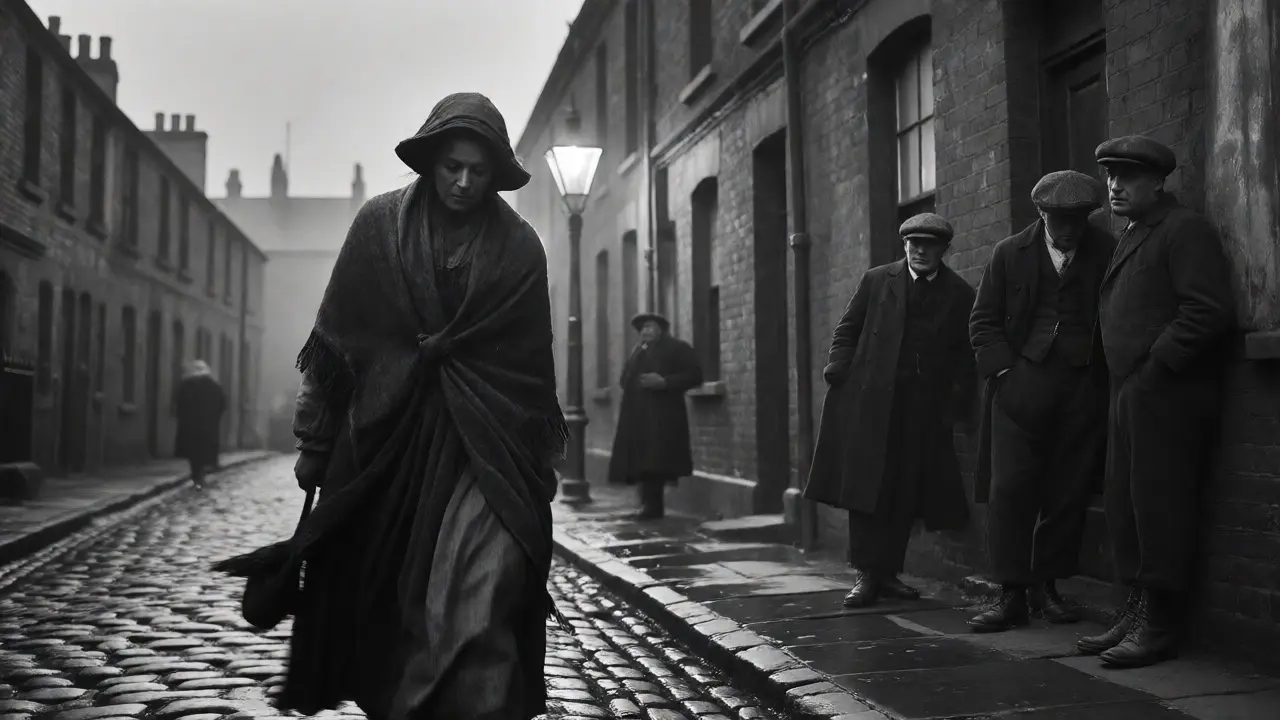
Public spaces became battlegrounds for respectability. Parks, music halls, and streets were policed not just by police, but by social expectation. Women walking alone after dark were assumed to be "on the town" (a euphemism for prostitution). A man walking alone was just a man. This spatial segregation limited women’s freedom. To go to the theater alone was risky. To travel without a chaperone was scandalous. The city promised opportunity, but it also demanded constant performance of virtue.
Consider the case of Florence Maybrick, tried in 1889 for poisoning her husband. The trial wasn't just about arsenic; it was about her alleged affairs and her refusal to conform to wifely duties. The jury convicted her largely because she failed the test of respectability. Her sexuality was on trial alongside her actions. This shows how deeply intertwined sex and class were. Her fall from grace was spectacular because her rise had been visible.
Prostitution: The Shadow Economy of Desire
If respectable women were repressed, prostitution was the release valve. It was huge. Estimates suggest there were tens of thousands of prostitutes in London alone during the mid-19th century. Why so many? Because the double standard created demand. Men wanted sex outside marriage, and women needed money to survive.
Prostitution wasn't just a moral issue; it was an economic one. Many women entered the trade due to low wages, unemployment, or family crises. They weren't all "fallen angels" as literature portrayed them. Some were savvy entrepreneurs managing their own lives in a restrictive society. However, society refused to see them as workers. They were criminals or victims, never agents.
The Contagious Diseases Acts of the 1860s highlight this hypocrisy. These laws allowed police to forcibly examine women suspected of prostitution for venereal diseases. Men, the carriers, were never examined. If a woman tested positive, she was locked up. If a man infected her, he walked free. This medicalized the double standard, turning women’s bodies into sites of state control. It took decades of activism, led by figures like Josephine Butler, to repeal these acts.
Class Friction: Who Gets to Be "Respectable"?
Respectability wasn't just about sex; it was about class mobility. The emerging middle class obsessed over distinguishing themselves from the working class. One way to do this was through stricter sexual mores. By policing women’s behavior more tightly, middle-class men asserted their superiority. They claimed to be more civilized, more moral, more controlled than the rougher, louder working class.
This created tension. Working-class women often had more practical freedoms. They managed household finances, worked openly, and interacted with men socially without the same stigma. Middle-class women, confined to the home, had less power but more prestige-if they followed the rules. When working-class women adopted middle-class behaviors, they were sometimes mocked as "snobs." When middle-class women broke the rules, they were destroyed.
Education played a role here too. As literacy spread, women read novels that challenged these norms. Authors like George Eliot wrote complex female characters who struggled against societal constraints. Readers saw themselves in these stories. This cultural shift began to crack the foundation of the double standard, though slowly.

The Cracks Begin to Show: Late Victorian Shifts
By the late 1800s, things started to change. New ideas about psychology, medicine, and women’s rights emerged. The concept of "sexuality" itself was being invented. Before this, people talked about acts, not identities. Now, doctors and psychologists began categorizing people by their desires. This opened the door for discussing female desire, albeit pathologized initially.
The "New Woman" of the 1890s challenged the old ideals. She rode a bicycle, smoked cigarettes, went to university, and refused to marry solely for security. Critics called her unfeminine and hysterical. Supporters called her liberated. This figure embodied the struggle between old respectability and new autonomy. She proved that women could exist publicly without being sexualized or shamed, though backlash remained fierce.
Legal reforms also helped. Changes in divorce law gave women more leverage. Property rights improved. Access to higher education increased. These structural changes didn't erase the double standard overnight, but they weakened its grip. Women gained tools to negotiate their lives rather than just endure them.
Key Takeaways
- Respectability was economic: Social standing directly impacted financial security and employment opportunities.
- Gendered laws: Legal systems explicitly favored men in cases of adultery and property ownership.
- Urban surveillance: Cities amplified scrutiny, making public behavior a high-stakes performance.
- Prostitution as symptom: The sex trade thrived because male demand was excused while female supply was stigmatized.
- Class distinction: Strict sexual morals were used by the middle class to differentiate themselves from the working class.
Frequently Asked Questions
Why were Victorian women expected to be sexually passive?
Victorian ideology viewed women as morally superior but physically weaker. Their role was to manage the domestic sphere and raise virtuous children. Active sexuality was seen as masculine and potentially disruptive to the family unit. Women were taught that desire was something men had, and women merely accommodated it.
Did working-class women face the same sexual standards as middle-class women?
Not exactly. While both groups faced judgment, working-class women had more visibility in public spaces and workplaces. They were often stereotyped as less moral or more coarse. Middle-class women were held to a stricter ideal of invisible purity. However, poor women faced harsher economic penalties for losing their reputation, as respectability was key to securing domestic service jobs.
How did the law treat adultery differently for men and women?
Until the late 19th century, a husband could divorce his wife for a single act of adultery. A wife, however, had to prove her husband committed adultery along with another offense, such as cruelty, bigamy, or rape. This legal framework treated women as property whose fidelity belonged to the husband, while men retained sexual autonomy.
What role did religion play in enforcing these standards?
Religion, particularly Evangelical Christianity, reinforced the idea of sin and redemption. Female chastity was linked to spiritual purity. Churches provided community support but also enforced conformity. Attending church was a public display of respectability. Missing services or behaving improperly could lead to social ostracization within religious communities.
Were there any exceptions to the sexual double standard?
Yes, but they were rare and costly. Women who were exceptionally wealthy or talented (like actresses or artists) sometimes gained leeway, but they were always scrutinized. "Fallen women" who repented and married well could reintegrate. However, the default position remained punitive for women who deviated, regardless of circumstance.