
Victorian State Control: The CDA Analysis Tool
Explore the stark contrast between the treatment of men and women under the Contagious Diseases Acts (1864–1886) and the economic realities that drove women into the system.
Legal Classification:
"Common Prostitute" (Police Discretion)
Legal Status:
Anonymous and Unchecked
Quick Takeaways
- The CDAs focused on forced medical exams of women to reduce STIs in military personnel.
- They created a "gendered double standard" by ignoring the role of male clients in disease transmission.
- Lock hospitals were used to confine infected women for months at a time.
- The repeal campaign led by Josephine Butler marked a turning point for early feminist political activism.
- Economic desperation, not just "moral failure," drove many women into sex work during this era.
The Military Machine and the "Subjected Districts"
By the 1860s, the British government had a problem. An 1863 Royal Commission report revealed that roughly 4% of the Army and 7% of the Royal Navy were out of action due to sexually transmitted infections. To the War Office, this wasn't a health crisis; it was a security risk. Their solution was to turn specific towns and ports-like Aldershot, Chatham, and Portsmouth-into "subjected districts."
In these zones, the law gave police sweeping powers. If an officer decided a woman looked "immoral"-maybe she walked alone at night or wore a certain style of dress-she could be arrested. Once brought before a magistrate, she could be certified as a "common prostitute." Because the law never actually defined what a "common prostitute" was, anyone from a working-class girl to a military wife could find herself caught in the net. Once registered, these women were forced to undergo internal medical examinations every 14 days. If they refused, they faced hard labor in prison.
The Horror of Lock Hospitals
When a woman was found to have syphilis or gonorrhea during these exams, she wasn't just given medicine; she was imprisoned. She was sent to a Lock Hospital, which was a specialized medical facility designed to isolate and treat women with venereal diseases. Under the 1864 Act, confinement lasted three months, but by 1869, this was extended to nine months.
The experience inside these hospitals was often brutal. These examinations were frequently performed without anesthesia, and the settings were rarely private, often involving multiple observers. Women described the process as "violent and degrading," with some comparing it to being treated like animals at a slaughterhouse. This system created a massive administrative machine, costing the government about £37,000 annually (over £4 million today) to maintain 12 hospitals and a staff of 42 government surgeons.
| Act Year | Number of Districts | Max Confinement Period | Primary Objective |
|---|---|---|---|
| 1864 | 11 | 3 Months | Initial trial in southern England/Ireland |
| 1866 | 12 | 6 Months | Expansion of police powers and duration |
| 1869 | 18 | 9 Months | Maximum geographical and punitive reach |

A Gendered Double Standard
The most glaring flaw in the CDAs was the total absence of male accountability. While women were hunted, examined, and locked away, the men who contracted and spread the diseases-the soldiers and sailors-were never required to undergo examinations. This created a medical absurdity. Even the government's own medical officers, like Dr. Thomas Spencer Wells, admitted in 1870 that the system was unsound because men continued to transmit the disease back to the women after they had been treated.
This wasn't just a medical failure; it was a social statement. The laws protected male anonymity while stripping women of their bodily autonomy. This discrepancy highlights the Victorian era's deep-seated belief that women were the sole carriers of "impurity" and the only ones who needed to be managed by the state.
Economic Desperation and the Purity Movement
To understand why prostitution was so common, we have to look at the money. In the 1860s, a woman in domestic service earned about 7 shillings a week. A prostitute could make 5 to 10 shillings. For many, sex work wasn't a "lifestyle choice" but a survival strategy. This was especially true for military wives. An average soldier earned just 13 shillings a week-nowhere near enough to support a family. This economic gap pushed about 12% of military wives into prostitution just to keep a roof over their heads.
At the same time, the Social Purity Movement began to gain traction. While the CDAs were a form of "regulation," the purity movement sought the total elimination of prostitution and a higher moral standard for both genders. This created a clash of ideologies: the War Office wanted "clean" prostitutes, while purity advocates wanted a society without the trade entirely.
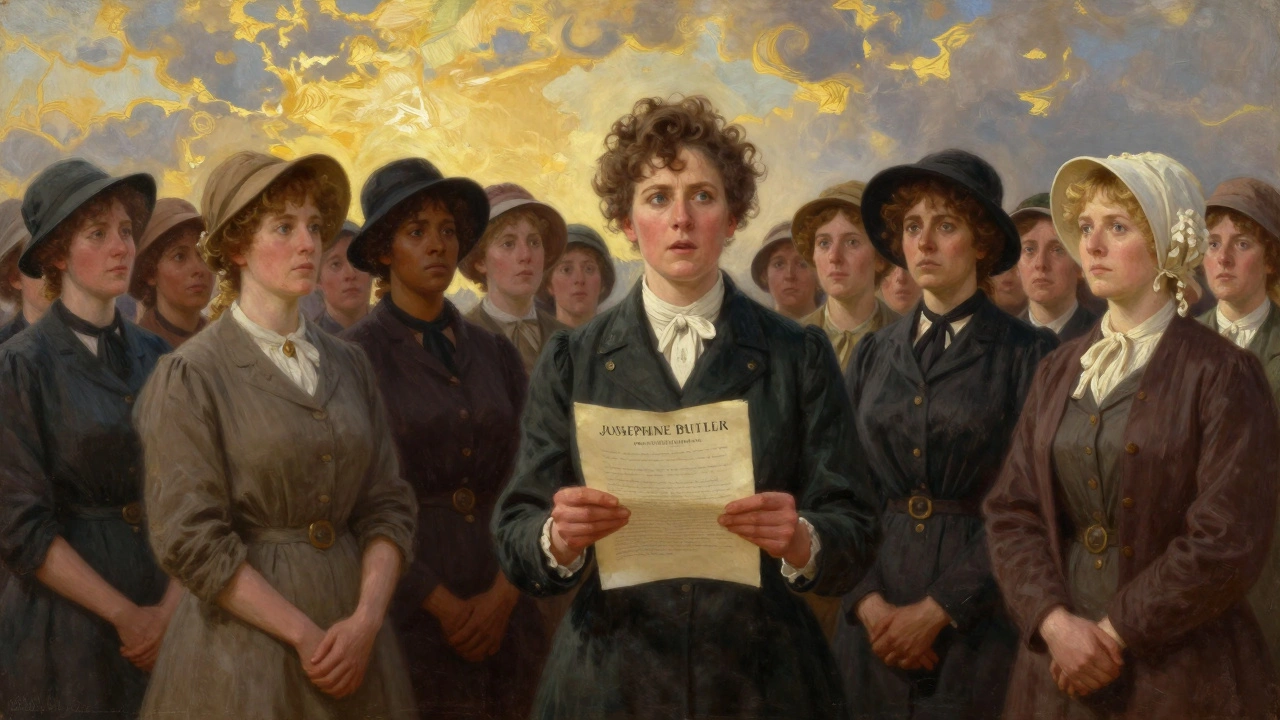
The Rise of the Ladies' National Association
The tide began to turn in 1869 when Josephine Butler founded the Ladies' National Association (LNA) for the Repeal of the Contagious Diseases Acts. Butler, a Quaker and social reformer, didn't just argue that the laws were ineffective; she called them "legalized rape." She recognized that the CDAs were a systematic violation of women's rights and a targeted attack on the poor.
The LNA was revolutionary. It started with 123 women and grew into a powerhouse of 90,000 members across 450 branches. This was one of the first times in British history that middle-class women organized on a national scale to challenge the state. They used evidence and testimonies from working-class women to show that the laws were not only cruel but failed to actually lower disease rates. In fact, a 1871 Royal Commission found that venereal disease rates actually increased by 15% in the subjected districts compared to areas without the Acts.
The Path to Repeal and Long-Term Legacy
After nearly two decades of relentless campaigning, the government finally blinked. The laws were suspended in 1883 and formally repealed in 1886. The fallout was surprising to the military establishment: once the forced examinations stopped, disease rates among soldiers actually decreased by 25% over the next decade. The theory that state-regulated prostitution was the only way to keep an army healthy was proven wrong by the data.
The legacy of this fight extends far beyond the 1880s. The arguments used by the LNA helped push through the 1898 Criminal Law Amendment Act, which raised the age of consent from 13 to 16. More importantly, it proved that women could be a formidable political force long before they had the right to vote. It established the precedent that bodily autonomy is a fundamental right that the state cannot simply ignore for the sake of "efficiency" or "military readiness." Today, these laws serve as a cautionary tale in medical ethics, reminding us why informed consent is non-negotiable.
Were the Contagious Diseases Acts effective at reducing disease?
No. While proponents like Dr. William Acton claimed they would reduce rates by 70%, a 1871 Royal Commission found that venereal disease rates actually increased by 15% in the districts where the Acts were enforced. After the laws were repealed, rates actually dropped by 25% between 1886 and 1895.
Who was Josephine Butler?
Josephine Butler was a prominent social reformer and founder of the Ladies' National Association (LNA). She led the 18-year campaign to repeal the CDAs, framing the legislation as a violation of women's bodily autonomy and a form of state-sanctioned discrimination.
What happened to women who refused the medical exams?
Women who refused to comply with the mandatory fortnightly examinations could be arrested and sentenced to imprisonment with hard labor for up to one month.
Why were military wives targeted by these laws?
Many military wives were forced into prostitution because the soldiers' wages (averaging 13 shillings a week) were too low to support a family. Because they lived in military towns, they were frequently swept up in police raids and registered as "common prostitutes" due to their poverty and living situations.
What was a "lock hospital"?
A lock hospital was a specialized facility used to isolate and treat women diagnosed with STIs under the CDAs. Women could be confined there for anywhere from three to nine months depending on which version of the Act was in effect.
Next Steps for Research
If you're interested in how these laws shaped later society, look into the history of the Suffragette movement, as many of the organizational tactics used by the LNA were adopted by later voting rights activists. You might also explore the Criminal Law Amendment Act of 1898 to see how the shift from "regulating" to "protecting" vulnerable women changed British legal standards. For those focused on public health, comparing the CDAs to early 20th-century hygiene laws in other colonies reveals a pattern of gendered medical surveillance that persisted long after 1886.