Early Cinema History Quiz
Loading question...
Quiz Complete!
You scored:
0/5
Imagine sitting in a dimly lit room in Paris, 1896. You aren't watching the Lumière brothers' train arrive at La Ciotat station for the first time. Instead, you are watching something far more controversial: two people undressing and engaging in acts that would get them arrested if seen by the wrong police officer. This wasn't just smut; it was a technological marvel wrapped in scandal. Early porn films from the 1890s represent the birth of erotic cinema, a genre that emerged almost simultaneously with the invention of motion pictures themselves. These short, silent clips weren't made for mass distribution. They were private novelties, often marketed as "sexual aids" for men who wanted to see what they couldn't easily find in the conservative Victorian era.
You might think pornography is a modern phenomenon, fueled by high-speed internet and smartphone screens. But the demand for visual eroticism predates the digital age by over a century. In fact, the very first movies ever shown to paying audiences included explicit content. While mainstream cinema was busy capturing trains leaving stations or workers leaving factories, underground filmmakers were experimenting with nudity and intimacy. Understanding this history changes how we view the relationship between technology, censorship, and human desire.
The Intersection of Technology and Taboo
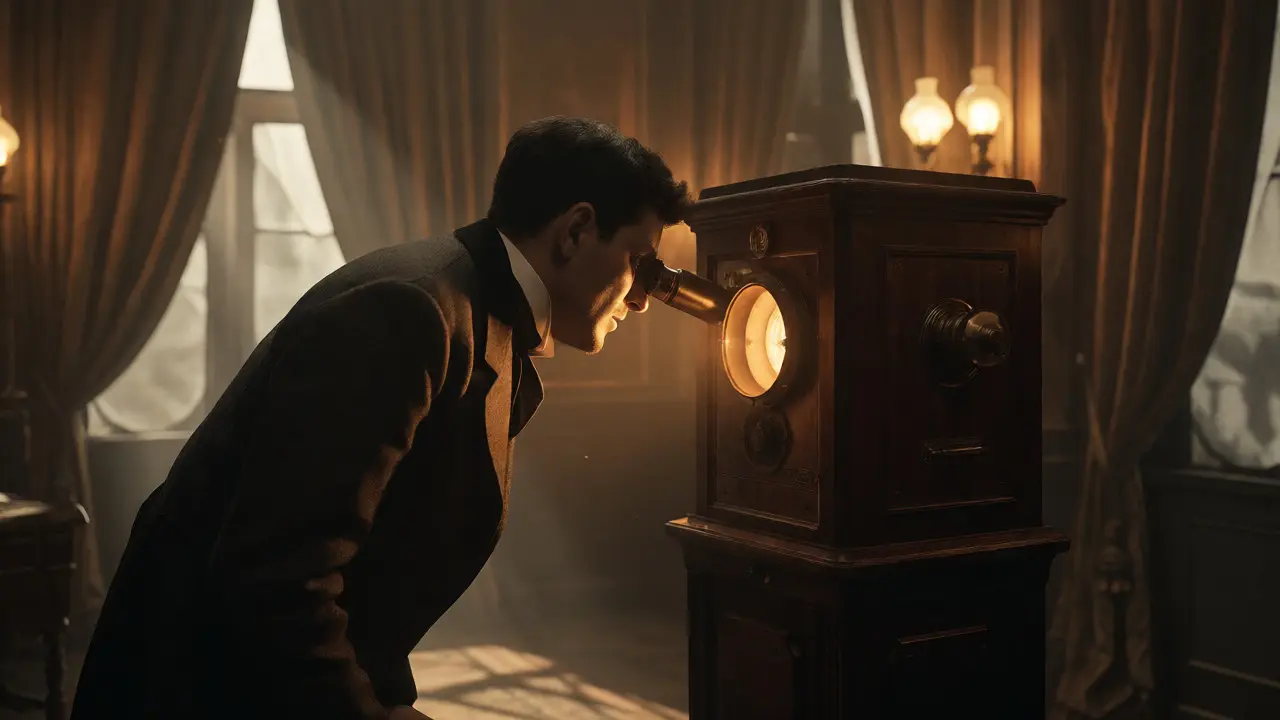
To understand why these films appeared when they did, you have to look at the tools available. The late 19th century saw rapid advancements in photography and optics. Devices like the Kinetoscope and the Mutoscope allowed individuals to view moving images through a peephole. Unlike projected films, which required an audience, these devices offered privacy. This privacy was crucial. It meant a man could pay a penny to watch a nude woman dance without his wife, mother, or priest knowing about it.
These early machines didn't just show innocent dancers. Manufacturers quickly realized that adding nudity increased profits. The result was a wave of "looping" films-short clips designed to be viewed repeatedly. Because there was no sound, the focus was entirely visual. Directors used creative camera angles and editing tricks to imply sex acts without showing full penetration, navigating the strict moral codes of the time while still delivering the goods.
| Device Name | Inventor/Company | Viewing Method | Primary Use Case |
|---|---|---|---|
| Kinetoscope | Edison Manufacturing Co. | Peephole viewing | Individual entertainment, novelty shows |
| Mutoscope | Herman Casler | Hand-cranked flipbook mechanism | Arcades, bar parlors, private clubs |
| Zoetrope | Various manufacturers | Spinning drum with slits | Pre-film animation, educational demos |
Famous Titles and Underground Distribution
Some of these films became legendary in their own right, though mostly among collectors and law enforcement. One of the most famous examples is Le Coucher de la Mariée (The Bedtime for the Bride), released around 1896 by Eugène Pirou. It depicted a bride being undressed by her maid. Another notable title was Elle et Lui (She and He), which showed a couple in bed. These films were rarely screened publicly. If they were, they were shown in exclusive clubs or behind closed doors.
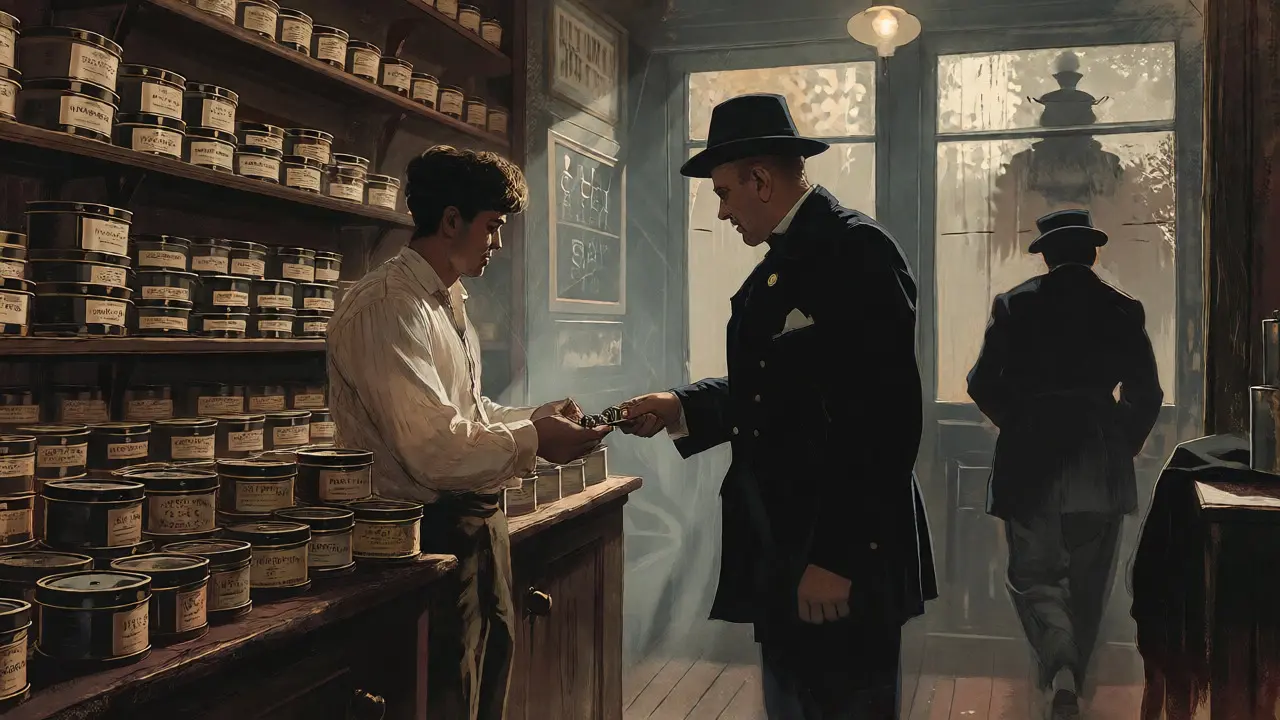
Distribution was a cat-and-mouse game. Producers sold films to specific venues rather than releasing them widely. This limited exposure helped avoid immediate legal backlash. However, as copies multiplied, so did the risk. Police raids became common in major cities like London, Paris, and New York. Officers would confiscate reels and arrest operators for "obscene exhibition." The fines were steep, but the profits were steeper, keeping the industry alive despite constant threats.
Censorship Laws and Legal Loopholes
Censorship in the 1890s wasn't just about morality; it was about control. Governments feared that unrestricted access to such imagery would corrupt public morals and disrupt social order. In the United States, the Comstock Act of 1873 already banned the mailing of "obscene" materials. When film arrived, courts struggled to classify it. Was a movie a photograph? A performance? A publication?
Filmmakers exploited these ambiguities. Many early porn films were labeled as "educational" or "medical" demonstrations. By framing nudity as scientific study of the human body, producers could sometimes evade charges of obscenity. For instance, a film showing childbirth or anatomical models might pass muster, while a similar scene with romantic context would not. This dual identity allowed the genre to survive in the shadows, waiting for cultural norms to shift.
In Europe, particularly France, attitudes were slightly more relaxed. Paris became a hub for erotic filmmaking partly because its laws were less stringent regarding artistic expression. This geographical difference created a trade network where films produced in France were smuggled into stricter jurisdictions like Britain and America. The border checks were porous, and customs officials often turned a blind eye-or took a bribe-to let the reels pass.
The Role of Women and Labor
We often forget the people behind the camera. Most actors in these early films were women working in low-wage jobs. They weren't necessarily "stars" in the modern sense. Many were former circus performers, dancers, or even prostitutes looking for steady income. Working conditions were poor. Shoots were quick, often lasting only minutes, but the stigma attached to appearing nude was severe.
Unlike today's adult industry, there was little glamour. These women faced social ostracization if identified. Yet, they also had agency. Some negotiated their fees directly. Others formed small networks to share information about reliable producers versus those who might cheat them. Their labor built the foundation of an industry that would eventually become worth billions.
Legacy and Modern Parallels
The patterns established in the 1890s still resonate today. We see the same tension between innovation and regulation. Every new medium-from VHS tapes to streaming services-has faced initial resistance before becoming normalized. The early porn films proved that demand for visual erotica is resilient. No matter how many laws are passed or how many technologies change, people seek out these experiences.
Moreover, the technical innovations driven by the need to hide or enhance certain shots influenced mainstream cinematography. Close-ups, soft lighting, and careful framing-all techniques used to make nudity appealing yet palatable-became standard tools in all filmmaking. So next time you watch a romance scene in a Hollywood blockbuster, remember that its roots lie in those shaky, silent reels from the 1890s.
Frequently Asked Questions
Were early porn films considered illegal in the 1890s?
Yes, in many countries, including the US and UK, exhibiting obscene material was illegal under various vice laws. However, enforcement varied. Often, these films were sold privately or shown in restricted venues to avoid public prosecution. In some cases, they were disguised as medical or educational films to bypass censorship.
How were early porn films distributed?
Distribution was primarily underground. Films were sold to specific arcade owners, club proprietors, or private collectors. There was no mass marketing. Copies were hand-delivered or shipped discreetly. This limited distribution helped maintain secrecy and reduced the likelihood of widespread legal action against producers.
Did early porn films have sound?
No, films from the 1890s were silent. Sound synchronization in cinema didn't become commercially viable until the late 1920s. Early erotic films relied entirely on visual cues, facial expressions, and body language to convey intimacy and arousal.
Who acted in these early films?
Actors were typically non-professionals, including dancers, circus performers, and sex workers. Few were credited by name due to the stigma associated with nudity. Many worked anonymously to protect their reputations and livelihoods outside the film industry.
Why are 1890s porn films significant to film history?
They demonstrate that erotic content was present from the very beginning of cinema. They also drove technical innovations in close-up photography and editing. Furthermore, they highlight the ongoing conflict between artistic expression, commercial demand, and societal norms.