📜 The Hirschfeld Institute Timeline
Explore the critical moments in the history of the Institute for Sexual Science. Click on any year below to learn about the event.
Key Events
Event Title
YearDescription goes here.
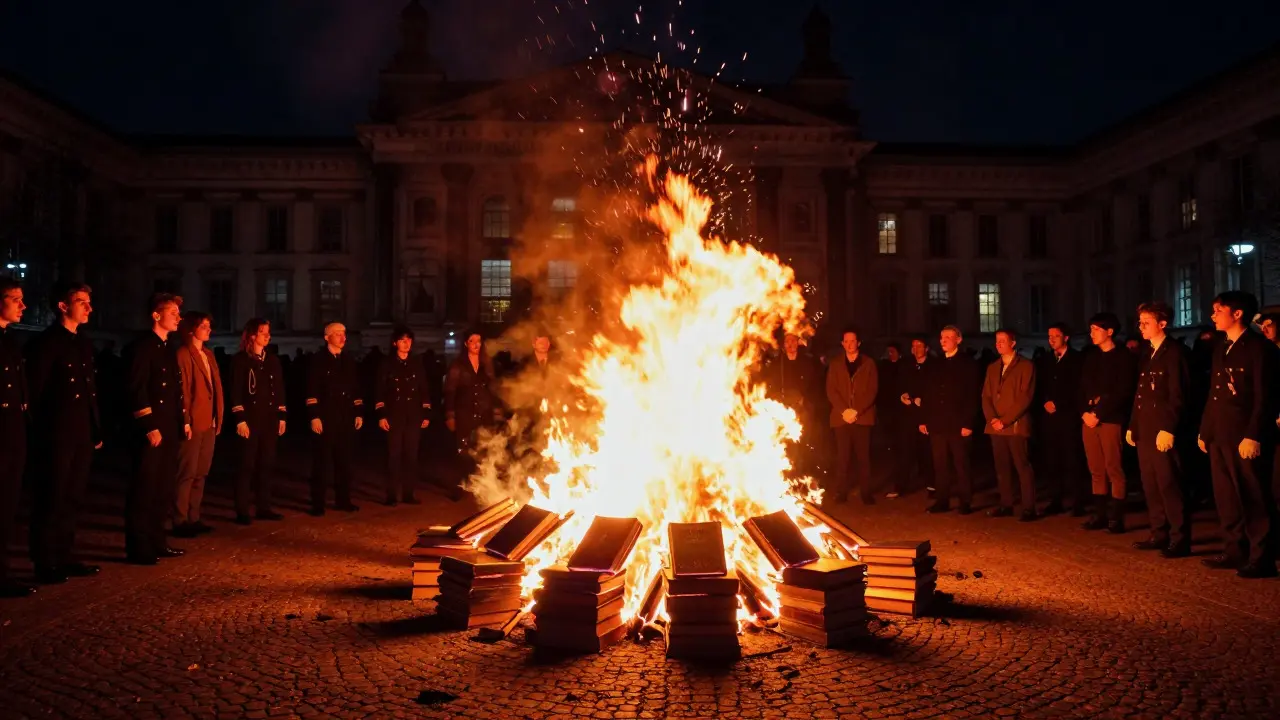
On May 10, 1933, students at Berlin University dragged crates of books from a prestigious institute into the courtyard and set them alight. Among the ashes were not just philosophical texts or political pamphlets, but medical journals, legal codes, and anthropological studies that had defined modern sexology is the scientific study of human sexuality, including biological, psychological, and social aspects. The target was the Hirschfeld Institute is a pioneering research center for sexology and homosexuality founded by Magnus Hirschfeld in 1919, a place where science, activism, and medicine intersected to challenge centuries of stigma.
This wasn't just a symbolic gesture. It was an act of epistemic violence designed to erase a specific worldview: one that argued sexual diversity was natural, measurable, and deserving of legal protection. To understand why this mattered, we have to look at what the Institute actually did before it was destroyed, and how its legacy survived despite the efforts of the Nazi regime is the totalitarian government of Germany under Adolf Hitler from 1933 to 1945.
The Birth of a Scientific Haven
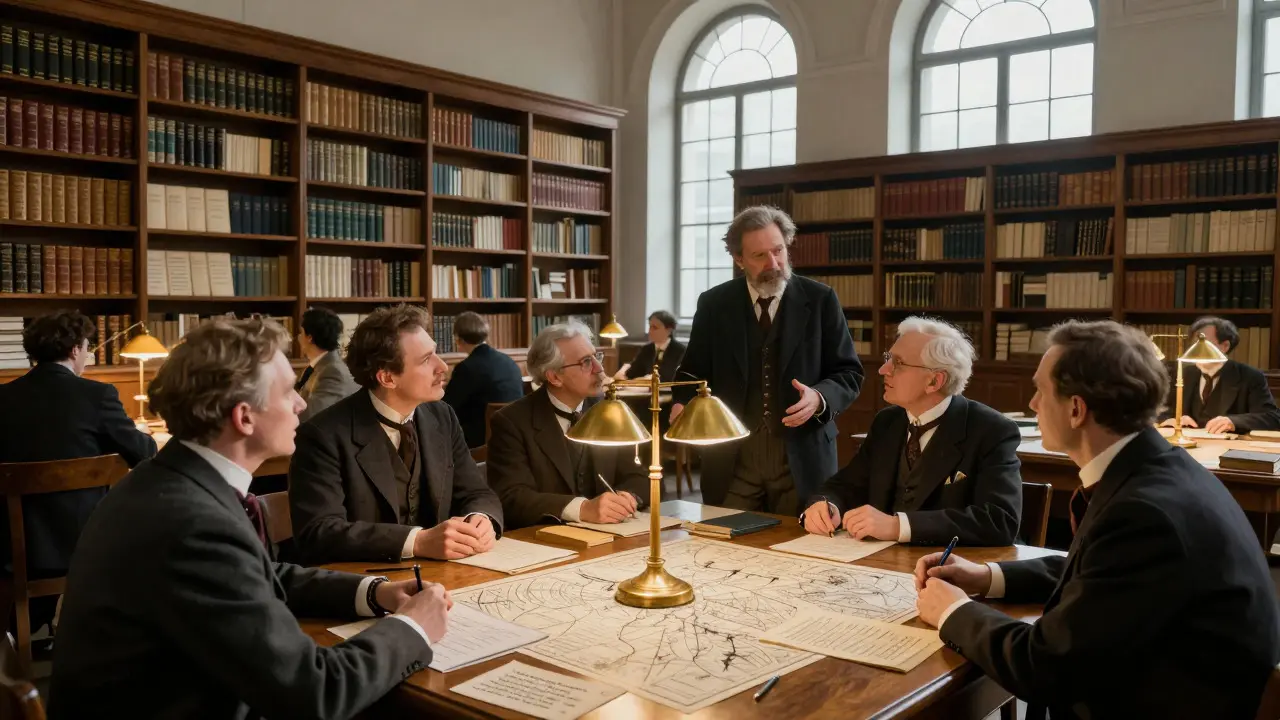
Magnus Hirschfeld didn't start out as a radical activist; he started as a doctor who asked uncomfortable questions. In the early 20th century, homosexuality was largely viewed through two lenses: either as a moral failing or a mental illness. Hirschfeld proposed a third option: it was a variant of human nature, biologically rooted and socially constructed.
- Founding Date: 1919, shortly after World War I ended.
- Location: Berlin, Germany (initially at Kurfürstendamm 216).
- Core Mission: To use scientific data to decriminalize homosexuality and promote sexual education.
Activism Through Science
You might think a research institute would stay behind closed doors, but Hirschfeld’s team was aggressively public. They didn't just publish papers; they lobbied politicians, held lectures in schools, and even ran a clinic for transgender individuals. This dual approach-science as proof, activism as application-made them dangerous to the status quo. One of their most significant contributions was the push to repeal Paragraph 175 of the German Criminal Code, which criminalized male homosexuality. By presenting data showing that "inverts" (their term for homosexual men) were a stable minority rather than a deviant class, they hoped to shift public opinion. Their strategy relied on visibility. If society saw these people as normal citizens with complex inner lives, shame would lose its power. However, this visibility also made them targets. Conservative groups, the Catholic Church, and rising nationalist movements viewed the Institute as a hotbed of degeneration. To them, studying sexuality openly was itself a sin.
The Night of the Books
The destruction of the Institute's library on May 10, 1933, is one of the most iconic images of the early Nazi era. But the context matters. By then, the Nazis had already been in power for three months. They had banned independent trade unions, established concentration camps, and passed the Enabling Act that gave Hitler dictatorial powers. The book burnings were organized by the German Students' League is a student organization aligned with Nazi ideology that led cultural purges in universities. They targeted works by authors deemed "un-German," including Marx, Freud, Einstein, and, crucially, Hirschfeld. The Institute's collection included rare manuscripts, photographs of patients, and legal records that documented decades of advocacy. When the fire crews arrived, they hesitated. Some firefighters reportedly saved boxes of documents, sensing the value of what was being lost. But most of the physical archive was reduced to ash. Yet, the intellectual infrastructure remained. Hirschfeld himself fled Germany in 1933, eventually settling in Switzerland and later France, where he died in 1935.
Survival in Exile and the Post-War Vacuum
After the war, many assumed the Institute's work was gone forever. The building was damaged, the staff scattered, and the political climate in post-war Germany was still hostile to open discussion of sexuality. The Allied forces focused on denazification and rebuilding infrastructure, not restoring niche academic institutions. For decades, the history of sexology in Europe was fragmented. Researchers in the United States, particularly at places like the Kinsey Institute, took up the mantle of large-scale sexual surveys. But the specific European tradition of linking sexology directly to civil rights legislation was largely forgotten until the late 20th century. Key survivors of the Institute's network included:
- Karl Moring: A co-founder who continued to advocate for gay rights in exile.
- Lena Horne (not the singer): Actually, let's correct that. It was Anita Lichtenstein and other associates who preserved oral histories.
- International Colleagues: Scientists in Sweden and the Netherlands who had collaborated with Hirschfeld kept copies of key papers.

Reclaiming the Archive Today
In recent years, there has been a renewed effort to reconstruct the Hirschfeld Institute's legacy. Digital archives have allowed historians to piece together fragments from museums in London, New York, and Berlin. The Lesbian and Gay Archives is collections dedicated to preserving LGBTQ+ history, often housed in major libraries or community centers in various cities now hold digitized scans of Hirschfeld's publications. This reconstruction isn't just about nostalgia. It's about establishing a precedent. The Hirschfeld Institute demonstrated that when science is used to support human rights, it becomes a threat to authoritarian regimes. Today, as debates over transgender rights is legal and social protections for people whose gender identity differs from their assigned sex at birth rage globally, the Institute's model offers a blueprint: combine rigorous data with bold advocacy. Moreover, the story serves as a warning. Knowledge isn't passive. It can be burned, banned, or buried. Preserving it requires active stewardship, whether through digital backups, international collaborations, or simply teaching the next generation about why those books mattered.
Lessons for Modern Research Institutions
What can contemporary researchers learn from the fall of the Hirschfeld Institute? First, diversify your storage. Relying on a single physical location for critical data is risky. Second, build international networks. When local politics turn hostile, global colleagues can preserve the record. Third, engage the public. Academic work that stays hidden in journals is vulnerable to dismissal. Work that touches people's lives creates defenders. The Institute failed because it was too visible to some, and too isolated to others. Its success lay in bridging the gap between the lab and the street. That balance remains difficult to achieve, especially in an era of polarized media. Yet, the core idea endures: sexuality is not a crime, nor a disease, but a fundamental aspect of human experience. Recognizing that fact required courage, and it required evidence. The ashes of 1933 couldn't destroy both.
What was the primary goal of the Hirschfeld Institute?
The primary goal was to use scientific research to decriminalize homosexuality and promote comprehensive sexual education, arguing that sexual diversity was a natural part of human biology rather than a moral failing.
Why did the Nazis target the Hirschfeld Institute specifically?
The Nazis targeted the Institute because it challenged their ideology of racial purity and traditional family structures. By promoting the idea that homosexuality was natural and legal, the Institute threatened the social control mechanisms the regime relied upon.
Did any of the original archives survive the 1933 book burning?
Most of the physical library was destroyed, but some documents were saved by sympathetic firefighters and colleagues. Additionally, copies of key publications existed in international libraries, allowing scholars to reconstruct much of the Institute's intellectual output.
How does the history of the Hirschfeld Institute relate to modern LGBTQ+ rights?
It provides a historical precedent for using scientific evidence to support civil rights. It shows that progress often comes from combining data with activism, and it warns that gains can be reversed if knowledge is not actively protected and shared.
Where can one find resources related to the Hirschfeld Institute today?
Resources are available in major university libraries, particularly those with strong collections in German history or LGBTQ+ studies. Digital archives in Berlin, London, and New York host scanned versions of Hirschfeld's works and related correspondence.