Interactive Legal Timeline: Abortion Status in English Common Law
Click on a period below to explore how the legal status of abortion changed over time, moving from subjective maternal experience to objective medical definition.
Most people assume that the strict laws against abortion we see today have always existed. They imagine a long, unbroken line of prohibition stretching back to ancient times. But if you look closely at English Common Law, which forms the backbone of legal systems in the US, UK, and Canada, you find something surprising. For centuries, the law did not treat abortion as a crime before a specific moment called Quickening. This wasn't just a loophole; it was the foundational rule.
The concept of quickening refers to the first time a pregnant woman feels fetal movement. Historically, this usually happened between the fourth and sixth months of pregnancy. Before this sensation, the fetus was legally considered part of the mother’s body, not a separate entity with independent rights. After quickening, however, the fetus gained legal protection. Killing it became a serious offense, often categorized alongside homicide or manslaughter depending on the era and jurisdiction. Understanding this distinction helps explain why modern debates over abortion are so heated-they clash with a legal tradition that defined life differently than science does today.
What Exactly Is Quickening?
To understand the law, you first need to understand the biology as they saw it. Quickening is the perception of fetal movement by the mother during pregnancy. It is a subjective event, meaning it relies entirely on the woman’s report. There was no ultrasound machine, no heartbeat monitor, and no way for a doctor to verify the claim objectively. If a woman said she felt kicks, the law believed her.
This subjectivity created a unique legal dynamic. In medieval and early modern England, proving a pregnancy was difficult without visible signs like a growing belly or reported movements. Because the law relied on the mother’s testimony, it placed significant trust in women regarding their own bodily experiences. This stood in stark contrast to later eras, where medical experts began to override personal experience with clinical data.
Why did the law focus on movement? Medieval scholars and jurists were influenced by Aristotelian ideas about the soul. They believed the soul entered the body only when the fetus showed signs of life through motion. Before that point, the embryo was viewed as potential life rather than actual life. This philosophical stance shaped centuries of legislation across Europe and its colonies.
The Role of English Common Law
English Common Law is a body of law derived from judicial decisions and custom rather than statutes. Unlike civil law systems that rely on comprehensive codes, common law evolves through case-by-case rulings. When it came to abortion, there was rarely a single statute banning it outright. Instead, judges looked at precedents involving assault, battery, and murder.
In the early years, abortion before quickening was generally not an indictable offense. It might be considered a moral failing or a violation of church doctrine, but secular courts rarely punished it. If a woman induced an abortion before she felt movement, she faced little legal risk. Her husband might complain, or her neighbors might gossip, but the state stayed out of it.
After quickening, the situation changed dramatically. Causing the death of a quickened fetus was treated as a violent act against the mother’s body. Some courts classified it as manslaughter. Others viewed it as a form of assault. The severity depended on whether the fetus died or survived, and whether the mother suffered lasting injury. These distinctions mattered because they determined whether a person faced fines, imprisonment, or even execution.
Statutory Shifts and the Nineteenth Century
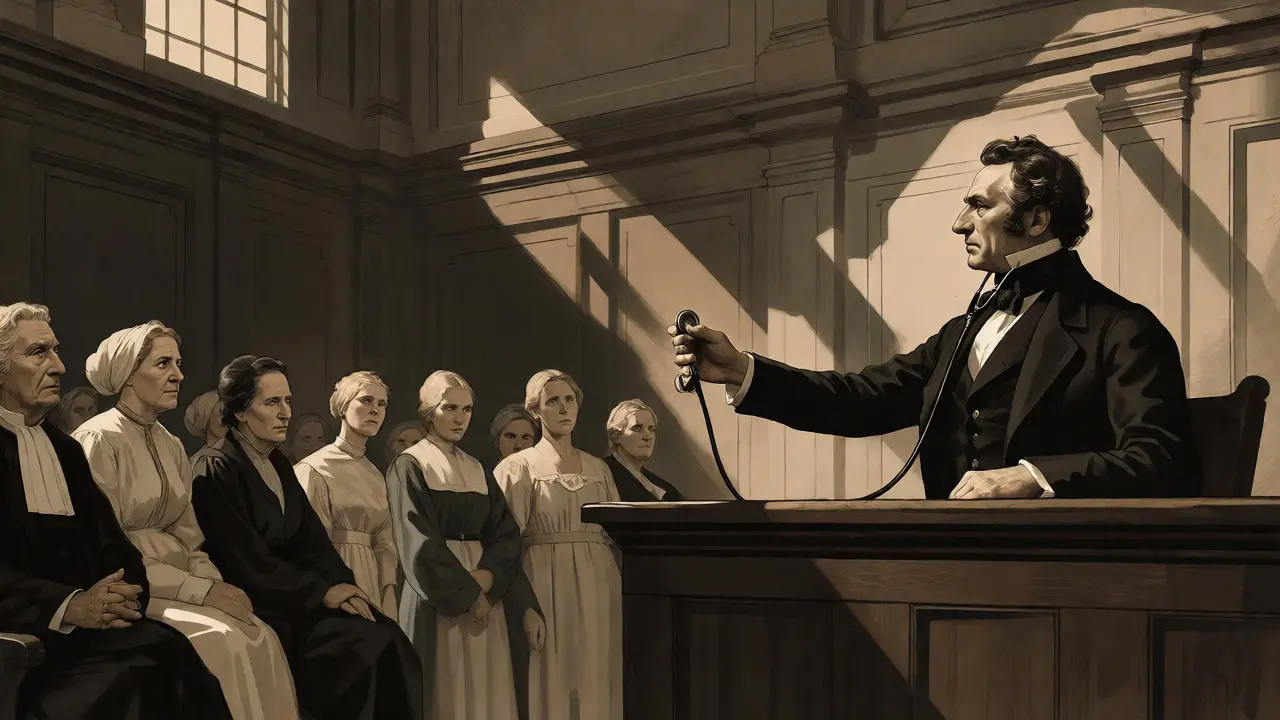
For most of history, common law principles dominated. But things started to shift in the 1800s. Medical professionals, eager to establish their authority over traditional midwives, began pushing for stricter regulations. They argued that medicine required precise definitions of life and death, not vague sensations like quickening.
In 1861, the United Kingdom passed the Offences Against the Person Act. This law made abortion a crime regardless of quickening. It marked a major departure from tradition. Suddenly, any attempt to terminate a pregnancy after conception could lead to prosecution. The focus moved from the mother’s experience to the biological fact of conception.
American states followed suit throughout the late 19th century. By 1900, almost every state had laws banning abortion except to save the mother’s life. These new statutes ignored the quickening standard entirely. They reflected a changing view of fetal development and growing influence of the American Medical Association, which sought to professionalize healthcare and marginalize non-physician practitioners.
| Feature | Common Law Era (Pre-1850) | Statutory Era (Post-1850) |
|---|---|---|
| Legal Trigger | Quickening (fetal movement) | Conception |
| Primary Authority | Judicial precedent and custom | Legislative statutes |
| Role of Mother | Testimony accepted as proof | Medical diagnosis required |
| Punishment Severity | Varied; often lesser offenses | Consistent criminal penalties |
| Medical Oversight | Minimal; midwives common | High; physicians dominant |
Why Did the Definition Change?
You might wonder why society abandoned a system that gave women some autonomy. The answer lies in power dynamics. Midwives and herbalists had managed pregnancies for generations. They used knowledge passed down through families. Physicians wanted to replace them. To do so, they needed to define pregnancy scientifically, not experientially.
By defining life at conception, doctors claimed expertise that laypeople couldn’t match. Only a physician could detect a heartbeat with a stethoscope or identify pregnancy through physical exams. This shift centralized control within the medical establishment. It also aligned with religious movements that emphasized the sanctity of life from the earliest possible moment.
Economic factors played a role too. As industrialization changed family structures, concerns about population growth and labor supply influenced policy. Stricter abortion laws helped maintain larger family units, which served certain economic interests. The move away from quickening wasn’t just about morality; it was about who controlled reproduction.

Legacy in Modern Jurisprudence
Even though statutory bans replaced common law rules, the ghost of quickening lingers. In the landmark case Roe v. Wade, the Supreme Court referenced historical traditions to justify trimester frameworks. Justice Harry Blackmun noted that at common law, abortion was not a crime before quickening. This historical analysis provided a basis for allowing greater freedom in early pregnancy.
When Roe was overturned in 2022, many critics pointed out the disconnect between modern biology and historical law. Today, we know that heartbeats occur weeks before quickening. We know that neural activity begins early. Yet, legal debates still sometimes echo old arguments about when life becomes legally relevant. The tension between scientific facts and historical legal concepts remains unresolved.
Understanding this history clarifies current conflicts. Proponents of restrictive laws often cite continuity with tradition, yet they ignore the specific nature of that tradition. Opponents argue for bodily autonomy, drawing on the common law respect for maternal experience. Both sides use history, but they interpret it differently based on their values.
Practical Implications for Historical Research
If you’re researching family history or legal cases from the 1700s or 1800s, keep quickening in mind. Court records may not list "abortion" as a charge. Look instead for terms like "assault," "battery," or "manslaughter." A missing child or unexplained death might hide an attempted termination. Women’s diaries often mention quickening as a milestone, marking the transition from uncertainty to confirmed pregnancy.
Genealogists should note that birth dates can be tricky. If a baby was born premature, parents might record the date of quickening plus nine months instead of the actual birth. This practice stems from the difficulty of tracking exact conception dates. Recognizing these patterns helps correct family trees and understand social norms of the time.
Did English Common Law ban all abortions?
No. Under English Common Law, abortion was generally not considered a crime before quickening, which is when the mother first feels fetal movement. After quickening, causing the death of the fetus could result in criminal charges such as manslaughter or assault.
How was quickening determined?
Quickening was determined solely by the pregnant woman's testimony. Since there were no medical tools to detect fetal movement objectively, the law relied on her report of feeling the fetus kick or move. This typically occurred between four and six months into pregnancy.
Why did laws change from quickening to conception?
Laws shifted due to the rise of the medical profession and religious advocacy. Doctors sought to replace midwives and assert scientific authority, while religious groups promoted the idea that life begins at conception. Statutes enacted in the 19th century banned abortion after conception, ignoring the older quickening standard.
Does quickening matter in modern law?
While not a legal standard in most jurisdictions today, quickening has historical significance. It was cited in the reasoning behind Roe v. Wade to support early-term abortion rights. Modern debates often reference this history to argue for or against restrictions based on tradition versus science.
Was abortion illegal in colonial America?
Colonial America largely followed English Common Law. Therefore, abortion before quickening was generally legal or unpunished. After quickening, it was treated as a crime against the mother or the fetus, similar to how it was handled in England.