The Factory Wage & Independence Simulator
Adjust the parameters below to see how different working conditions impacted the life of a factory worker during the early Industrial Revolution.
Total Savings Potential
£15
Assuming 50% of wages are saved after basic food/shelter costs.Economic Independence Score
Moderate Leverage
Historical Context & Consequences
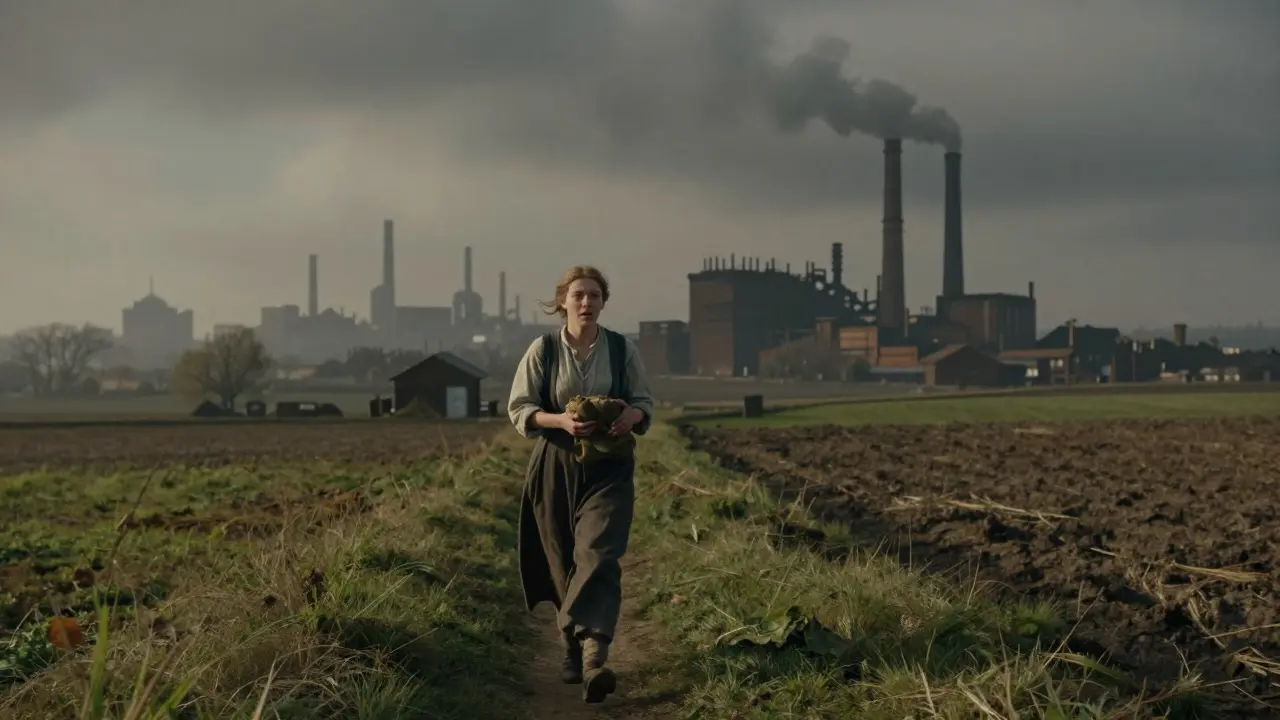
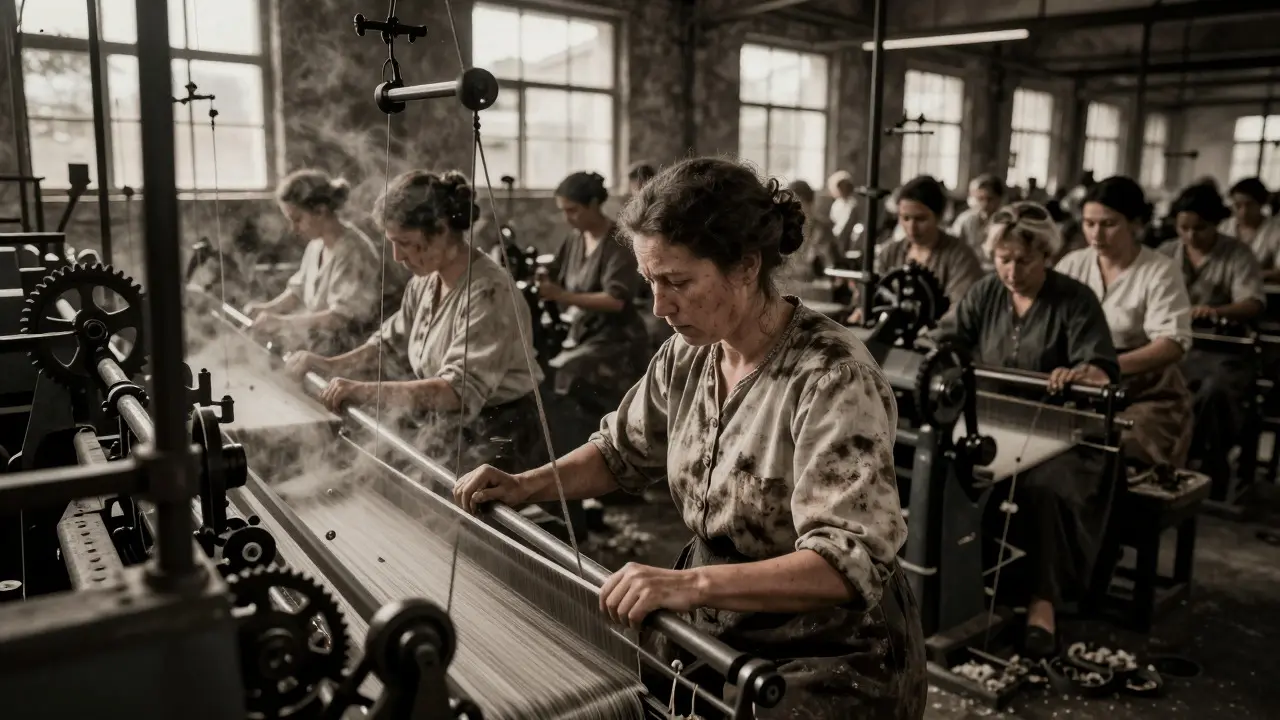
Imagine working fourteen hours a day in a textile mill, breathing cotton dust that stains your lungs black, just to earn enough to buy bread. For generations, this was the reality for millions of women who stepped out of the domestic sphere into the roaring factories of the Industrial Revolution is a period of major industrial development in Europe and America during the late 18th and early 19th centuries. While historians often focus on the steam engines and iron bridges, the human engine driving this transformation was largely female. The story of factory women is women who worked in manufacturing plants during the Industrial Revolution, challenging traditional gender norms through wage labor is not just about economics; it is a foundational chapter in the modern struggle for economic independence is the ability to support oneself financially without relying on a spouse or family wealth.
The shift from home-based cottage industries to centralized factories didn't happen overnight. It forced a radical redefinition of what it meant to be a woman in society. You weren't just producing goods anymore; you were negotiating power, autonomy, and identity in a world that had no blueprint for your presence. This tension between earning a living and meeting societal expectations created a friction that still echoes in today's workplace debates.
The Pull of the City and the Push of Poverty
Why did so many young women leave their rural homes? It wasn't necessarily a desire for liberation in the abstract sense. Often, it was survival. As agricultural land became less viable due to enclosure laws and population growth, rural wages plummeted. Cities like Manchester, London, and Boston offered something the countryside no longer could: cash wages. Even if those wages were low, they represented control. A man might have his pride, but a woman with her own pocket money had leverage.
The demographic makeup of these early factories was striking. In the British cotton mills of the early 1800s, women and children made up the majority of the workforce. They were seen as ideal workers because they were perceived as dexterous, patient, and-crucially-cheaper than men. Employers knew that single women, particularly daughters from poor farming families, would accept lower pay to help their households survive. This economic logic pulled thousands into the urban core, creating dense communities where new social dynamics took root.
Life Inside the Mill: Discipline and Danger
Stepping onto the factory floor meant entering a world of rigid discipline. The bell system dictated every movement. You arrived at dawn, worked through breaks that were often non-existent, and left only when the machinery stopped. The noise was deafening, a constant roar of spinning mules and power looms that damaged hearing permanently. But the physical dangers went beyond noise.
- Cotton Dust: Known as "byssinosis" or brown lung, this respiratory condition affected countless workers. Breathing in fine fibers led to chronic coughing and reduced lung capacity.
- Machinery Hazards: Spinning frames had exposed gears. If a worker’s hair got caught, the consequences were often fatal or resulted in severe disfigurement. Long hair was tied up tightly, a practical necessity that also symbolized the suppression of feminine vanity in favor of productivity.
- Chemical Exposure: Dyeing and finishing processes involved toxic chemicals that stained skin and clothes, marking the worker physically as part of the machine.
Despite these harsh conditions, there was a paradoxical sense of freedom. Outside the factory, a woman’s movements were monitored by parents, husbands, or community gossip. Inside the mill, she was an atom in a larger mechanism. Her value was her output. This anonymity allowed some women to escape local surveillance, offering a rare space where their primary identity was not defined by their relationship to a man, but by their labor.
Economic Leverage vs. Social Stigma
Earning money changed the dynamic within the household. When a daughter brought home wages, she gained a voice. She could influence decisions about food, clothing, and even marriage. However, this economic independence came with a heavy social cost. Middle-class society viewed the working-class woman who earned her own keep with suspicion. Was she saving for a dowry? Or was she avoiding marriage?
The concept of the "cult of domesticity" emerged strongly during this era, arguing that a woman’s proper place was in the home, managing servants and raising children. For the wealthy, this was a lifestyle choice. For the working class, it was an unattainable ideal. Yet, the ideology trickled down. Working women who saved money were praised if they used it to support their brothers or mothers, but criticized if they used it to maintain a bachelorhood or delay marriage. The expectation was that work was temporary-a bridge to a husband, not a destination.
| Aspect | Domestic Sphere (Ideal) | Factory Floor (Reality) |
|---|---|---|
| Primary Value | Moral guardian, child-rearer | Productive laborer, wage earner |
| Time Control | Flexible, centered on family needs | Rigid, dictated by clock and machinery |
| Financial Role | Dependent on male provider | Independent contributor to household |
| Social Perception | Pure, virtuous, protected | Dangerous, promiscuous, ambitious |
The Marriage Squeeze and the Wage Gap
Here lies the central conflict: the economy needed women’s labor, but the social structure punished them for keeping it. Most factory jobs were explicitly targeted at unmarried women. Once a woman married, she was expected to quit. Why? Because the employer assumed her husband would now be the sole provider. If she stayed, she was taking a job from another single woman. This created a "marriage squeeze." Young women rushed to marry before their skills became obsolete or before they were too old to find a partner in the tight labor market.
This cycle kept wages low. Since employers knew women would leave upon marriage, they had little incentive to offer long-term benefits, pensions, or significant raises. The wage gap wasn't just about bias; it was structural. Women’s employment was treated as provisional. This provisionality prevented the accumulation of capital or seniority that could have shifted power dynamics more permanently. You couldn’t build a career if your career ended the moment you said "I do."
Unionizing and the Fight for Recognition
Did factory women just accept this fate? Not entirely. By the mid-19th century, women began organizing. They formed mutual aid societies, savings clubs, and eventually, trade unions. These groups provided a safety net when illness struck or when a mill closed. More importantly, they gave women a collective voice.
In places like Lancashire, England, and New England, USA, women led strikes over piece rates and working hours. They weren't fighting for universal suffrage yet-that was decades away-but they were fighting for fair pay and humane conditions. These early labor actions established a precedent: women’s labor was valuable, and its value required protection. The rhetoric used was often framed in terms of "protecting" women from exploitation, which ironically reinforced the idea that they needed special care rather than equal rights. Nevertheless, the act of organizing proved that economic independence required political action.

Lasting Impacts on Modern Gender Roles
The legacy of the factory woman is complex. On one hand, she paved the way for the professional woman. She demonstrated that women could handle repetitive, demanding tasks and manage their own finances. On the other hand, she cemented the idea that women’s work was secondary. The notion that a wife should stay home while the husband worked full-time became the dominant norm for the next century, a direct reaction against the chaos of industrial labor.
Today, when we discuss the "second shift"-where women work outside the home and then come home to do unpaid domestic labor-we are seeing the unresolved tension from the 19th century. The factory gave women money, but society never fully adjusted to give them time or respect. The expectation that women should balance career and caregiving seamlessly, without structural support, is a ghost of that industrial era. We haven't moved past the idea that a woman’s primary duty is domestic, even when her primary income source is external.
Understanding this history helps us see that gender roles are socially constructed patterns of behavior and expectations assigned to individuals based on their sex are not static. They shift in response to economic forces. When women entered the workforce en masse, the definition of femininity had to stretch to accommodate it. Now, as automation and AI reshape the labor landscape again, we are facing a similar adjustment. The question remains: will economic independence finally align with social expectation, or will the friction continue?
Frequently Asked Questions
Why did factories prefer hiring women over men?
Employers hired women because they could pay them less than men. Additionally, women were often perceived as having finer motor skills necessary for delicate tasks like threading needles or operating intricate looms. Their dependency on the household economy meant they were willing to accept lower wages to supplement family income.
Did factory work improve women's health?
Generally, no. Factory work was physically taxing and often dangerous. Respiratory diseases like byssinosis were common due to dust exposure. However, compared to rural subsistence farming, factory work sometimes provided better access to healthcare in cities and more consistent nutrition due to steady cash wages, though the physical toll was significant.
How did the 'Cult of Domesticity' affect working women?
The Cult of Domesticity promoted the idea that a woman's true worth lay in her role as a mother and homemaker. For working women, this created a moral dilemma. They were expected to be virtuous and pure, yet their public presence in factories challenged private notions of modesty. It led to social stigma, where working women were often judged as lacking in feminine virtue compared to their idle, wealthy counterparts.
What was the typical age of women working in factories?
Most factory workers were young, typically between the ages of 16 and 25. Many started working as children in the earliest phases of industrialization, but by the mid-19th century, child labor laws began to push the minimum age up. The peak working years were short, as most women left the workforce upon marriage.
Did factory women have any legal protections?
Initially, very few. Early factory acts in the UK and US focused primarily on limiting child labor hours. Protections for adult women were slow to develop and were often framed as paternalistic measures to protect their reproductive health rather than as labor rights. It wasn't until later in the 19th and early 20th centuries that broader labor laws began to address safety and wages for all workers, regardless of gender.