Medieval Marriage Validity Checker
Select your case details and click "Determine Legal Status" to see the verdict.
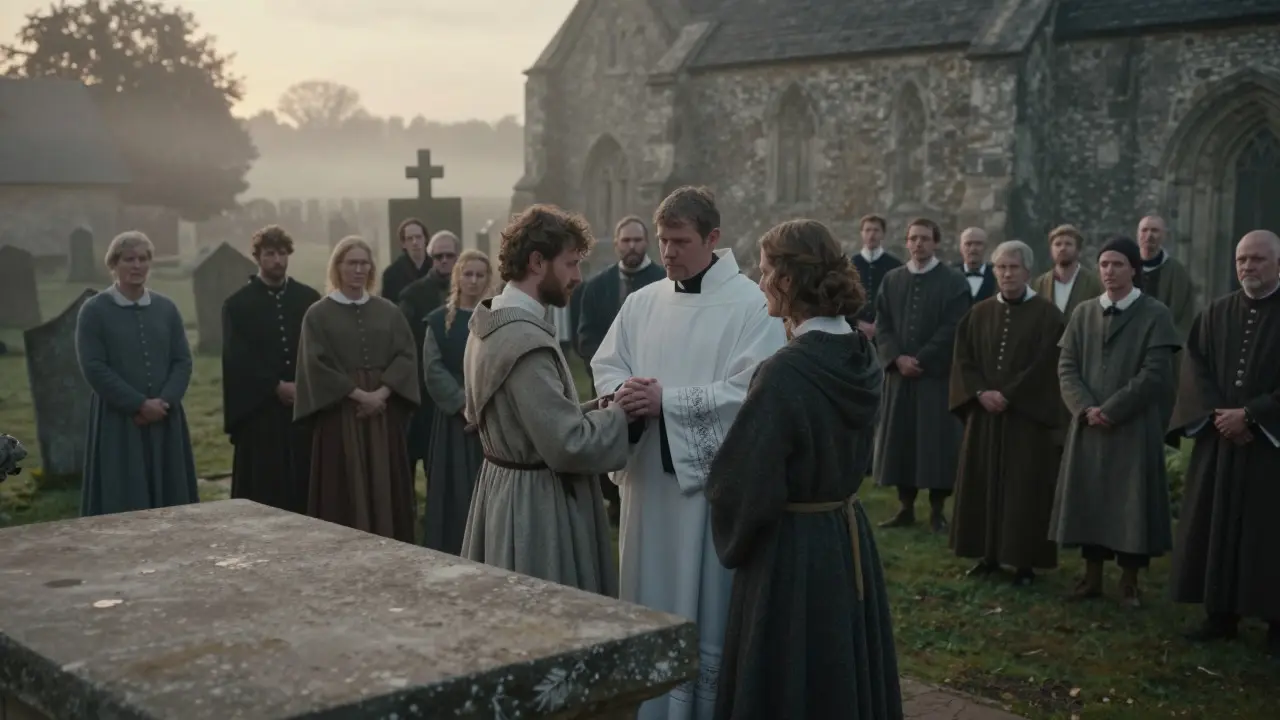
Imagine standing in a medieval churchyard. The priest has just spoken the words of blessing, but is the couple actually married? In the modern world, we might say yes once the license is signed or the vows are exchanged. But in the Middle Ages, the answer was often a complicated "maybe," depending on whether they had agreed to be together and whether they had slept together. This distinction between consent and consummation wasn't just a legal technicality; it determined who owned whose property, who could inherit land, and whether a woman was considered chaste or not.
For centuries, historians focused heavily on the role of the Church as a moral regulator. However, recent scholarship reveals that medieval marriage was a dynamic interplay between rigid canonical rules and flexible local customs. Understanding this duality helps us see how people navigated their personal lives within a system that viewed sex primarily as a duty rather than a pleasure.
The Two Pillars: Consent and Carnal Knowledge
To understand medieval marriage, you have to break it down into two distinct stages. First, there was consensus facit nuptias, a Latin phrase meaning "consent makes the marriage." Second, there was carnalis copula, or carnal union. These two elements operated differently under Canon Law compared to secular custom.
Canon Law is the body of laws and principles made by ecclesiastical authorities in the Catholic Church. By the time of the Fourth Lateran Council in 1215, the Church had standardized many aspects of marriage. Yet, even then, the definition of a valid bond remained fluid. A marriage could be considered "ratified" by mutual consent but not yet "consummated." This created a unique legal limbo where couples were bound to each other but could potentially separate if no sexual intercourse had occurred.
Here is why that matters:
- Ratified but Not Consummated: The couple was legally married in the eyes of the Church. They could not marry others without an annulment. However, if one party failed to perform their marital duties (specifically, sexual access), the other could petition for separation.
- Consummated: Once sexual intercourse took place, the marriage became indissoluble. No human power, not even the Pope, could dissolve it except through death. This was the bedrock of Christian doctrine regarding the permanence of marriage.
How Consent Was Proven Without Paperwork
We tend to think of contracts as written documents. In the medieval period, especially before the widespread use of marriage licenses in the later Middle Ages, consent was verbal and public. You didn't need a piece of paper to prove you were married; you needed witnesses.
The process usually involved three key moments:
- Public Vows: The couple stood before a crowd, often at the church door or in a town square, and declared their intent to be husband and wife. This was the primary evidence of consent.
- Betrothal Gifts: Exchanging rings, money, or other tokens reinforced the agreement. If a man gave a ring, it symbolized his commitment. If he broke the promise, he might have to pay damages.
- Cohabitation: Living together after the vows served as physical proof that the consent was genuine and ongoing.
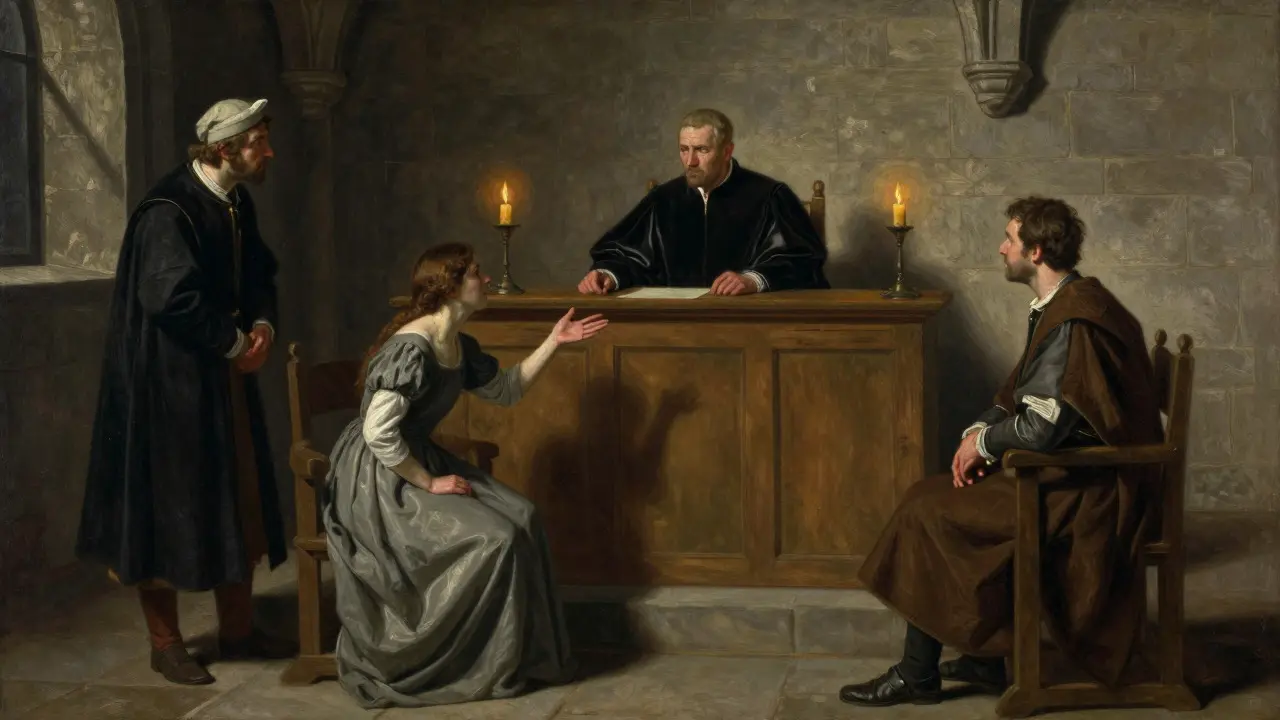
However, proving consent was tricky when disputes arose. Did she really agree, or was she coerced? Did he intend to marry her, or was it just a temporary arrangement? Courts spent hours listening to testimony from neighbors, family members, and servants. The burden of proof lay heavily on the claimant. If a woman claimed she was married because her husband died and she wanted his inheritance, she had to prove that both parties intended a permanent, exclusive union.
The Role of Sexual Access in Legal Disputes
This is where things get gritty. Consummation wasn't just about procreation; it was about proving the reality of the marriage. If a husband accused his wife of infidelity, the defense often hinged on whether the marriage had been consummated. If it hadn't, the wife might argue that the marriage was invalid due to impotence or lack of consent, freeing her from the accusation.
Conversely, if a wife claimed her husband was impotent, she had to provide evidence. In some cases, this led to bizarre medical examinations. Doctors would assess physical capability, though the standards were vague and often biased against women, who were blamed more frequently for reproductive failures.
Consider the case of impotence. Under Canon Law, a marriage could be annulled if one party was unable to perform sexual intercourse. But "unable" was interpreted broadly. It included physical defects, psychological blocks, or simply a refusal to grant access. This gave women a rare legal lever to escape an unwanted marriage, though using it was risky and socially stigmatizing.
Custom vs. Canon: The Local Reality
While Canon Law set the theoretical standard, local custom often dictated the practical outcome. In rural areas, pre-contractual relationships were common. Couples might live together for years before having a priest bless the union. The Church frowned upon this, calling it "irregular," but rarely punished it severely unless it caused social unrest.
In urban centers, particularly in places like London or Paris, the rules were stricter. Marriage licenses became more common in the 13th and 14th centuries, requiring parents' permission for minors and preventing secret marriages. This shift reflected the growing influence of the state and the Church's desire to control inheritance rights.
| Factor | Canon Law Standard | Local Custom Variation |
|---|---|---|
| Consent | Must be free, full, and public | Often implied through cohabitation or gift exchange |
| Consummation | Required for indissolubility | Sometimes delayed; not always immediate proof of validity |
| Witnesses | Two or more credible adults | Could include children or servants in informal settings |
| Church Blessing | Not strictly required for validity before 1215 | Increasingly expected and enforced in urban areas |
Why This Matters for Historical Sexuality
Studying these legal nuances gives us a window into medieval attitudes toward sex. Unlike today, where sex is often seen as a private right or source of joy, medieval law viewed it as a functional act tied to duty. The fact that consummation was a legal requirement means that sex was monitored by the community. If a couple didn't have children, questions arose. If a woman was found pregnant before the wedding, her honor-and her dowry-was at risk.
Yet, it also shows agency. Women used the language of consent and consummation to protect their interests. By insisting on public vows, they secured their status. By claiming non-consummation, they gained leverage in divorce-like proceedings. Men, too, used these laws to enforce fidelity and secure heirs. It was a high-stakes game where every word and every night mattered.
Frequently Asked Questions
Did medieval couples need a priest to get married?
Not always. Before the Decretals of Gregory IX and the Fourth Lateran Council in 1215, a marriage could be valid based solely on mutual consent, even without a priest. After 1215, while consent still formed the core, the Church increasingly required public declaration and eventually blessings to prevent secret marriages.
What happened if a marriage was ratified but not consummated?
The couple was still considered married and could not remarry. However, either party could petition for separation if the other failed to grant sexual access. This was different from annulment, which declared the marriage never existed.
How did medieval courts prove consummation?
Proof usually came from witness testimony, such as neighbors hearing noises or seeing the couple enter the same bedchamber. Physical examination was rare but possible in cases of alleged impotence. Pregnancy was strong evidence of consummation, though not absolute proof.
Could a woman force a man to consummate the marriage?
Yes, in theory. Since sexual access was a mutual obligation, a wife could complain to ecclesiastical courts if her husband withheld it. However, enforcement was difficult and often depended on the social status of the parties involved.
Was virginity a legal requirement for marriage?
Virginity was highly valued socially, especially for women, but it was not a strict legal requirement for the validity of the marriage itself. However, loss of virginity before marriage could affect dowry negotiations and social reputation, leading to disputes over consent and honesty.