The Constantinian Shift: Legal & Social Comparison Tool
Instructions: Click on an era below to see how specific laws and social norms differed.
Diocletian Era
Pre-312 CEThe Great Persecution. Christians were a marginalized minority facing legal penalties, property seizure, and violence.
Constantine Era
Post-313 CEThe Constantinian Shift. Christianity becomes privileged. Imperial power fuses with theology to reshape morality.
When Reece Glenny looks at the map of Western civilization, one name stands out as the pivot point where everything changed. That name is Constantine’s Conversion. It wasn’t just a personal change of heart for the Roman Emperor; it was a seismic shift that fused imperial power with Christian theology. This union didn't just affect prayer habits-it radically altered how society controlled sexuality, defined marriage, and punished crime. If you want to understand why modern laws on rape, divorce, and celibacy look the way they do, you have to start in Rome, around 312 CE.
The End of Persecution and the Rise of Privilege
To grasp the magnitude of this shift, we need to look back at what life was like before Constantine. Under Emperor Diocletian (reigned 284-305 CE), Christians faced the "Great Persecution." Starting in 303 CE, four edicts ordered the destruction of churches, burning of scriptures, and imprisonment of clergy. If you were a Christian, you lost your legal rights and faced torture if you refused to sacrifice to the gods. The empire viewed monotheistic refusal to honor traditional gods as a threat to social stability.
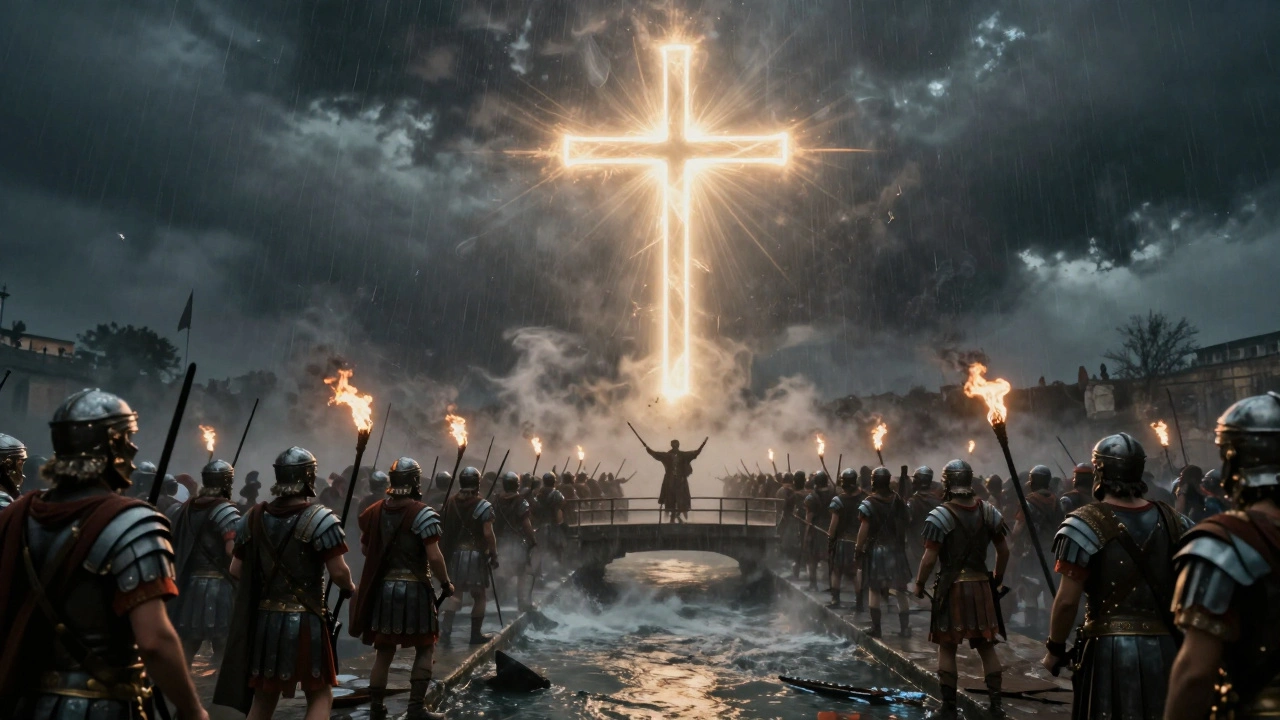
Then came ... well, not today, but October 28, 312 CE. At the Battle of the Milvian Bridge, Constantine defeated his rival Maxentius. According to historians like Lactantius and Eusebius of Caesarea, Constantine claimed a divine sign-a cross of light in the sky with the words "in this conquer." Whether you view this as genuine faith or political opportunism, the result was immediate. In February 313 CE, Constantine and his co-emperor Licinius issued the Edict of Milan. This decree didn't make Christianity the state religion-that happened later under Theodosius I in 380 CE-but it legalized Christian worship and restored confiscated property. Suddenly, the persecuted minority became the favored partner of the state.
| Aspect | Under Diocletian (Pre-312) | Under Constantine (Post-313) |
|---|---|---|
| Legal Status | Persecuted minority | Legally privileged and funded |
| Clergy Role | Targeted for arrest | Exempt from taxes; acted as judges |
| Property Rights | Churches destroyed/assets seized | Confiscated assets returned |
| Imperial Support | None | State funds for building and poor relief |
The Sincerity Debate: Faith or Realpolitik?
Historians still argue about whether Constantine truly believed in Christ or just used Him to hold the empire together. On one side, scholars like Hans Pohlsander argue it was pure realpolitik. They point out that Constantine kept the title pontifex maximus (high priest of the old cults) and put the sun god Sol Invictus on his coins well into the 320s. He delayed his own baptism until his deathbed in 337 CE, possibly to ensure he entered heaven sinless.
On the other side, Peter Leithart argues in Defending Constantine (2010) that the emperor was a sincere convert who gradually reshaped society along Christian lines. Evidence includes his convening of the Council of Nicaea in 325 CE to settle doctrinal disputes and his massive investment in church construction, such as the Church of the Holy Sepulchre in Jerusalem. Most modern historians take a middle ground: Constantine likely had mixed motives. He saw that persecuting Christians failed, while uniting the empire under a disciplined, monotheistic faith could stabilize his rule. His sincerity may have grown over time, but his political calculations never stopped.
Reshaping Sexual Morality and Law
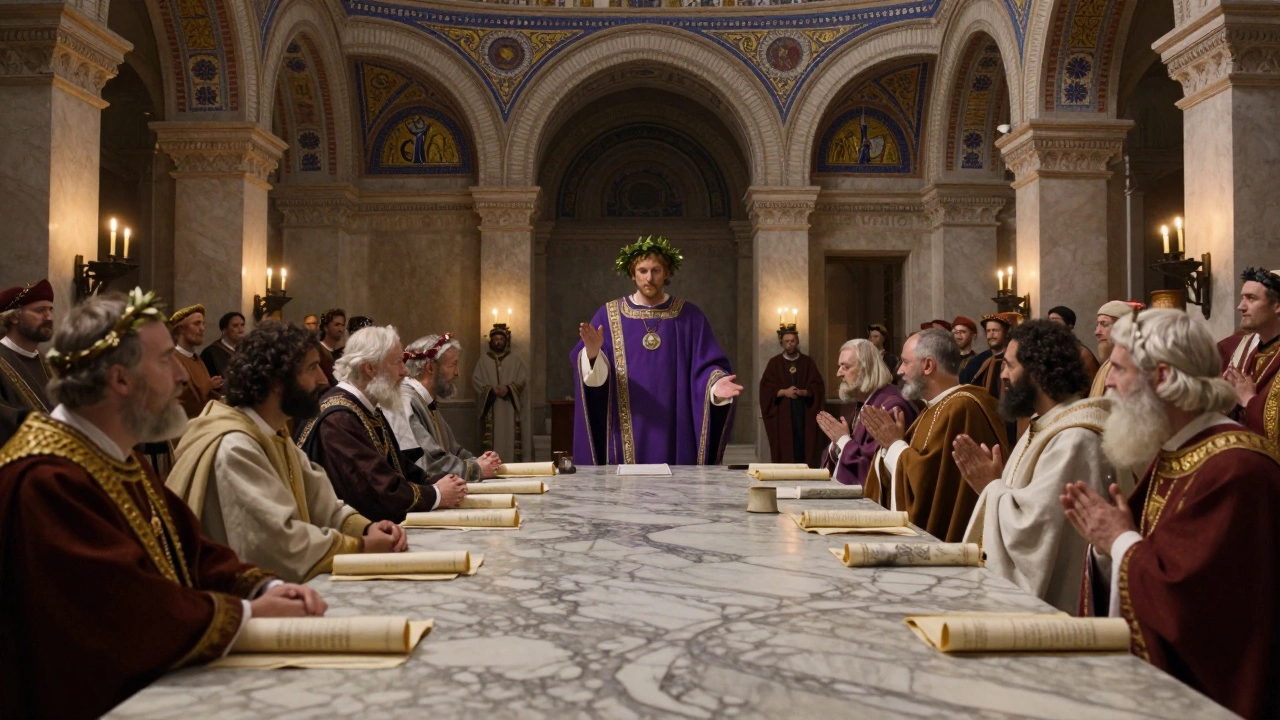
This is where the story gets really interesting for understanding modern social norms. As historian Kyle Harper notes in From Shame to Sin (2013), Constantine’s reign marked a "Christian sexual revolution." The Roman Empire began to enforce Christian ideals of chastity, marital fidelity, and self-control through imperial law. This wasn't just about preaching; it was about codifying morality into criminal justice.
Consider the shift in how the state treated celibacy. Earlier emperors, like Augustus, had penalized unmarried and childless adults to boost birth rates among the elite. Constantine repealed these penalties. By removing disadvantages for the celibate and childless, he aligned state policy with Christian esteem for virginity and monastic devotion. This signaled a new form of masculinity-one defined by spiritual discipline rather than just sexual conquest or military glory.
More drastically, Constantine increased punishments for sexual violence. Laws preserved in the Theodosian Code show that he imposed the death penalty for rapists. Previously, many such offenses were treated as private family matters. By making rape a public crime with capital stakes, Constantine elevated the protection of women's bodily integrity to a matter of state interest. He also strengthened women's control over dowries and inheritances, limiting fathers' ability to disinherit daughters arbitrarily. While the society remained patriarchal, these laws offered women more legal security than before.
Control Through Spectacle and Family
Constantine’s control extended to public entertainment and family structure. In 325 CE, he banned gladiatorial games. Critics like John Howard Yoder might see this as coercive intolerance, but supporters argue it ended sacrificial violence embedded in pagan culture. Whether gladiators vanished overnight is debated, but the symbolic message was clear: the empire no longer celebrated bloodshed for amusement.
In the home, Constantine restricted easy divorce. Laws from the late 320s imposed financial penalties on spouses who divorced for frivolous reasons, reinforcing marriage as an indissoluble bond. He also addressed infanticide, which was tolerated in earlier Roman practice. A law from 315 CE provided tax relief to poor families to encourage them to raise children rather than abandon them. These measures reflected a new Christian valuation of infant life and family unity.
| Issue | Previous Roman Norm | Constantine’s Reform |
|---|---|---|
| Celibacy | Penalized by inheritance restrictions | Penalties removed; valued as virtuous |
| Rape | Often a private civil matter | Capital crime with death penalty |
| Divorce | Relatively easy for men | Restricted; financial penalties for unjustified separation |
| Gladiatorial Games | Popular public spectacle | Banned in 325 CE as sacrificial violence |
| Infanticide/Exposure | Tolerated custom for unwanted infants | Restricted; state support for poor parents |
The Legacy of the Constantinian Shift
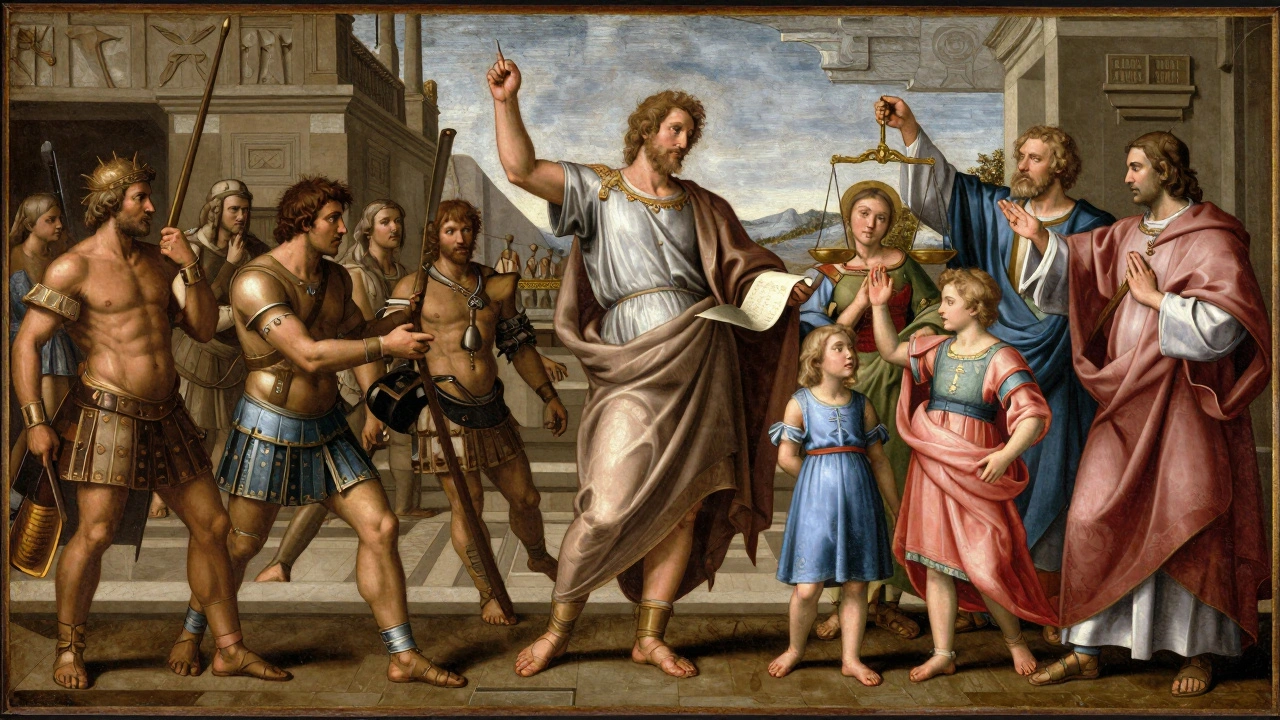
The term "Constantinian shift" describes this moment when the church moved from being a marginalized group to a partner in imperial power. This alliance had lasting consequences. It allowed bishops to act as judges (episcopalis audientia) and gave the church jurisdiction over moral disputes. It also set a precedent for using state force to enforce religious orthodoxy, seen in Constantine’s harsh treatment of Donatist communities in North Africa.
Today, views on Constantine remain divided. Eastern Orthodox churches venerate him as "Equal-to-the-Apostles," celebrating his role in ending persecution and defining core doctrines at Nicaea. Meanwhile, Anabaptist and some evangelical critics warn against "Constantinianism," arguing that mixing church and state compromises the gospel’s voluntary nature. Yet, there is no denying his impact. The laws he passed laid the groundwork for European legal traditions regarding sexual ethics, women’s rights, and family law for over a millennium.
Frequently Asked Questions
Did Constantine make Christianity the official state religion?
No. Constantine legalized Christianity and favored it with funding and privileges through the Edict of Milan in 313 CE, but he did not make it the exclusive state religion. That status was granted later by Emperor Theodosius I in 380 CE via the Edict of Thessalonica.
Was Constantine’s conversion to Christianity sincere?
Historians disagree. Some, like Hans Pohlsander, argue it was primarily political strategy (realpolitik) to unify the empire. Others, like Peter Leithart, argue it was a genuine faith journey. Most modern scholars take a nuanced view, suggesting his motives were mixed, combining political calculation with growing personal belief.
How did Constantine change Roman laws regarding sexuality?
Constantine introduced laws that promoted Christian sexual morality. He repealed penalties on celibacy, imposed the death penalty for rape, restricted easy divorce, protected women’s property rights, and banned gladiatorial games. These changes shifted Roman law from viewing sex as a private matter to regulating it as a public moral concern.
What is the "Constantinian shift"?
The "Constantinian shift" refers to the transition of Christianity from a persecuted minority religion to one allied with imperial power. This shift allowed the church to influence state policy, law, and culture, fundamentally changing the relationship between religion and government in the West.
Did Constantine ban all forms of same-sex relationships?
Not directly. While Christian rhetoric against non-procreative sex grew during his reign, the famous law imposing death by burning for passive same-sex acts was issued by his sons, Constantius II and Constans, in 342 CE. Constantine’s focus was more on rape, adultery, and public order.
Why did Constantine repeal penalties on celibacy?
Earlier Roman emperors like Augustus penalized celibacy to boost elite birth rates. Constantine repealed these laws to align state policy with Christian values, which esteemed virginity and celibate devotion as superior spiritual states. This move supported the growing monastic movement within the church.
How did Constantine protect women under Roman law?
Constantine’s legislation improved women’s legal status by making it harder for fathers to disinherit daughters arbitrarily, protecting widows’ assets from guardians, and increasing punishments for sexual crimes like rape and abduction. These measures offered greater security for women within a still-patriarchal society.
What role did the Council of Nicaea play in Constantine’s reign?
Convened by Constantine in 325 CE, the Council of Nicaea aimed to resolve doctrinal disputes, particularly Arianism, to maintain church unity. Constantine’s involvement demonstrated the new model of the emperor as guarantor of orthodoxy, blending imperial authority with theological oversight.