Sex Education Approach Analyzer
Assess Your Context
Answer these questions to determine which approach best fits your current situation. The tool calculates a "Fit Score" for each model.
Results
Fill out the form to see which model scores highest for your needs.
Understanding the Scores
There is a persistent tension in American classrooms regarding who holds the primary responsibility for teaching sex education is a set of lessons designed to help adolescents understand human reproduction, sexual health, and interpersonal relationships. While parents have historically been viewed as the default educators on these intimate topics, the complexity of modern adolescent life has forced a re-evaluation of this dynamic. The debate is no longer just about biology; it is about access to accurate information, cultural values, and the practical reality that schools often serve as the first structured environment where teens encounter peer pressure and media-influenced narratives.
The Traditional View: Parents as Primary Educators
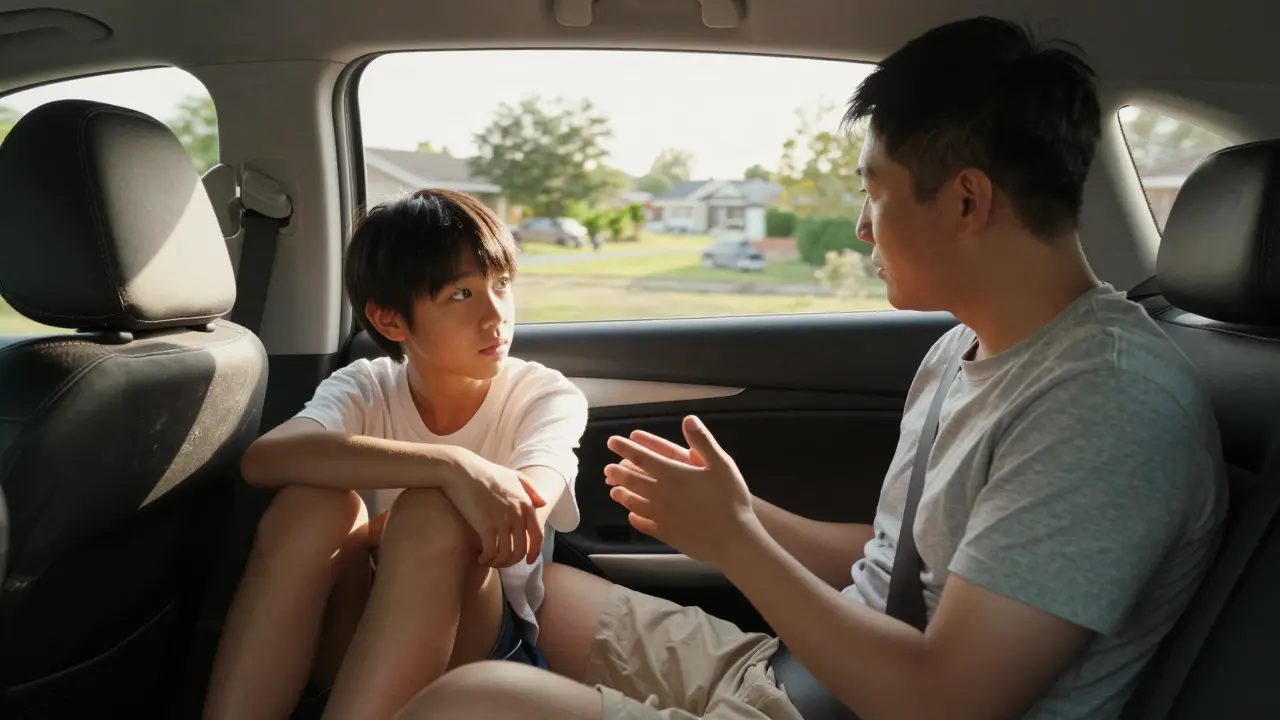
For decades, the prevailing social contract suggested that parental guidance is the foundational method through which children learn about sexuality and moral boundaries. This approach relies on the assumption that home environments provide a safe, personalized space for questions that might feel awkward in a classroom. Proponents argue that values are deeply personal and should be transmitted directly from one generation to the next without institutional interference. In many households, this takes the form of casual conversations during car rides or bedtime chats, rather than formal lessons.
However, this model faces significant logistical challenges. Not all parents possess the same level of comfort discussing anatomy or contraception. Research indicates that while most parents believe they are responsible for sex ed, fewer than half report having had a detailed, ongoing conversation with their child about contraception before age 15. This gap creates a vacuum that is often filled by peers or internet sources, which may lack accuracy or nuance. When parents remain silent, the message sent to the child is often that the topic is taboo, potentially increasing anxiety rather than reducing it.
The Case for School-Based Instruction
Schools offer a distinct advantage: consistency and reach. comprehensive sex education is an evidence-based curriculum that covers not only biological facts but also skills like communication, consent, and decision-making. Unlike ad-hoc home discussions, school programs follow a standardized framework, ensuring that every student, regardless of their family background, receives the same baseline knowledge. This is particularly crucial for students living in unstable homes, those raised by grandparents, or those whose parents are working multiple jobs and lack time for extended dialogues.
Furthermore, teachers trained in pedagogy can manage the emotional dynamics of the classroom better than untrained adults. They know how to handle interruptions, answer difficult questions objectively, and create an inclusive environment for diverse family structures. For example, a lesson on reproductive health can be framed in a way that respects religious beliefs while still providing medically accurate data. This balance is difficult to achieve in private settings where personal biases might overshadow factual clarity.
Comparing the Two Approaches
To understand the trade-offs, it helps to look at the specific strengths and weaknesses of each setting. Neither approach is perfect in isolation, but they address different aspects of adolescent development.
| Feature | Parent-Led Education | School-Based Education |
|---|---|---|
| Personalization | High; tailored to family values and child’s maturity | Low; standardized for broad audience |
| Consistency | Variable; depends on parent availability and comfort | High; scheduled and systematic |
| Peer Influence | Isolated from peer pressure | Integrated; allows discussion of social dynamics |
| Coverage Scope | Often limited to basics or avoidance | Broad; includes consent, STIs, contraception, identity |
| Accessibility | Dependent on household stability | Universal access for enrolled students |

The Hybrid Model: Collaboration Over Conflict
Rather than viewing this as a zero-sum game, many experts advocate for a hybrid model where schools handle the factual and skill-based components, while parents reinforce the value-based ones. This division of labor acknowledges that adolescent development is a multi-stage process requiring input from both authoritative figures and peer groups. Schools can teach the mechanics of how a condom works or the biology of puberty, while parents discuss what respect means in their specific family context.
This collaboration requires clear communication channels. School districts often send home informational packets outlining the curriculum, allowing parents to prepare their children for upcoming lessons. Conversely, parents can signal to teachers if a particular topic needs extra sensitivity due to a recent family event. When these two systems work together, the risk of conflicting messages decreases significantly. Students receive a unified narrative that supports their physical health while respecting their emotional growth.
Addressing Common Concerns
One of the biggest hurdles in implementing school-based sex ed is the fear that early instruction encourages premature sexual activity. However, longitudinal studies consistently show the opposite. Countries and states with robust, comprehensive programs tend to have lower rates of teen pregnancy and sexually transmitted infections compared to those relying solely on abstinence-only messaging. The key lies in the quality of the instruction. If the curriculum is outdated or shaming, it will backfire. But when it is respectful and accurate, it empowers students to make informed choices.
Another concern involves ideological conflicts. In some communities, there is a strong preference for keeping certain topics out of public schools. To address this, opt-out policies are sometimes implemented, though these can create administrative burdens and stigma for opted-out students. A more effective solution is transparent governance, where community boards review curricula annually and ensure they align with local standards while maintaining scientific accuracy.

Practical Steps for Effective Implementation
If you are a parent or educator looking to improve the current landscape, here are actionable steps to consider:
- Review Local Curricula: Check your district’s website for the specific scope and sequence of health classes. Knowing exactly what is taught removes much of the uncertainty.
- Initiate Open Dialogues: Use school lessons as a springboard for home conversations. Ask your child, "What did you learn today?" rather than launching into a lecture.
- Seek Professional Support: If discussing certain topics feels overwhelming, consult a pediatrician or a licensed counselor who specializes in adolescent health.
- Advocate for Quality: Participate in school board meetings to ensure that sex ed remains part of the core health curriculum rather than being marginalized.
Why This Matters Now More Than Ever
In the digital age, children are exposed to sexual content earlier than any previous generation. Smartphones and social media mean that the "first exposure" often happens outside of controlled environments. Without structured guidance from either home or school, teens navigate this landscape alone. The stakes are high because misinformation spreads quickly online. A single viral video can convey a skewed view of intimacy or health risks. Both parents and schools act as anchors, providing stable points of reference in a chaotic information ecosystem.
Ultimately, the question of who should teach sex education is less about ownership and more about partnership. Parents bring the emotional connection and long-term relationship context. Schools bring the educational structure and peer normalization. When these two forces align, adolescents are better equipped to handle the complexities of growing up. The goal is not to replace one role with the other, but to ensure that neither is left to carry the burden alone.
Is school sex education mandatory in the United States?
No, sex education is not federally mandated in the U.S. Requirements vary significantly by state. Some states require comprehensive sex ed, others mandate abstinence-only programs, and some leave the decision entirely to local school districts. This patchwork approach leads to inconsistent experiences for students across the country.
Does comprehensive sex ed lead to more teen pregnancies?
Research generally suggests the opposite. Studies indicate that comprehensive sex education, which includes information on contraception and communication skills, is associated with delayed initiation of sexual activity and lower rates of unintended pregnancy compared to abstinence-only instruction.
How can parents support school sex ed without taking over the role?
Parents can support school efforts by staying informed about the curriculum and using it as a starting point for home conversations. Instead of lecturing, ask open-ended questions about what was discussed in class. This reinforces the importance of the topic while allowing the school to maintain its educational authority.
What is the difference between abstinence-only and comprehensive sex ed?
Abstinence-only education focuses primarily on delaying sexual activity until marriage, often with limited information on contraception. Comprehensive sex ed covers a broader range of topics, including anatomy, puberty, contraception, STI prevention, consent, and healthy relationships, aiming to equip students with practical skills for real-life scenarios.
At what age should sex education begin?
Experts recommend starting basic conversations early, around ages 5-8, focusing on body parts and safety. More detailed information about puberty and reproduction is typically introduced in middle school (ages 11-14), while high school courses cover advanced topics like contraception and long-term relationship dynamics.