
Gonorrhea Through History — Interactive Timeline & Quiz
The Great Mix-Up
Egypt, Greece. The Ebers Papyrus records "urethral discharge." Greek physicians used gonorrhea (seed flow) for any seminal discharge; gonorrhea and syphilis were never separated.
Stigma & Urban Spread
Venice, Florence, London. Venereal diseases tied to moral failing; treated with harmful mercury ointments. The term chlamydia (cloak) described the hidden infection.
Separating the Diseases
Edinburgh, Paris. John Hunter argued gonorrhea and syphilis are distinct. By the late 1700s, gonorrhea firmly meant the purulent discharge from N. gonorrhoeae.
The Bacterium Is Found
Berlin, Vienna. Albert Neisser identifies the gram-negative diplococcus under a microscope. Public health campaigns begin tracking incidence rates.
Antibiotics Arrive
New York, Los Angeles, Global. Penicillin cures gonorrhea in a single dose. Slang like clap and cocks persists alongside clinical terms.
Resistance & Global Spread
Global. Resistance to penicillin, tetracycline, and fluoroquinolones forces reliance on cephalosporins. NAATs are the diagnostic gold standard; ~82 million new cases yearly.
Test Your Knowledge
Who identified the bacterium that causes gonorrhea in 1879?
What does the word gonorrhea literally mean?
Which antibiotic became ineffective against gonorrhea by the 1980s?
Imagine a soldier in 1500s Rome complaining of a painful urine stream. A doctor might call it "the clap." Now picture a patient in 1940s New York facing the same symptoms, but the diagnosis is "clap" or simply "gonorrhea." The disease has stayed the same-caused by Neisseria gonorrhoeae is a gram-negative diplococcus bacterium that infects mucous membranes-but how we name it, where we treat it, and what we think it means have shifted dramatically over centuries.
This isn't just about medical trivia. Understanding the history of gonorrhea reveals how societies stigmatize sexual behavior, how urbanization spreads disease, and how clinical descriptions evolve from vague humoral theories to precise microbiology. If you're studying medical history, writing a paper on STIs, or just curious why we call it what we call it, this timeline breaks down the key names, cities, and clinical shifts that defined gonorrhea's journey.
The Ancient Confusion: Syphilis, Gonorrhea, and the Great Mix-Up
For most of human history, doctors couldn't tell the difference between gonorrhea and syphilis. Both cause genital discharge, pain, and sores. In ancient Egypt, the Ebers Papyrus (circa 1550 BCE) described a condition called "discharge of the urethra," treating it with herbal washes. There was no distinct entity for gonorrhea; it was part of a broader category of genital ailments linked to moral failing or divine punishment.
Greek physicians like Hippocrates and Galen didn't separate them either. They spoke of "gonorrhea" literally meaning "seed flow" (from Greek *gonos* = seed, *rhoea* = flow). This referred to any seminal discharge, whether pathological or normal. It wasn't until the late 18th century that clinicians began distinguishing the two diseases based on symptom progression. Before that, if you had a sore and discharge, you were likely labeled as having "the French pox" (syphilis) or "the clap" (gonorrhea), often interchangeably.
Medieval Europe: Stigma, Plague, and Urban Spread
As European cities grew in the 13th and 14th centuries, so did the spread of sexually transmitted infections. Venice, Florence, and London became hotspots. Monasteries and hospitals started keeping records of "venereal diseases." The term "chlamydia" (from Greek *chlamys*, meaning cloak) emerged in medieval texts to describe the hidden nature of the infection, though this term later shifted to refer to a different bacterium entirely.
In 1348, the Black Death devastated Europe, and many survivors blamed venereal diseases for societal decay. Church courts documented cases of "gonorrhea" among clergy, leading to stricter moral policing. The disease was often associated with prostitution, linking it to social class rather than biology. Treatments included mercury ointments, which caused more harm than good, and herbal remedies like garlic and turmeric. No one knew the cause was bacterial.
The 18th Century Breakthrough: Separating the Diseases
The real turning point came in the 1700s. In 1769, Scottish physician John Hunter published his work on venereal diseases, arguing that gonorrhea and syphilis were distinct entities. He noted that gonorrhea primarily affected the urethra and cervix without causing systemic skin lesions, unlike syphilis. This clinical distinction allowed for better treatment protocols.
By the late 18th century, the term "gonorrhea" was firmly established in medical literature to refer specifically to the purulent discharge caused by *N. gonorrhoeae*. Meanwhile, "syphilis" became the standard term for the spirochetal infection. This separation was crucial because treatments diverged: gonorrhea could be managed with local cleansing and later antibiotics, while syphilis required systemic therapy.
The 19th Century: Microscopy and the Discovery of the Bacterium
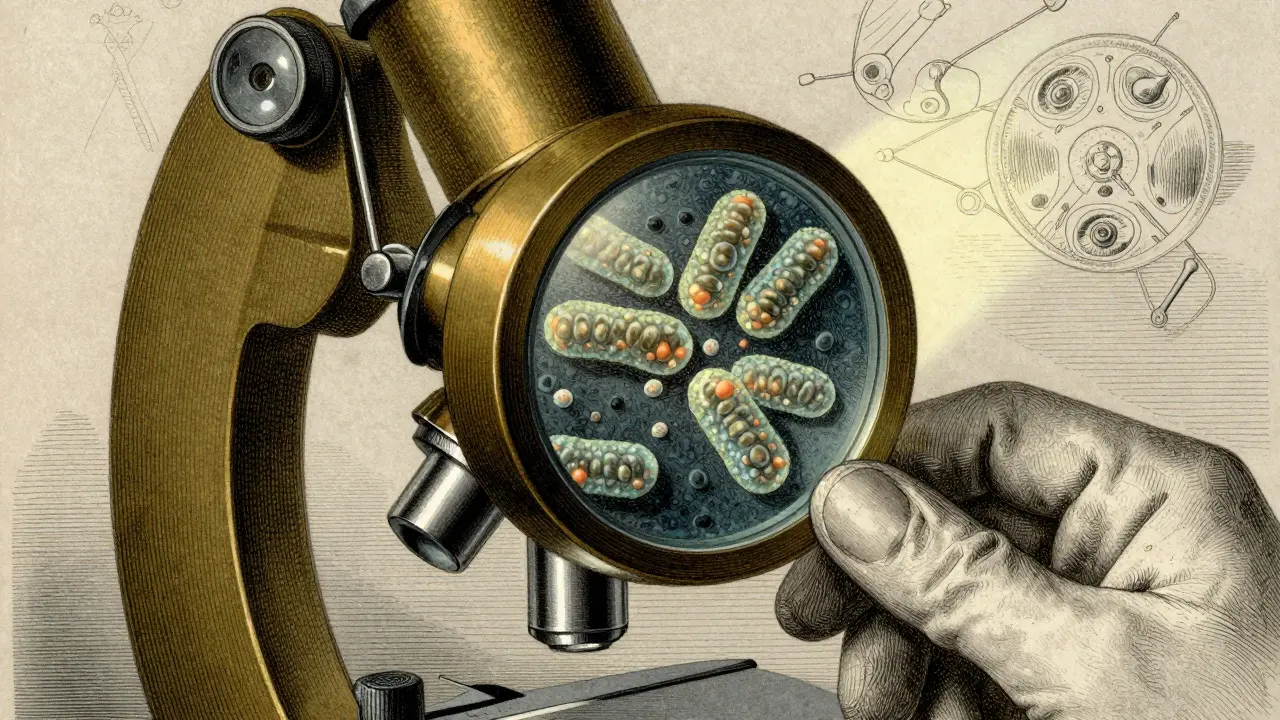
In 1879, German physician Albert Neisser identified the specific bacterium responsible for gonorrhea under a microscope. He observed gram-negative diplococci in pus samples from patients. This discovery transformed gonorrhea from a mysterious affliction into a scientifically understood disease. The bacterium was named after him, cementing the link between clinical observation and microbiology.
With this knowledge, public health campaigns began in major cities like Berlin and Vienna. Hospitals started tracking incidence rates, revealing that gonorrhea was far more common than previously thought, especially among young men and women in urban centers. The stigma began to shift from moral failing to biological inevitability, paving the way for more open discussion and treatment.
20th Century: Antibiotics, Resistance, and Global Spread
The introduction of penicillin in the 1940s revolutionized gonorrhea treatment. What once took weeks of painful injections could now be cured with a single dose. However, by the 1980s, *N. gonorrhoeae* developed resistance to penicillin. This led to the use of tetracycline, then ciprofloxacin, and finally cephalosporins like ceftriaxone. Each new antibiotic faced the same challenge: bacterial adaptation.
Today, gonorrhea is a global public health concern. Cities like Los Angeles, New York, and London report high rates due to factors like migration, sexual network density, and inconsistent screening. The World Health Organization estimates 82 million new cases annually worldwide. Despite advances, the bacterium remains elusive, evolving faster than our drugs can keep up.

Modern Clinical Descriptions and Diagnostic Shifts
Modern medicine defines gonorrhea not just by symptoms but by laboratory confirmation. Nucleic acid amplification tests (NAATs) are the gold standard, detecting *N. gonorrhoeae* DNA with high sensitivity. Clinically, the disease presents differently in men and women. Men often experience dysuria (painful urination) and urethral discharge within 2-7 days. Women may be asymptomatic or have mild vaginal discharge, making diagnosis harder and transmission easier.
The term "clap" persists in colloquial speech, particularly in the UK and US, while "cocks" is used in some Australian contexts. These slang terms reflect cultural attitudes toward sex and shame. Yet, in clinical settings, precision matters. Misdiagnosis can lead to untreated complications like pelvic inflammatory disease (PID) in women or epididymitis in men, both of which can cause infertility.
Why the History Matters Today
Understanding gonorrhea's history helps us appreciate the complexity of STI management. It shows how scientific progress reduces stigma, how urbanization accelerates spread, and how bacterial evolution challenges public health. As we face rising antibiotic resistance, the lessons from the past are clear: vigilance, accurate diagnosis, and equitable access to care are essential.
Whether you're a student, historian, or healthcare provider, recognizing the evolution of gonorrhea's names and clinical descriptions provides context for current debates on prevention, treatment, and policy. The disease hasn't changed much, but our understanding has-and that gap is where future breakthroughs will emerge.
What does the word gonorrhea actually mean?
The term comes from Greek: *gonos* (seed) and *rhoea* (flow). Originally, it referred to any seminal discharge, but by the 18th century, it specifically denoted the purulent discharge caused by *Neisseria gonorrhoeae*.
How long did doctors confuse gonorrhea with syphilis?
For most of recorded history, until the late 18th century. John Hunter's work in 1769 helped establish them as distinct diseases based on symptom patterns and progression.
Which city had the earliest detailed records of gonorrhea treatment?
Ancient Egyptian papyri, such as the Ebers Papyrus, contain early descriptions, but systematic hospital records emerged in medieval European cities like Venice and London during the 14th-15th centuries.
Who discovered the bacterium that causes gonorrhea?
Albert Neisser, a German physician, identified the gram-negative diplococcus in 1879. The bacterium was subsequently named *Neisseria gonorrhoeae* in his honor.
Why is gonorrhea still a problem today despite antibiotics?
Antibiotic resistance is the primary issue. *N. gonorrhoeae* has developed resistance to penicillin, tetracycline, and fluoroquinolones. Current treatments rely on cephalosporins, but resistance to these is emerging, necessitating ongoing research and public health strategies.