Sparta vs. Athens: Gender & Sexual Norms Quiz
How to play: Each question asks which city — Sparta or Athens — best fits the description. Tap a city to lock in your answer, then continue. At the end you'll see your score and how each city fared.
Loading...
Review your answers
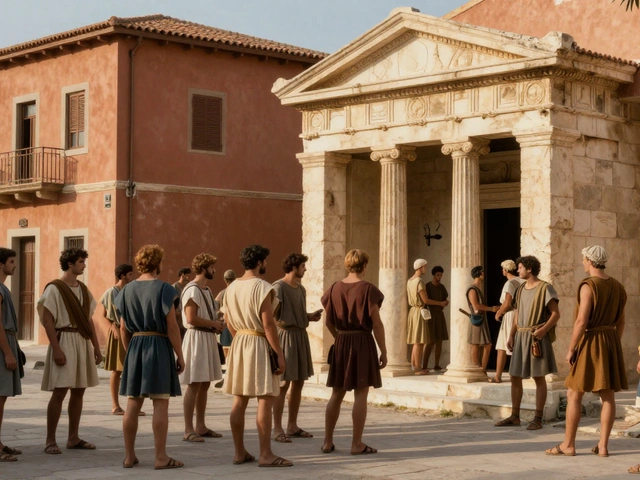
Imagine two cities that defined Western civilization, yet treated their citizens like they lived on different planets. On one side, you have Athens, the intellectual hub where democracy was born but women were largely confined to the domestic sphere. On the other, Sparta, a militaristic state where women enjoyed unprecedented freedom of movement and physical training. The contrast between these two poleis isn't just a historical footnote; it reveals how deeply culture shapes our understanding of gender and sexuality. If you think modern debates about rights and norms are new, look at the fifth century BCE. The differences here weren't subtle-they were structural, legal, and daily.
The Spartan Woman: A Citizen in Training
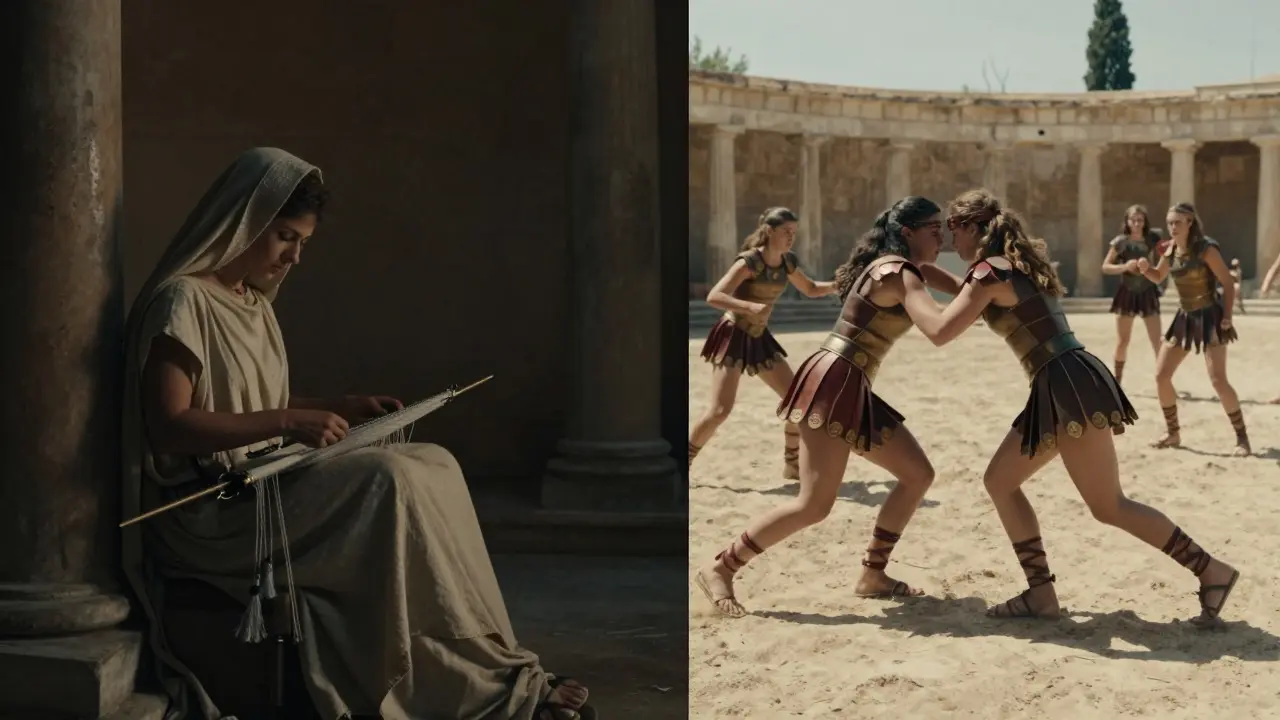
In Sparta, the concept of citizenship was tied to military service, which meant men spent most of their adult lives away from home. This created a vacuum that Spartan women filled with surprising autonomy. Unlike their Athenian counterparts, Spartan girls received formal education. They ran, wrestled, and threw javelins. Why? Because the state needed strong mothers to produce strong soldiers. The goal wasn't personal fitness for its own sake; it was biological utility. A healthy mother produced a healthy warrior. This pragmatic approach gave Spartan women a level of public visibility that was rare in the ancient world.
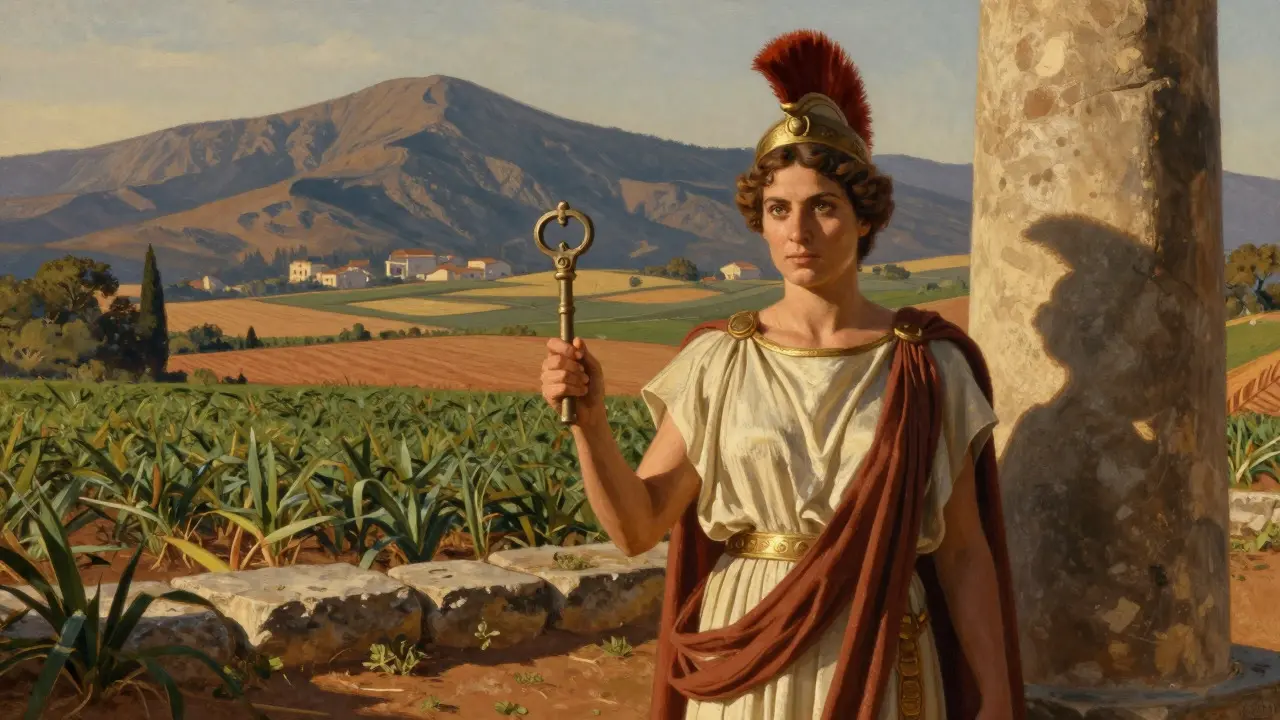
They could own property, inherit land, and even manage estates while their husbands were deployed. By the fourth century BCE, women in Sparta owned roughly 40% of the land. This economic power translated into social influence. They ate in public mess halls (syssitia) alongside men, a practice that shocked visitors from other Greek city-states. However, this freedom came with a heavy price. Spartan women had little say in politics or lawmaking. Their role was strictly defined by the state's need for population growth and military readiness. It was freedom within a cage of state interest.
The Athenian Woman: Confined to the Oikos
Walk through the streets of classical Athens, and you likely wouldn't see many women. And if you did, they would be veiled. In Athens, the ideal woman was invisible. Her domain was the oikos, or household. From puberty onward, an Athenian woman's life revolved around managing the home, raising children, and overseeing slaves. She was under the legal guardianship (kyrieia) of her father, then her husband, and finally her son. This system meant she rarely had independent legal standing. She couldn't vote, serve in jury, or hold public office. Even entering the agora, the central marketplace, was discouraged unless accompanied by a male relative.
This seclusion wasn't just social custom; it was tied to honor. An Athenian man's reputation depended heavily on his wife's chastity. Adultery by a wife was a serious crime, often punishable by death or divorce. In contrast, a husband's extramarital affairs were socially tolerated, provided he didn't impregnate another man's wife. This double standard highlights a key difference: in Athens, female sexuality was controlled to ensure legitimate heirs, whereas in Sparta, it was encouraged to boost the population. The Athenian woman was a keeper of the lineage; the Spartan woman was a producer of the army.
Sexual Norms: Homosexuality and Heterosexuality
When we talk about ancient Greek sexuality, we often forget that the binary we use today didn't exist back then. Relationships were categorized more by age and social status than by gender alone. Both Athens and Sparta practiced pederasty, a socially accepted relationship between an older man (the erastes) and a younger boy (the eromenos). In Athens, this was deeply embedded in education and elite culture. It was seen as a way to transmit knowledge and virtue. The older partner was expected to be a mentor, not just a lover. If the relationship was conducted properly, it brought honor to both parties. If it went wrong, it could lead to social ostracization.
In Sparta, pederasty also existed, but it served a different purpose. It was less about philosophical mentorship and more about character formation and military discipline. The older man guided the younger in combat skills and civic duty. Interestingly, both cities viewed same-sex relationships as normal parts of male social life. Heterosexual marriage, meanwhile, was primarily a contractual arrangement for producing citizens. For Athenian men, sex with slaves or foreign women was common and carried no stigma. For Spartan men, similar practices occurred, but the focus remained tightly on the production of free Spartan citizens. The fluidity of sexual roles in both cities challenges our modern assumptions about what 'normal' looked like in antiquity.
Key Differences at a Glance
| Attribute | Sparta | Athens |
|---|---|---|
| Women's Education | Formal physical and basic literacy training | Limited to domestic skills; formal education rare |
| Public Visibility | High; participated in festivals and sports | Low; confined to the oikos (household) |
| Property Rights | Could own and inherit significant land | No independent ownership; managed by male guardian |
| Purpose of Marriage | Population growth and military strength | Alliances and legitimate heir production |
| View on Pederasty | Military and civic discipline tool | Educational and philosophical mentorship |

Why Did These Differences Matter?
You might wonder why these distinctions persist in history textbooks. It’s because they show that 'Greekness' wasn't monolithic. There was no single 'Ancient Greek' experience. Your reality depended entirely on which polis you called home. Sparta’s model was extreme in its collectivism; the individual mattered only insofar as they served the state. Athens’ model was extreme in its elitism; political power was reserved for a small group of freeborn males, while the majority of the population-women, slaves, and metics (foreign residents)-had limited rights. Understanding this helps us avoid romanticizing either city. Sparta offered women more freedom than anywhere else in the ancient Mediterranean, but it did so to create better soldiers. Athens offered men more political agency, but it locked women out of public life entirely. Neither system was 'better'; they were simply optimized for different goals.
Frequently Asked Questions
Did Spartan women fight in wars?
Generally, no. While they trained physically, they were not part of the regular hoplite army. However, there are legendary accounts of them defending the city during invasions, such as when King Cleomenes I was deposed. Their primary role was to ensure the health of the next generation of warriors.
Were Athenian women completely illiterate?
Not necessarily, but it was uncommon. Most Athenian women learned enough to manage household accounts and perhaps read religious texts. Formal education in rhetoric or philosophy was almost exclusively for boys. Wealthy women might have access to tutors, but it was not the norm.
How did slavery affect gender roles in both cities?
Slavery was pervasive in both Sparta and Athens. In Athens, slaves performed much of the manual labor, freeing up citizen men for politics and war. In Sparta, the helots (state-owned serfs) worked the land. This allowed Spartan men to focus on military training and Spartan women to manage large estates. Slavery underpinned the leisure necessary for both systems to function.
Was homosexuality considered 'normal' in Ancient Greece?
The concept of 'homosexuality' as a distinct identity didn't exist. Relationships were defined by age and role. Pederasty between an older man and a younger adolescent boy was socially accepted and often institutionalized. Adult men engaging with other adult men was less common and sometimes stigmatized, depending on the context. So, while same-sex relations were normal, they followed specific social scripts.
Which city is considered more 'advanced' regarding women's rights?
By modern standards, Sparta appears more advanced because Spartan women had mobility, property rights, and public presence. However, this 'advancement' was instrumental, not ideological. Athens restricted women to protect patriarchal lineage purity. Neither city granted women full political equality, but Sparta allowed for greater personal autonomy in daily life.