Consent of the Governed Knowledge Check
Loading question...
Quiz Complete!
You scored 0 out of 0
Have you ever stopped to think about why your government actually has the power to tax you, enforce laws, or even exist at all? It’s not because a king said so, and it’s certainly not because they’re stronger than you. In modern democracies, that authority comes from one specific source: you. This concept is known as consent of the governed, which is the principle that a government's legitimacy and moral right to use state power is justified only when derived from the agreement of the people. Without this consent, any rule is just force.
This idea might sound like common sense now, but for most of human history, it was radical. For centuries, rulers claimed their authority came directly from God-the "divine right of kings." If you didn't like how you were treated, too bad; questioning the ruler was questioning heaven itself. The shift toward believing that power belongs to the people, not the throne, changed everything. It turned subjects into citizens and obedience into a conditional contract.
Where Did This Idea Come From?
To understand where we stand today, we have to look back at John Locke, who was an English philosopher whose natural rights theory argued that individuals possess inherent rights to life, liberty, and property. Writing in the late 1600s, Locke argued that people are born free and equal. They don’t owe anyone anything by default. So, why do we agree to live under rules? Because living in a chaotic "state of nature" is dangerous and inconvenient. We trade some of our absolute freedom for security and order. But here is the catch: we only do this if we agree to it. That agreement is the social contract.
Locke’s ideas didn’t stay in books. They traveled across the Atlantic and landed in the minds of American revolutionaries. When Thomas Jefferson wrote the Declaration of Independence, which is the foundational document declaring American independence from Britain in 1776, he didn’t just complain about high taxes. He built a legal case based on Locke’s philosophy. The famous line-"governments derive their just powers from the consent of the governed"-was a direct shot at King George III. It argued that because the British Crown ignored the colonists' voice, the contract was broken. The colonies weren’t just rebelling; they were enforcing the terms of political legitimacy.
From Theory to Practice: The Constitution
Proclaiming independence was one thing; building a stable government was another. The founders knew that "consent" couldn’t be a one-time event. It had to be an ongoing process. This is why the United States Constitution, which is the supreme law of the United States establishing the framework for federal government, starts with the words "We the People." This wasn’t poetic flair. It was a legal statement. It meant that the power didn’t come from the states alone, nor from a monarch, but from the collective body of citizens.
The ratification process proved this point. The Constitution didn’t become law just because a convention voted yes. It had to go to special conventions in each state, where elected representatives debated and voted on behalf of their communities. This was consent through representation. The founders understood that while everyone couldn’t gather in one room to vote on every law (as they did in small New England town meetings), they could choose agents to act for them. As Benjamin Franklin famously put it, "In free governments, the rulers are the servants and the people their superiors and sovereigns."
The Problem of Representation
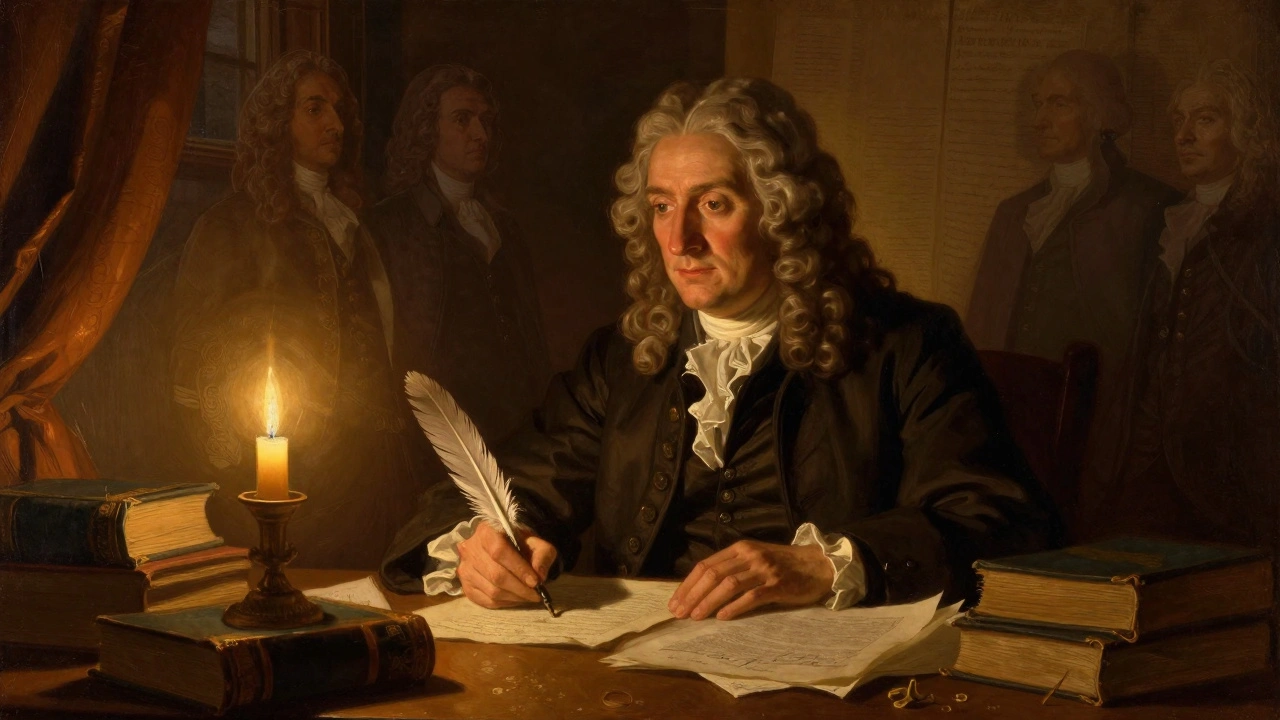
But what does "representation" actually mean? This question sparked intense debate. The British argued for "virtual representation." Their logic was simple: Parliament represented the interests of all British subjects, even those who didn’t elect members. Therefore, the colonists were already consenting to laws like the Stamp Act because their interests were theoretically aligned with those in London.
The Americans rejected this completely. They insisted on "actual representation." You can’t consent to a law if you haven’t chosen the person who writes it. Thomas Jefferson called this "the whole object of the present controversy." This distinction remains crucial today. It’s why we care about gerrymandering, voter suppression, and electoral fairness. If the link between the voter and the representative is broken, the consent is fake. Legitimacy crumbles.
| Model | Core Argument | View on Colonists/Citizens | Legitimacy Basis | ||||
|---|---|---|---|---|---|---|---|
| Virtual Representation | Parliament represents shared interests regardless of geography. | Consented implicitly by being part of the empire. | Theoretical alignment of interests. | Actual Representation | Lawmakers must be elected by the people they govern. | Did not consent due to lack of voting power. | Explicit choice of delegates. |
Consent Is Not One-Time
A key insight of modern democracy is that consent isn’t a stamp you get once and keep forever. It’s renewable. Every election is a chance to withdraw or reaffirm that consent. The Federalist papers expanded on this, suggesting that public opinion acts as a continuous check on power. The people never fully hand over their sovereignty. They lend it out, partially and tentatively, to their representatives. If the government violates the trust-by infringing on rights or ignoring the will of the majority-the people can take that power back.
This leads to the controversial but essential concept of the right to revolution. The Declaration of Independence doesn’t just say you should change leaders; it says you can alter or abolish the government entirely if it becomes destructive of your rights. While violent revolution is rare in stable democracies, the spirit lives on in protests, civil disobedience, and the ballot box. It serves as a reminder that the government works for us, not the other way around.

Global Recognition and Human Rights
The idea of consent of the governed didn’t stop at the US border. After World War II, the international community recognized that legitimate governance requires popular approval everywhere. Article 21 of the Universal Declaration of Human Rights, which is a milestone document adopted by the UN in 1948 outlining fundamental human rights, states clearly: "The will of the people shall be the basis of the authority of government." This elevated consent from a national constitutional principle to a universal human right. It means that dictatorships, colonial regimes, and authoritarian states are illegitimate not just because they are cruel, but because they lack the fundamental moral foundation of popular agreement.
Challenges in the 21st Century
Today, the principle faces new tests. Voter apathy, polarization, and misinformation can weaken the quality of consent. If people feel their vote doesn’t matter, or if they believe the system is rigged, the social contract frays. Additionally, there is a tension between majority rule and minority rights. Just because 51% of people consent to something doesn’t make it right if it violates the fundamental rights of the remaining 49%. Constitutional limits exist to protect against this "tyranny of the majority." True consent requires a society that respects individual freedoms alongside collective decision-making.
Understanding consent of the governed helps us see politics not as a distant game played by elites, but as a relationship we actively maintain. It demands engagement, vigilance, and participation. When you vote, petition, or protest, you aren’t just exercising a privilege; you’re fulfilling your role as the ultimate source of political power.
Who first proposed the idea of consent of the governed?
While the concept has roots in earlier Greek and Roman thought, John Locke is credited with developing the modern philosophical framework for consent of the governed in his Two Treatises of Government (1689). He argued that political authority arises from a social contract among free individuals.
How is consent expressed in a modern democracy?
Consent is primarily expressed through voting for representatives, participating in referendums, engaging in public discourse, and holding officials accountable through elections. It also includes the right to petition the government and participate in civic organizations.
What is the difference between virtual and actual representation?
Virtual representation claims that legislators represent the interests of all citizens, even those who didn’t vote for them. Actual representation requires that lawmakers be directly elected by the constituents they govern. The American Revolution was fought largely to establish actual representation.
Can a government lose its legitimacy?
Yes. According to the principle of consent of the governed, a government loses legitimacy if it consistently violates the rights of the people or ignores their will. In extreme cases, this can justify altering or abolishing the government, though democratic societies usually resolve this through constitutional amendments and elections.
Is consent of the governed mentioned in the US Constitution?
The exact phrase "consent of the governed" appears in the Declaration of Independence, not the Constitution. However, the Constitution embodies the principle through its Preamble ("We the People") and its structure of representative government, ratification processes, and regular elections.