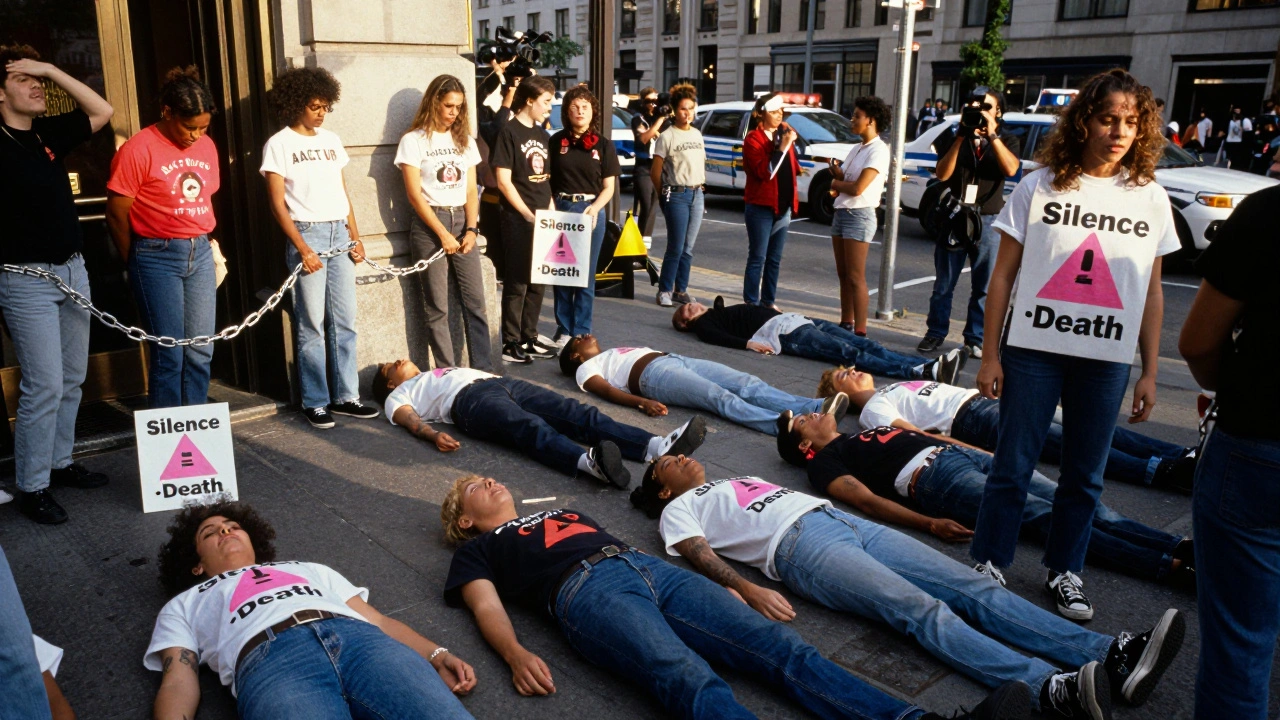
In 1987, over 40,000 Americans were living with HIV. Thousands were dying. The government didn’t care. Drug companies refused to act. The CDC didn’t even recognize that women could get AIDS. And then, on March 12, a group of angry queer people walked into a community center in New York City and said: enough.
They Didn’t Ask for Permission
ACT UP - AIDS Coalition to Unleash Power - wasn’t formed to lobby. It wasn’t formed to write polite letters. It was formed because people were dying in silence, and no one was listening. The founders, including Larry Kramer, Peter Staley, and Mark Harrington, knew that if they waited for permission, everyone they loved would be dead. So they took the streets.At first, it was just 300 people. By the end of the year, it was thousands. Weekly Monday night meetings at the Gay and Lesbian Community Services Center became a hub of raw energy. People showed up whether they were HIV-positive or not. Friends, lovers, siblings, nurses, artists - all of them brought something. No membership fees. No paperwork. Just anger, grief, and a refusal to let the world forget.
The Silence = Death Poster That Changed Everything
ACT UP didn’t just protest. They designed their protests like weapons. The most famous symbol - a pink triangle on a black background with the words Silence = Death - wasn’t just art. It was a manifesto. The pink triangle had been used by Nazis to mark gay men in concentration camps. ACT UP reclaimed it. They turned trauma into power.They didn’t just hold signs. They collapsed in public. They staged die-ins at Wall Street, the FDA, and the White House. They dragged coffins into government buildings. They chained themselves to the doors of pharmaceutical companies. One protest in Boston shut down the Department of Health and Human Services for hours. In Edinburgh, activists blocked traffic outside the Scottish Office - and won a major funding increase within months.
Every action was calculated. Every demonstration had a target. Every slogan had a purpose. They weren’t just angry. They were smart. They studied clinical trial data. They learned how the FDA approved drugs. They read medical journals. They brought scientists to meetings. They didn’t just yell - they argued. And they won.
Women Didn’t Get AIDS? They Proved Otherwise
The CDC’s original definition of AIDS only included conditions that mostly affected gay men: Kaposi’s sarcoma, pneumocystis pneumonia. Women, especially Black and Latina women, injection drug users, and incarcerated people - they didn’t count. They were invisible.Until ACT UP’s Women’s Caucus stepped in. Led by women of color, lesbians, and formerly incarcerated women, they launched the campaign: Women Don’t Get AIDS, We Just Die from It. They gathered data. They testified. They forced the CDC to expand its definition to include cervical cancer, bacterial pneumonia, and other infections that affected women. That change didn’t just save lives in the U.S. - it saved millions globally. It meant women could now access treatment, clinical trials, and federal aid.
Charlene Schneider Haslip, who found out she had HIV while in prison, started AIDS Counseling and Education (ACE) to support women behind bars. She wasn’t waiting for permission. She was building care where no one else would.

They Told the FDA: We Know More Than You
The FDA was moving at a glacial pace. AZT, the only approved drug, was toxic, expensive, and hard to get. People were dying while waiting for approval. ACT UP didn’t wait. They showed up at FDA meetings with binders full of data. They asked questions no one else dared to ask. They called out conflicts of interest. They demanded transparency.They didn’t just protest. They became experts. The Treatment and Data Committee became one of the most influential patient advocacy groups in the world. Members like Gregg Bordowitz and Michael Callen - who openly said they were living with AIDS - stood up in meetings and said: “We are the experts on our own bodies.” They forced the FDA to shorten approval timelines, open trials to more people, and stop excluding women and people of color.
By 1990, ACT UP had pushed the FDA to approve new drugs faster than ever before. They didn’t just change policy - they changed the power dynamic between doctors and patients. For the first time, people with a disease were treated as partners in their own care.
The Movement Wasn’t Just in New York
ACT UP wasn’t a single organization. It was a network. Chapters popped up in Boston, Los Angeles, Chicago, San Francisco, Puerto Rico, London, and Edinburgh. Each adapted the model to their own fight.ACT UP/LA used its newsletter to spread information about needle exchange, clinical trials, and discrimination in hospitals. ACT UP/Boston pressured insurers to cover HIV treatment - a win that forced insurance companies to stop denying care. In Puerto Rico, the Latina/o Caucus didn’t just fight for AIDS care - they ignited the island’s broader LGBTQ+ rights movement.
What made these chapters powerful wasn’t just their tactics. It was their inclusivity. They welcomed people who had been left out of every other movement: trans people, sex workers, drug users, undocumented immigrants. They didn’t ask for respect. They demanded it.
They Turned Grief Into a Weapon
Maria Maggenti, an ACT UP member, said it best: “It was a place where you could be angry and you could be sad and you could be hopeful all at the same time.”People were losing partners, friends, siblings every week. Funerals became protests. Memorial services turned into rallies. They carried photos of the dead. They read names aloud. They didn’t hide their pain. They weaponized it.
Jim Eigo, who was HIV-negative, later said: “The broader idea of the empowerment of people with AIDS - most often without reference to that idea’s distinct political history - ultimately became the basis of ACT UP’s political credibility.”
That credibility didn’t come from being polite. It came from being relentless. From showing up when no one else would. From turning grief into strategy.

The Legacy Lives in Every Patient Advocate Today
ACT UP’s original New York chapter faded after the mid-90s. New drugs like protease inhibitors changed the game. The crisis didn’t vanish, but it changed shape.But the movement didn’t die. It evolved.
Today, PrEP4All uses ACT UP’s tactics to fight for affordable HIV prevention drugs. Black Lives Matter borrowed their die-ins and their unapologetic direct action. COVID-19 activists used their model to demand vaccine equity and faster drug approvals. The same playbook - show up, disrupt, educate, demand - is still being used.
There’s a reason Sarah Schulman, who co-founded the ACT UP Oral History Project, says: “In classrooms across the country, this history has largely gone untold.”
Because if you don’t know how people fought for their lives when the world ignored them, you don’t know how change actually happens.
What ACT UP Taught Us
- Anger is a tool. It’s not unprofessional. It’s necessary. - People with lived experience are the experts. Not the doctors. Not the bureaucrats. Them. - Direct action works. Petitions don’t. Letters don’t. Protests do. - Intersectionality isn’t a buzzword. It’s survival. If you ignore race, class, gender, or incarceration, you’re leaving people to die. - You don’t need permission to save lives.ACT UP didn’t wait for the government to catch up. They dragged it, kicking and screaming, into the 20th century. And they didn’t do it alone. They did it because they refused to let their loved ones die in silence.
What was ACT UP’s main goal?
ACT UP’s main goal was to end the AIDS crisis by forcing the government, pharmaceutical companies, and medical institutions to act. They demanded faster drug approvals, expanded access to treatment, inclusive research, and an end to stigma. Their focus was on saving lives through direct action, not polite requests.
Did ACT UP only include people with HIV/AIDS?
No. While people living with HIV/AIDS were at the center of the movement, ACT UP welcomed allies - lovers, friends, family, healthcare workers, and straight supporters. The group believed the crisis affected everyone, and change required a broad coalition. Many members were HIV-negative but fought because they refused to watch their community die.
How did ACT UP change medical research?
ACT UP forced changes in clinical trial design by demanding that people with HIV be included as participants, not just subjects. They pushed the FDA to shorten approval timelines, exposed conflicts of interest in drug trials, and ended policies that excluded women, people of color, and injection drug users. Their Treatment and Data Committee became a model for patient-led research advocacy worldwide.
Why was the slogan ‘Silence = Death’ so powerful?
The slogan reclaimed the pink triangle, a symbol used by Nazis to identify gay men in concentration camps. By turning it into a protest symbol, ACT UP connected the government’s silence on AIDS to historical persecution. It said: if you don’t speak up, people will die. Silence wasn’t just indifference - it was complicity.
Did ACT UP succeed in changing public perception of AIDS?
Yes. Before ACT UP, AIDS was seen as a gay disease, a punishment, or something that only affected drug users. ACT UP humanized people with HIV through public demonstrations, personal storytelling, and media campaigns. They forced news outlets to stop using stigmatizing language. They made it clear: AIDS wasn’t about morality - it was about public health.
What happened to ACT UP after the 1990s?
The original New York chapter became less active after effective HIV treatments became available in the mid-1990s. But the movement didn’t end. Chapters in other cities continued organizing. The ACT UP Oral History Project, launched in 2006, preserved the stories of 187 members. Today, its tactics inspire modern movements like PrEP4All and COVID-19 justice campaigns.
What to Read Next
If you want to learn more, start with Sarah Schulman’s book Let the Record Show: A Political History of ACT UP New York, 1987-1993. It’s the most comprehensive account of the movement’s inner workings, strategies, and triumphs. The ACT UP Oral History Project’s archive - available online - includes raw interviews with members who were on the front lines. Watch the documentary How to Survive a Plague - it’s not just history. It’s a blueprint for how to fight back.ACT UP didn’t wait for the world to change. They changed it themselves. And if you’re fighting for justice today - whether it’s for healthcare, racial equity, or climate action - their story is still your guide.