Victorian Public Health Impact Calculator
Calculate how many women would have been affected by the Contagious Diseases Acts in a town of your choice. Remember: Men were never examined under these laws, despite spreading the same diseases.
Estimated Impact
Between 1864 and 1886, the British government passed laws that allowed police to arrest women based on suspicion alone-and force them to undergo invasive medical exams. If they tested positive for venereal disease, they were locked up in hospitals for months, sometimes a year, with no trial, no lawyer, and no right to refuse. These were the Contagious Diseases Acts. And they weren’t meant to protect public health. They were designed to control women’s bodies.
What the Contagious Diseases Acts Actually Did
The Contagious Diseases Acts started as a military policy. In the 1850s, British army doctors reported that 10 to 15 percent of soldiers were sidelined by syphilis and gonorrhea. That meant fewer men ready for duty. The solution? Target women. Not the men who spread the diseases, but the women they slept with. The first Act, passed in 1864, applied to just eleven towns with large military bases-places like Portsmouth, Plymouth, and Aldershot. Police could stop any woman they thought looked like a prostitute. No proof needed. No warrant. Just suspicion. If she was arrested, she had to show up for a medical exam within 48 hours. If she refused, she could be jailed for up to three months. The exam itself was brutal. Male doctors used a speculum-a metal instrument designed to pry open the vagina-to look for signs of infection. These weren’t gentle checkups. Women described them as violent, humiliating, and painful. One woman told Josephine Butler, a leading critic of the Acts, that she’d rather be whipped than go through it again. If she tested positive, she was sent to a lock hospital. These weren’t clinics. They were prisons with medical labels. Women were locked in for up to three months under the 1864 law. That stretched to nine months by 1868, and eventually a full year under the 1866 Act. No judge approved it. No jury decided. Just a doctor’s note and a police officer’s word. And here’s the worst part: not a single man was ever forced to get examined.A Double Standard Built Into Law
The Acts didn’t just ignore men-they protected them. Soldiers, sailors, and officers who slept with infected women were never tested. Never punished. Never even questioned. The law assumed men were victims of temptation, while women were the source of the problem. This wasn’t just unfair. It was scientifically wrong. Doctors in the 1860s knew venereal diseases spread both ways. But the medical establishment didn’t care. What mattered was maintaining the moral order. Women’s sexuality was seen as dangerous, dirty, and in need of control. Men’s sexuality? Normal, natural, and above reproach. Historians call this the “double standard.” But it wasn’t just social-it was legal. The state had created a system where women’s bodies were treated as public property, while men’s were left untouched. The Acts turned prostitution from a moral issue into a medical one, but only for women. For men, it remained invisible. By 1869, the government had expanded the Acts to eighteen towns. Some politicians even pushed to make them national. The Association for Promoting the Extension of the Contagious Diseases Act formed in 1867 to lobby for that very thing. Their goal? To extend the same system to every city in England. Imagine a Britain where any woman walking alone at night could be dragged to a hospital for a forced exam.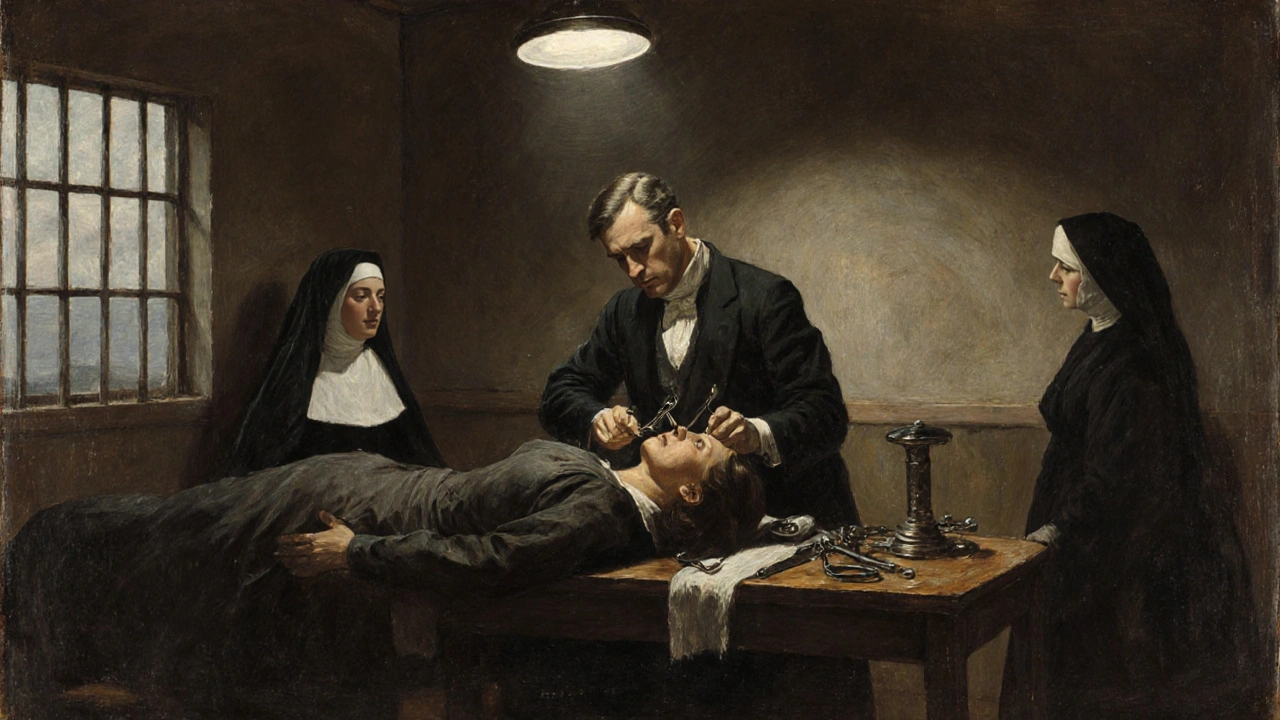
How Women Fought Back
No one expected women to resist. They were poor, voiceless, and ignored. But they did. And they didn’t do it quietly. Josephine Butler, a middle-class mother and religious reformer, became the face of the movement. After hearing testimonies from women who’d been abused in lock hospitals, she started organizing. In 1869, she co-founded the Ladies National Association for the Repeal of the Contagious Diseases Acts. Its members were mostly women-teachers, clergy wives, factory workers-who refused to stay silent. They didn’t just protest. They mobilized. Between 1870 and 1885, they collected 2.6 million signatures on petitions. That’s more than one in ten British adults at the time. They held over 900 public meetings. They wrote pamphlets. They lobbied MPs. They gave speeches in churches and town halls. Their arguments were simple: This isn’t public health. It’s state-sanctioned abuse. You can’t justify violating a woman’s body just because you think she’s immoral. And you can’t protect soldiers by punishing women. The movement grew because it connected with deeper fears. People were starting to question what kind of country they lived in. Was Britain really a land of justice, or just a place where the powerful could do whatever they wanted to the powerless?The System’s Flaws and Failures
Even supporters of the Acts admitted they didn’t work as intended. Military doctors claimed infection rates dropped by up to 50 percent in some towns. But that number was misleading. The drop didn’t come from fewer infections. It came from fewer women being allowed to work. Police drove women out of town. Others hid. Some left prostitution entirely. But the men? They kept sleeping with whoever they wanted. The system was also full of corruption. Police targeted women they didn’t like-those who were poor, Black, Irish, or just didn’t dress “properly.” One woman in Glasgow was arrested because she wore a red shawl. Another was taken in because she was seen talking to a soldier in a pub. No proof of prostitution. Just suspicion. Medical errors were common. Doctors misdiagnosed infections. Women were locked up for months even after they were clean. Some were examined every two weeks, whether they were infected or not. The system wasn’t about health. It was about control. And then there was the psychological toll. Women who went through the exams suffered trauma that lasted years. Many lost their jobs. Their families turned away. Some were driven to suicide. The state didn’t care. They called them “common prostitutes.” As if the label erased their humanity.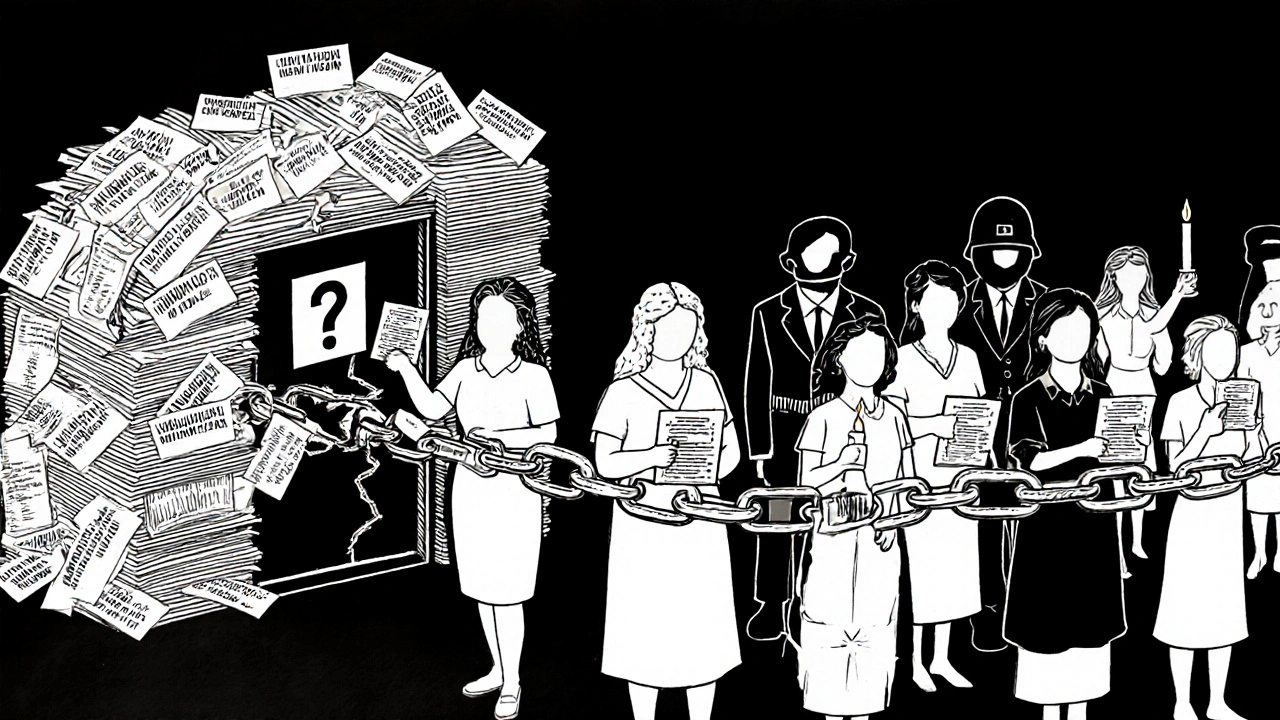
Why the Acts Were Repealed
In 1871, the government set up a Royal Commission to investigate the Acts. It wasn’t meant to repeal them. It was meant to defend them. But the evidence was overwhelming. Witnesses came forward. Doctors admitted the exams were cruel. Police admitted they targeted women arbitrarily. The commission’s final report said something shocking: “There is unanimous support for repeal.” The Acts were suspended in 1883 and fully repealed in 1886. The victory wasn’t because the government changed its mind. It was because women forced them to listen. The repeal of the Contagious Diseases Acts became the first major feminist campaign in Britain. It showed that ordinary women could organize, speak out, and win. The Ladies National Association didn’t just end the Acts. It created a blueprint for future movements-from suffrage to reproductive rights.The Legacy of the Contagious Diseases Acts
Today, the Acts are taught in history classes as a dark chapter. But their shadow still lingers. Modern public health policies still struggle with the same question: When does state intervention become state abuse? The forced testing of pregnant women for HIV. The detention of sex workers in some countries. The use of medical exams to justify surveillance. These aren’t new. They’re echoes of the same logic: control women’s bodies in the name of safety. The Acts remind us that medicine can be weaponized. That “science” can be used to justify cruelty. That laws don’t have to be evil to be oppressive. Sometimes, they’re just boring, bureaucratic, and deeply unfair. And they remind us that change doesn’t come from the top. It comes from women who refuse to be silent.Were men ever forced to get examined under the Contagious Diseases Acts?
No. Men were never required to undergo medical examinations under the Contagious Diseases Acts. Even though doctors knew venereal diseases were transmitted by both sexes, the law only targeted women. This double standard was one of the most criticized aspects of the Acts. Men who slept with infected women faced no legal or medical consequences, while the women they engaged with were arrested, examined, and imprisoned.
How many women were affected by the Contagious Diseases Acts?
Exact numbers are hard to determine because records were poorly kept, especially for working-class women. But historians estimate that between 1864 and 1883, at least 10,000 women were subjected to compulsory examinations. Over 1,000 were confined in lock hospitals for periods ranging from months to a year. The number of women arrested on suspicion alone was likely much higher, as many were released without formal charges or medical exams.
What was a lock hospital?
A lock hospital was a government-run facility where women found to have venereal diseases were confined under the Contagious Diseases Acts. Though called hospitals, they functioned more like prisons. Women were locked in for up to one year, forced to undergo daily medical treatments, and often subjected to religious instruction. Conditions were harsh, and women had no legal right to leave or refuse treatment. These institutions were located in major military towns like Portsmouth, Plymouth, and Edinburgh.
Did the Contagious Diseases Acts reduce venereal disease in the military?
Official reports claimed infection rates dropped by up to 50 percent in some towns, but this was misleading. The decline came not from fewer infections, but from women being driven out of towns or forced into hiding. Soldiers still had access to sex workers, but the state stopped tracking or treating them. The real effect was not public health improvement-it was the suppression of women’s freedom and the criminalization of poverty.
How did the repeal movement succeed?
The repeal movement succeeded through mass mobilization. Led by Josephine Butler and the Ladies National Association, women organized petitions, public meetings, and lobbying campaigns. Between 1870 and 1885, they gathered 2.6 million signatures-more than any previous petitioning campaign in British history. Their moral clarity, persistence, and ability to frame the issue as a violation of basic rights turned public opinion. The Royal Commission’s 1871 report, which admitted the Acts were unjust, sealed their victory.