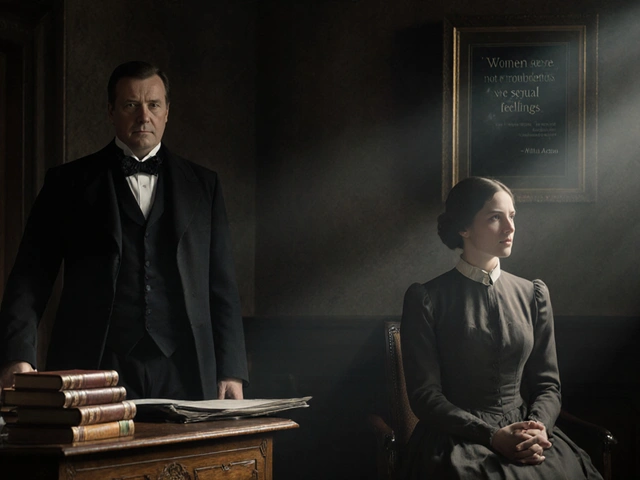
Explore the Lesbian Continuum
The Spectrum of Woman-Identified Experience
Rich expanded the definition beyond genital sexuality to include the full range of emotional, political, and spiritual connections between women.
Select a point above to learn more about each type of relationship
Traditional View vs. Continuum View
| Aspect | Traditional | Continuum |
|---|---|---|
| Women's Friendships | Secondary to marriage | Central & valid |
| Identity Definition | Sexual acts only | Full spectrum |
| Historical Analysis | Proof required | Includes bonds |
Key Insight
"The range—through each woman's life and throughout history—of woman-identified experience"
This definition validates the energy women put into supporting each other as politically significant, equal in weight to the energy society places on marriage.
Think about the strongest bond in your life. Is it a romantic partner? A spouse? For most of us, society has trained our brains to say yes immediately. We are taught that the nuclear family and heterosexual marriage are the gold standards of human connection. But what if that assumption is not a natural law, but a political tool designed to keep women subordinate?
This is the radical question posed by Adrienne Rich, a pioneering poet and essayist who changed how we understand female relationships forever. In her groundbreaking 1980 essay, she introduced the concept of the lesbian continuum, which redefines lesbianism not just as sexual activity between women, but as a broad spectrum of woman-identified experiences, including friendship, solidarity, and emotional intimacy. This idea didn't just shift academic debates; it gave language to millions of women who felt their deep connections with other women were being dismissed or ignored.
The Myth of Natural Heterosexuality
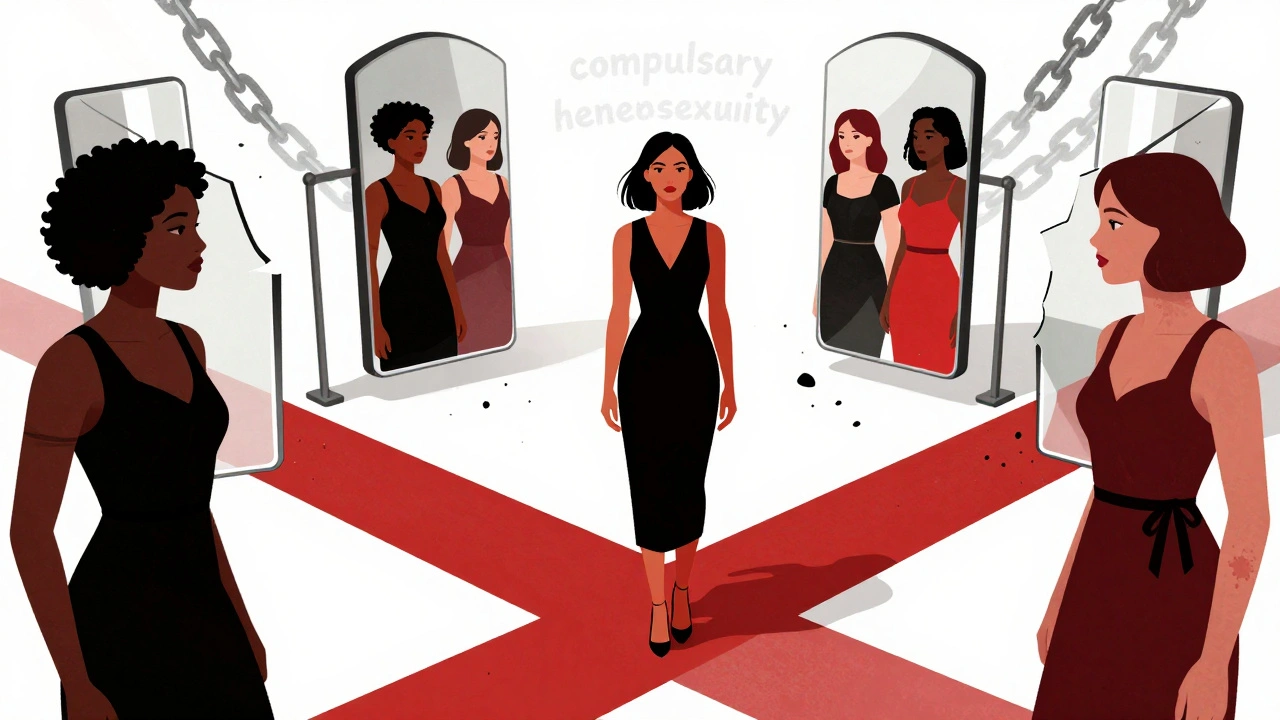
To understand why the lesbian continuum matters, you first have to understand what Rich was fighting against. She coined the term compulsory heterosexuality, describing it as a political institution that enforces women's subordination to men rather than a neutral or natural orientation. Rich argued that heterosexuality isn't something you are born with like eye color. Instead, it is something you are socialized into from childhood.
Consider how girls are raised. From a young age, cultural scripts direct them toward finding male partners as their central life goal. Media, family expectations, and even educational systems reinforce the idea that a woman’s ultimate success is tied to her relationship with a man. Rich called this "sexual slavery," noting that mechanisms like physical violence, control of labor, and the trivialization of women’s relationships with each other drive women into heterosexual dependency. By labeling heterosexuality as "compulsory," Rich stripped away its aura of inevitability. It became a system of power to be analyzed, not a destiny to be accepted.
Defining the Lesbian Continuum
If heterosexuality is a constructed institution, then what is the alternative? Rich didn’t suggest that every woman must become sexually active with other women to be free. Instead, she proposed the lesbian continuum, defined as the range-through each woman’s life and throughout history-of woman-identified experience, not simply the fact that a woman has had or consciously desired genital sexual experience with another woman.
This definition expands the category of "lesbian" far beyond genital sexuality. It includes:
- Intense friendships between women.
- Political solidarity and activism.
- Mother-daughter bonds that prioritize the daughter’s autonomy.
- Mentorship and professional collaboration.
- Emotional and spiritual commitments to women.
Rich wanted to pay respect to "lesbian existence"-the traces of women who made primary erotic and emotional choices for women-while acknowledging that not all woman-identified experiences involve sex. The continuum is a methodological tool. It allows us to see the full spectrum of affection between women without forcing every close friendship into a binary box of "just friends" or "lovers." It validates the energy women put into supporting each other as politically significant, equal in weight to the energy society places on marriage.
Reclaiming Women’s History
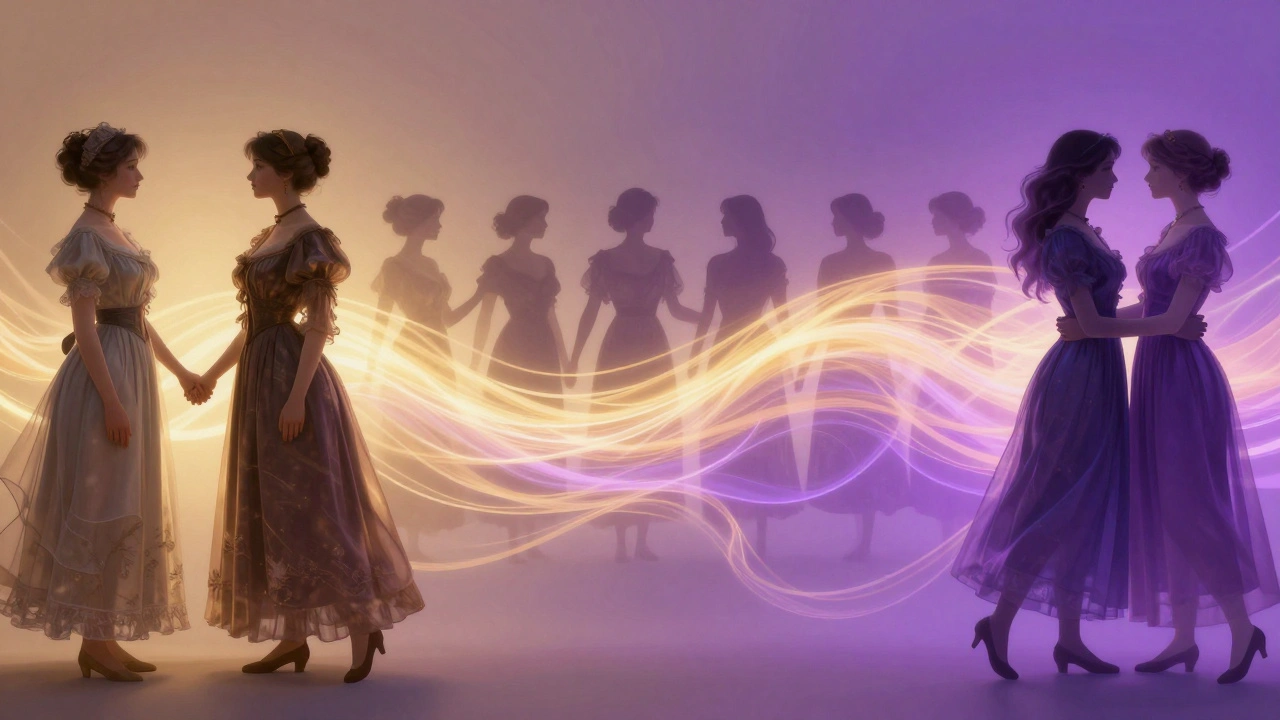
One of the most powerful applications of the lesbian continuum is in history. Before Rich, historians often erased or minimized the deep bonds between women in the past because they lacked evidence of sexual acts. Archives rarely named women as lesbians before the late 19th century. Many women entered heterosexual marriages while maintaining intense emotional attachments to other women. If we only look for explicit sexual evidence, we erase centuries of lesbian history.
The continuum provides a lens to read these histories differently. Look at the 19th-century phenomenon of "Boston marriages" or the hundreds of letters documenting "romantic friendships" between women studied by historian Lillian Faderman. These relationships involved cohabitation, financial independence, and profound emotional intimacy. Under a strict sexual definition, these might be dismissed as platonic. Through the lens of the lesbian continuum, they are recognized as part of a long tradition of woman-identified living arrangements that resisted patriarchal norms. This approach helps scholars unearth distinctly lesbian experiences from the past, even when those experiences were coded or hidden by "heteroreality"-the dominant culture’s insistence that only heterosexual relationships matter.
| Aspect | Traditional View | Lesbian Continuum View |
|---|---|---|
| Heterosexuality | Natural, biological default | Political institution enforcing subordination |
| Women's Friendships | Secondary to marriage; pre-sexual | Central, valid, and potentially subversive |
| Lesbian Identity | Defined by sexual acts with women | Spectrum of woman-identified emotional/political ties |
| Historical Analysis | Requires proof of sexual activity | Includes homosocial bonds and solidarity |
Critiques and Complexities
No theory is perfect, and the lesbian continuum has faced significant criticism since its inception. Some critics argue that Rich’s framework over-expands the definition of lesbianism. Diana Fuss, in her book *Inside/Out*, warned that if everyone is "a little bit lesbian" because of their friendships with women, the specific identity and struggles of actual lesbians get diluted. There is a risk of appropriating heterosexual women’s experiences for lesbian history, thereby erasing the distinct reality of women who are exclusively attracted to women.
Others point out issues with intersectionality. Early critiques from Black feminists like Audre Lorde highlighted that white lesbian feminists sometimes universalized their experience, ignoring how race, class, and colonialism shape women’s relationships. For example, the ability to choose a woman as a partner or live in a women-only commune was often a privilege available only to certain classes of women. Additionally, trans and nonbinary scholars have noted that Rich’s original essay assumes cisgender women, failing to account for trans women’s experiences or nonbinary identities. While later readers have tried to extend the continuum to be more inclusive, these gaps remain important points of discussion in modern queer theory.
Why It Still Matters Today
You might wonder why a theory from 1980 is still relevant in 2026. The answer lies in the ongoing conversation about "comphet" (compulsory heterosexuality) in online communities. In recent years, platforms like Tumblr, TikTok, and Reddit have seen a surge in young women questioning whether their attraction to men is genuine or simply a result of social conditioning. The "Lesbian Masterdoc," a collaborative document circulating since 2018, explicitly draws on Rich’s ideas to help women navigate this confusion.
Rich’s work gives language to the feeling of alienation many women experience in heterosexual relationships. It validates the choice to prioritize women as passionate comrades, life partners, and community members. Whether you identify as lesbian, bisexual, or queer, the lesbian continuum offers a way to revalue the bonds you have with other women. It reminds us that choosing women doesn’t require a label; it requires recognizing the power and validity of those connections in a world that constantly tries to minimize them.
What is the difference between the lesbian continuum and being a lesbian?
Being a lesbian typically refers to a sexual and romantic identity where a woman is attracted to other women. The lesbian continuum is a broader theoretical concept that includes all woman-identified experiences, such as close friendships, political solidarity, and mentorship, regardless of sexual activity. Rich used the continuum to honor lesbian existence while acknowledging that not all deep bonds between women are sexual.
Who created the concept of the lesbian continuum?
The concept was created by Adrienne Rich, an American poet and essayist. She fully articulated it in her 1980 essay "Compulsory Heterosexuality and Lesbian Existence," published in the journal *Signs*.
What does Adrienne Rich mean by compulsory heterosexuality?
Compulsory heterosexuality is the idea that heterosexuality is not a natural preference but a political institution enforced by society. Rich argued that women are socialized from childhood to depend on men through various structures like marriage, media, and economic control, making heterosexuality seem inevitable rather than chosen.
How does the lesbian continuum apply to history?
It allows historians to recognize woman-identified relationships in the past that may not have included explicit sexual acts. For example, 19th-century "romantic friendships" or "Boston marriages" can be viewed as part of lesbian history, helping to recover stories that were previously erased due to lack of sexual evidence.
Has the lesbian continuum been criticized?
Yes. Critics argue it dilutes the specific identity of lesbians by including too many non-sexual relationships. Others note that early formulations ignored racial, class, and trans/nonbinary perspectives, though contemporary scholars continue to debate and expand the concept to be more inclusive.