Victorian Castration Anxiety Simulator
Adjust the sliders below to simulate the pressure points facing a Victorian man. This tool visualizes how factors like medical warnings, social expectations, and erotic literature contributed to the concept of "Castration Anxiety".
Result Analysis
When we think of Victorian sexuality, which refers to the complex social norms, repressed desires, and emerging psychological theories regarding sex in 19th-century Britain, we often imagine stiff collars, moral panic, and a society that pretended not to know what adults did behind closed doors. But this image hides a darker, more fascinating reality. The Victorians didn't just ignore sex; they were obsessed with it. This obsession fueled the birth of modern psychology, the explosion of underground pornography, and the deep-seated fears that still shape how men view their own bodies today.
The idea of castration-whether real or imagined-is central to understanding male anxiety during this era. It wasn't just about physical loss; it was about power, identity, and the terror of losing control. In the world of early pornographic themes and erotic literature, these fantasies weren't merely for titillation. They served as a pressure valve for a society suffocating under strict moral codes. By exploring these dark corners of history, we can see how the past continues to influence our present understanding of gender, fear, and desire.
The Birth of Castration Anxiety
To understand why castration became such a potent symbol, we have to look at Sigmund Freud, who was an Austrian neurologist and the founder of psychoanalysis, known for his theories on the unconscious mind and sexual development. While Freud’s work peaked in the early 20th century, his ideas were rooted in the cultural soil of the late Victorian era. He coined the term "castration anxiety", describing a boy's fear that his father will punish him for his sexual desires by removing his penis.
This concept sounds extreme, but it tapped into a very real cultural nerve. In Victorian times, masculinity was tied closely to strength, control, and virility. To lose one's genitals was to lose everything that defined a man's place in the hierarchy. This fear wasn't just personal; it was societal. Men worried that women, whom they viewed as mysterious and potentially dangerous, could strip them of their power through seduction or rejection. The fantasy of castration, therefore, became a way to confront this terror in a controlled, safe environment-often through the pages of illicit books.
- Power Dynamics: Castration represented the ultimate loss of agency and control.
- Feminine Threat: Women were often portrayed as having the power to emasculate men psychologically.
- Moral Punishment: Society taught that deviant sexual thoughts would lead to divine or paternal punishment.
Underground Erotica and the Victorian Mind
You might wonder if people actually wrote about this stuff back then. Absolutely. The Victorian era saw a boom in underground pornography, often referred to as "yellow journalism, which refers to sensationalized news stories and erotic literature produced for mass consumption in the late 19th century" or simply "blue books." These publications were illegal, hidden away in locked drawers or sold in shady alleyways, but they were wildly popular.
Many of these texts featured themes of dominance, submission, and bodily harm. Castration fantasies appeared frequently, not because everyone wanted to be mutilated, but because these stories allowed readers to explore the boundaries of their fears. For a man living in a rigid class system, where he could be humiliated by his boss, his wife, or even a servant, reading about the ultimate humiliation provided a strange sense of catharsis. It was a way to scream silently against the constraints of polite society.
These narratives also reflected the medical anxieties of the time. Doctors warned that masturbation led to insanity, weakness, and yes, sometimes implied genital decay. So, when a man read a story involving castration, he was engaging with a fear that his own doctors had helped create. The line between medical advice and erotic fiction was blurrier than you might think.
The Female Gaze and Emasculation
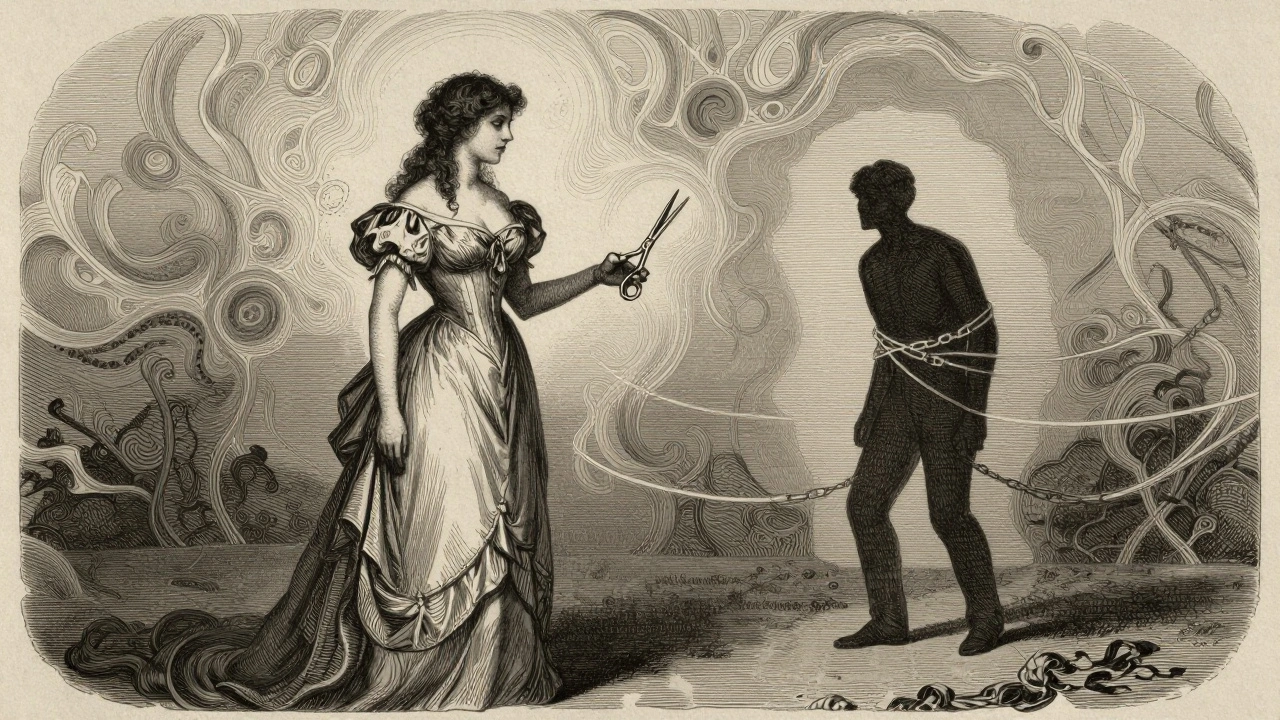
In many Victorian-era erotic tales, the woman is not a passive victim but an active agent of destruction. This flips the script on traditional gender roles. We see this clearly in later works like Basic Instinct, but the roots go back much further. The "femme fatale" archetype emerged from this period-a woman who uses her sexuality to trap and destroy men.
This theme resonates deeply with male anxiety. If a man's identity is built on his ability to conquer and control, then a woman who refuses to be controlled-or worse, one who controls him-is terrifying. Castration fantasies often feature women wielding knives, ropes, or other instruments. This isn't just about violence; it's about the transfer of power. The man gives up his physical potency to gain pleasure or submission. It’s a paradoxical exchange that highlights the complexity of human desire.
| Theme | Victorian Context | Modern Context |
|---|---|---|
| Castration | Symbolic loss of status and moral purity | Often fetishized as extreme BDSM play |
| Female Dominance | Fear of the "New Woman" and feminist movements | Exploration of consensual power exchange |
| Anxiety Source | Religious guilt and medical warnings | Social media comparison and performance pressure |
Medical Myths and Real Fears
We cannot separate these fantasies from the medical realities of the 19th century. Hysteria, which was a now-defunct diagnosis primarily applied to women, characterized by emotional instability and sexual repression was considered a major disease. Men, too, suffered from "neurasthenia," a condition blamed on overwork and excessive sexual activity. Treatments included rest cures, electric shocks, and yes, sometimes surgical interventions.
While actual castration was rare for psychiatric reasons, the threat loomed large. Eunuchs existed in various cultures throughout history, serving as trusted servants because they lacked the urge to reproduce. In Europe, the idea of becoming a eunuch was associated with servitude and loss of honor. When these concepts entered erotic literature, they carried heavy symbolic weight. To be castrated was to become a child, a slave, or a ghost-none of which fit the Victorian ideal of the robust, independent male.
Yet, some men sought out these stories precisely because they felt trapped by those ideals. The fantasy offered an escape from the burden of being the head of the household, the breadwinner, and the moral guardian. In the private space of the bedroom, reading about surrendering that power was liberating.
From Freud to Film: The Legacy Continues
The influence of these Victorian anxieties extends far beyond dusty old books. Film critics often analyze movies through the lens of castration anxiety. Think of scenes where a hero faces a monstrous villainess or loses his tools (like a gun or a car). These are modern metaphors for emasculation. The camera lingers on the phallic symbols-the skyscrapers, the weapons, the cars-and their destruction triggers the same primal fear that drove Victorian readers to buy illicit pamphlets.
Today, we might call it "insecurity" or "toxic masculinity," but the root is the same. Men still worry about their performance, their attractiveness, and their ability to provide. Pornography has evolved, becoming more accessible and varied, but the core themes remain. Some genres still focus on degradation and humiliation, tapping into that ancient well of anxiety. Understanding this history helps us see that these desires aren't just random quirks; they're responses to deep-seated cultural pressures.
By looking back at the Victorian era, we realize that our current struggles with gender and sexuality are part of a long conversation. The Victorians may have been prudish on the surface, but underneath, they were grappling with the same questions we are today: Who holds the power? What does it mean to be a man? And what happens when we lose control?
What exactly is castration anxiety?
Castration anxiety is a psychoanalytic concept introduced by Sigmund Freud. It describes a boy's unconscious fear that his father will punish him for his sexual desires toward his mother by removing his penis. Over time, this expanded to include general fears of emasculation, loss of power, or injury to the genitals.
Did Victorians really write about castration in erotica?
Yes. Underground Victorian literature, including pamphlets and novels, often contained themes of mutilation, bondage, and dominance. These stories served as a outlet for repressed desires and fears related to gender roles and medical myths of the time.
How does this relate to modern male anxiety?
The core fear of losing masculine identity remains relevant. Today, this manifests as concerns about sexual performance, body image, and societal expectations. The historical context shows that these anxieties are deeply rooted in cultural structures rather than just individual issues.
Why were women portrayed as threatening in these stories?
During the Victorian era, the rise of feminism and changing gender dynamics threatened traditional male authority. The "femme fatale" archetype represented the fear that women could use their sexuality to undermine men's power and status, leading to narratives where women actively emasculate men.
Is castration fantasy common in modern pornography?
While less common than mainstream themes, elements of castration, emasculation, and humiliation exist in niche genres of modern pornography. These themes continue to appeal to individuals interested in exploring power dynamics, submission, and the reversal of traditional gender roles.